Some air filters rely partly on electrostatic charge to improve particle capture. Appendix J of ASHRAE 52.2 describes an optional conditioning procedure used to evaluate how particle-size efficiency may change after controlled conditioning.
The Appendix J result is reported separately from the standard MERV test result. It should not be described as a direct simulation of a defined period of field ageing, because actual filter performance also depends on the aerosol, равиши ҳаво, намӣ, installation and operating environment.
Сатҳи таснифоти маъмулии MERV
Миқёси MERV аз 1 ба 16, бо арзишҳои баландтар, ки самаранокии филтратсияро нишон медиҳанд. Намунаҳои маъмулӣ дар бар мегиранд:
Рейтинги MERV
Аризаи маъмулӣ
MERV 6 – 8
системаҳои HVAC манзил
MERV 9 – 12
биноҳои тиҷоратӣ
MERV 13 – 16
беморхонахо ва вентилятсияи баландмахсул
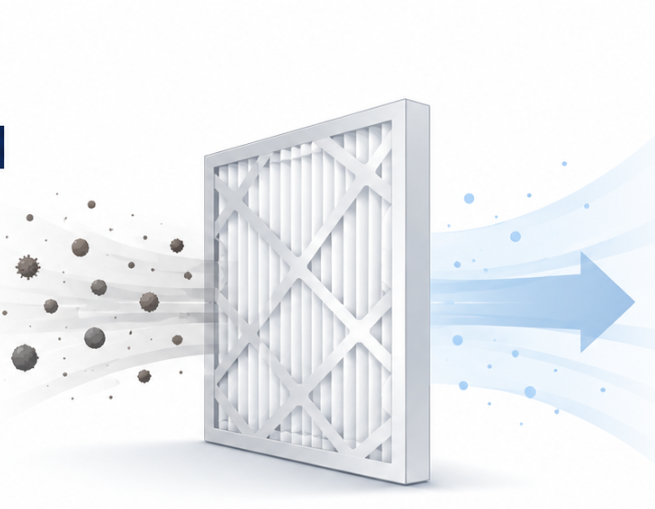
A higher MERV rating indicates higher particle-removal performance within the defined particle-size ranges. Аммо, MERV and airflow resistance are separate performance characteristics. Pressure drop also depends on the filter media, effective media area, pleat design, face velocity and filter construction.
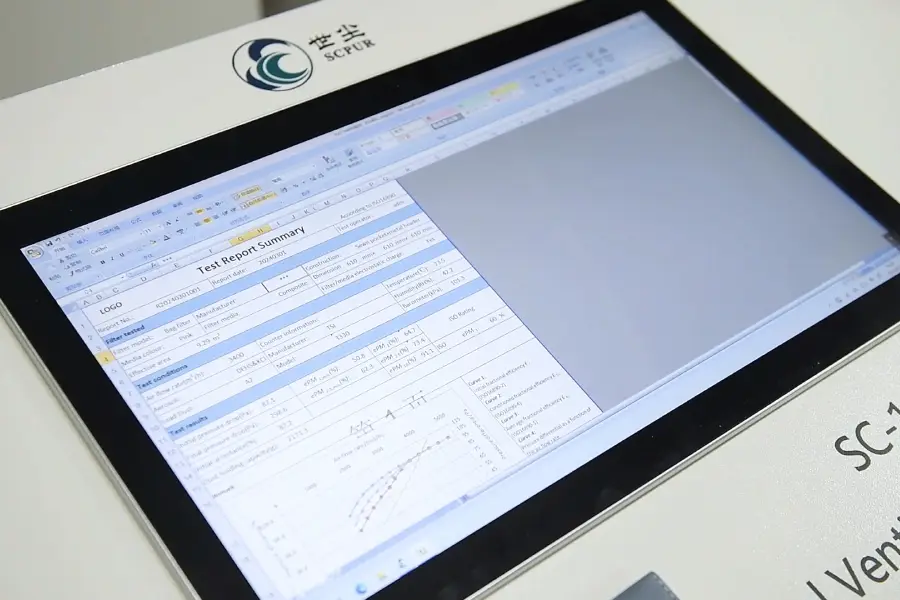
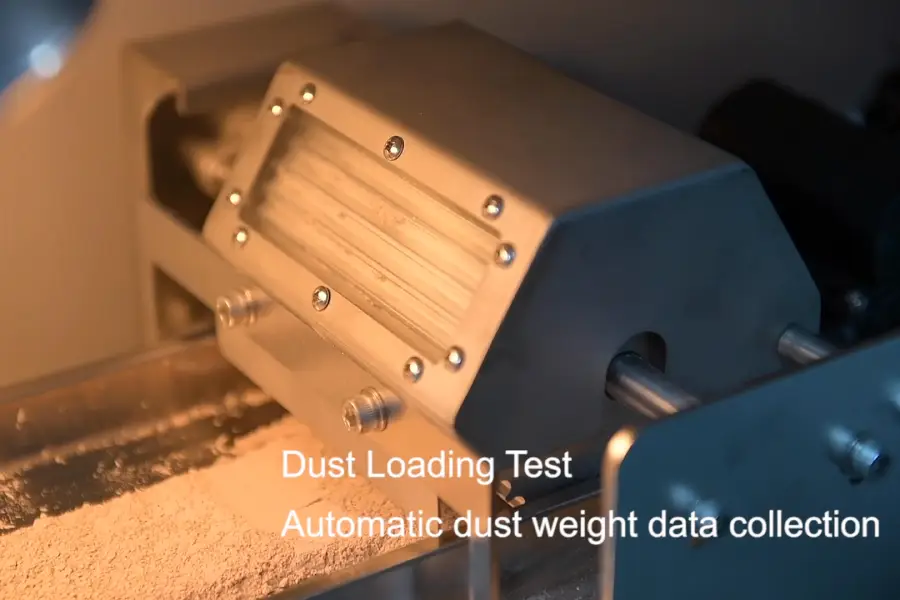
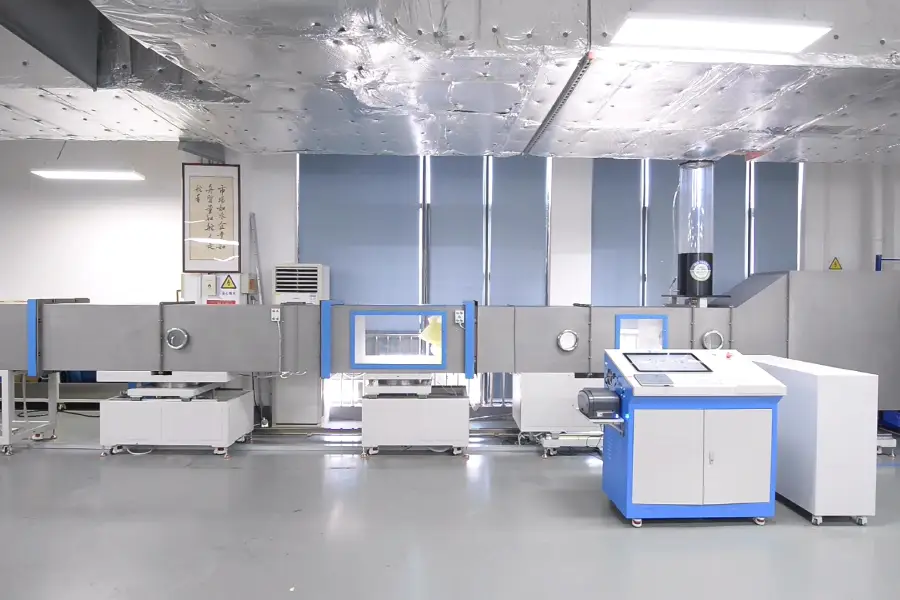
For ASHRAE 52.2 озмоиш, the system configuration should be selected according to the required test scope. Particle-size efficiency, MERV classification, airflow resistance and dust loading involve different instruments and functional modules.
SCPUR’sSC-7099can be configured for ASHRAE 52.2 testing according to the required airflow range, particle measurement method and dust-loading scope.
This page has been automatically translated from the English original for convenience. Product models, standards, numerical values and technical limits should be verified against the English version. Please contact SCPUR for project-specific confirmation.