

There is no universal price for an ISO 16890 laboratory. The real budget depends on the tests the laboratory must perform, the filters it must accommodate and the level of traceability expected from the results. The test bench itself is only one part of the investment.
Define the laboratory's job first
Define the laboratory’s job first
An R&D laboratory may initially need fractional-efficiency and pressure-drop curves. A laboratory issuing a complete ISO 16890 classification also needs the specified conditioning procedure and calculation workflow. If customers require dust-loading data, the laboratory must add controlled dust feeding, weighing and resistance-growth measurement. Production quality control may use a validated rapid method, but that method should be correlated with periodic standard testing rather than described as full certification.
Six major cost drivers
Six major cost drivers
- Test range: Maximum filter size, airflow, pressure drop and efficiency determine the capacity of the fan, duct and measurement system.
- Particle measurement: Aerosol generation, upstream dilution, particle sizing, channel switching and background control work as one measurement chain.
- Conditioning and dust loading: These add separate equipment, ventilation, weighing, consumables and cleaning work.
- Facility and utilities: Floor space, electrical power, compressed air, environmental control, exhaust and isopropanol safety are often underestimated.
- Calibration and validation: Flow, pressure, particle and mass measurements require calibration, while the complete rig must be checked for leakage, uniformity and repeatability.
- Ongoing operation: Training, reference samples, filters, consumables, maintenance, software support and downtime all belong in total cost of ownership.
When does an in-house laboratory make sense?
When does an in-house laboratory make sense?
Outsourcing is often more economical when test volume is low and products change infrequently. An in-house laboratory becomes more valuable when rapid R&D cycles are delayed by external testing or the factory must compare batches continuously. A blanket claim of a one-to-three-year payback is not credible. The return depends on outsourced testing cost, sample volume, equipment utilization, lead-time savings and the cost of development errors that the laboratory helps prevent.
Prepare a requirement sheet before requesting a quotation
Prepare a requirement sheet before requesting a quotation
List the sample dimensions, rated airflow, expected efficiency and pressure drop, required parts of ISO 16890, daily test volume, available utilities, reporting needs and calibration expectations. Suppliers can then separate the test rig, conditioning, dust loading, facility work and metrology services. Only then are quotations technically and commercially comparable.
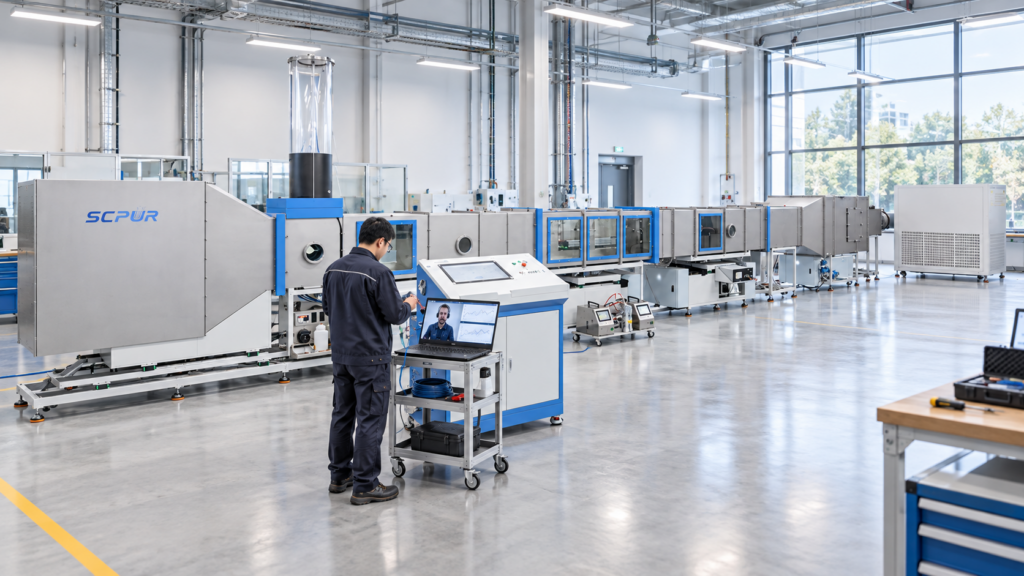
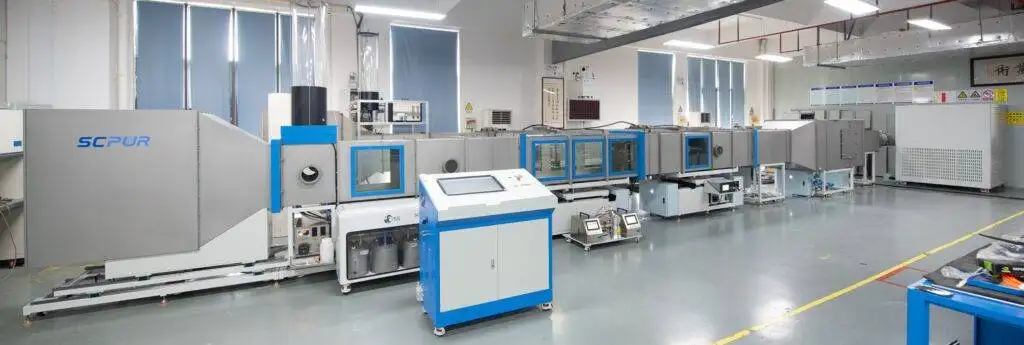
Recommended Test System:SC-16890 General Ventilation Air Filter Test System