HEPA & ULPA Filter Testing & Validation for Cleanroom
Reliable leak detection and efficiency testing for HEPA and ULPA filters, compliant with EN 1822 and ISO 29463.Designed for stable, repeatable results in real production environments.
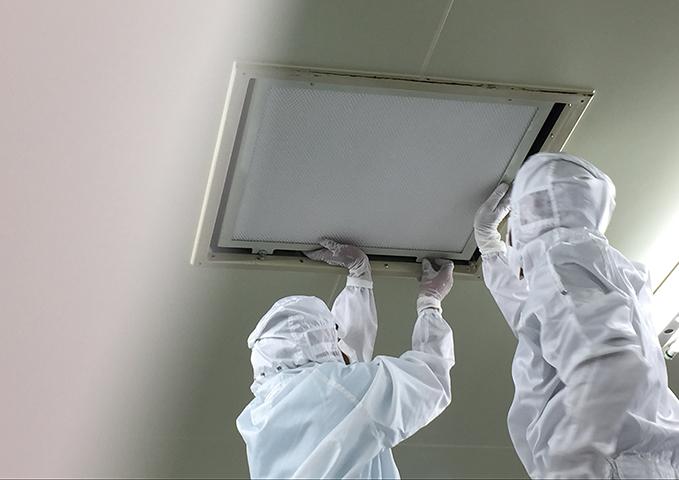
From cleanroom validation to factory quality control, testing results must be accurate, consistent, and traceable.
HEPA / ULPA Filter Efficiency and Leak Testing
Cleanroom operators and filter manufacturers need to ensure two things:required cleanliness performance and zero leakage in every filter unit.This requires reliable scanning and testing procedures in accordance with EN 1822 and ISO 29463.
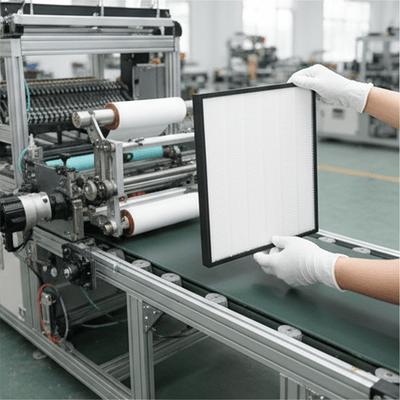
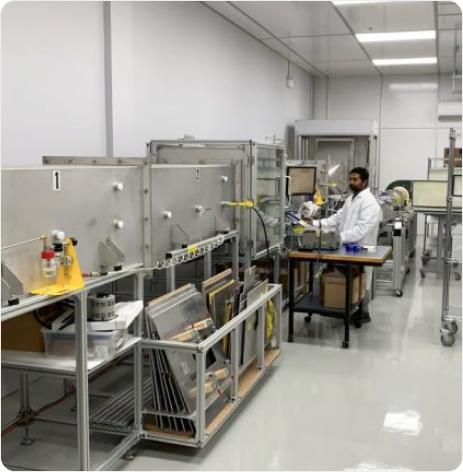
SCPUR focuses on bringing laboratory-level testing into real production environments.Our systems support high-speed automated scanning for standard filters, as well as customized solutions for complex geometries.
The goal is simple: stable operation and consistent, reliable results that support GMP requirements.
From Manual Scanning Bottlenecks to Automated Production Testing
Manual inspection cannot keep up with modern production.Automation is not just about speed — it is about consistency and reliability.
Reliable filter testing in production depends on three key factors: throughput, coverage, and data traceability.
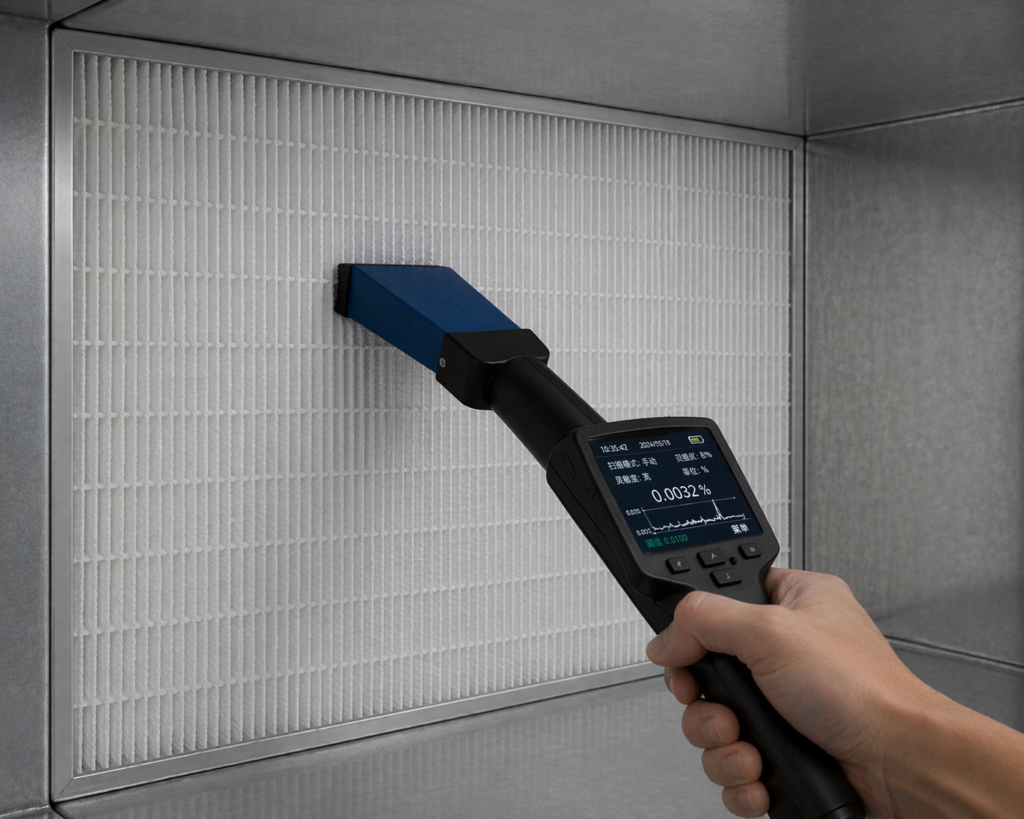
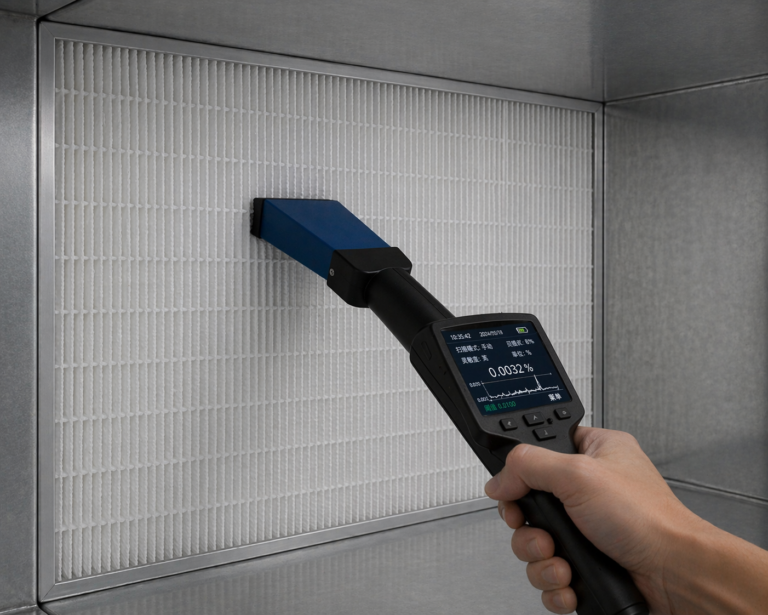
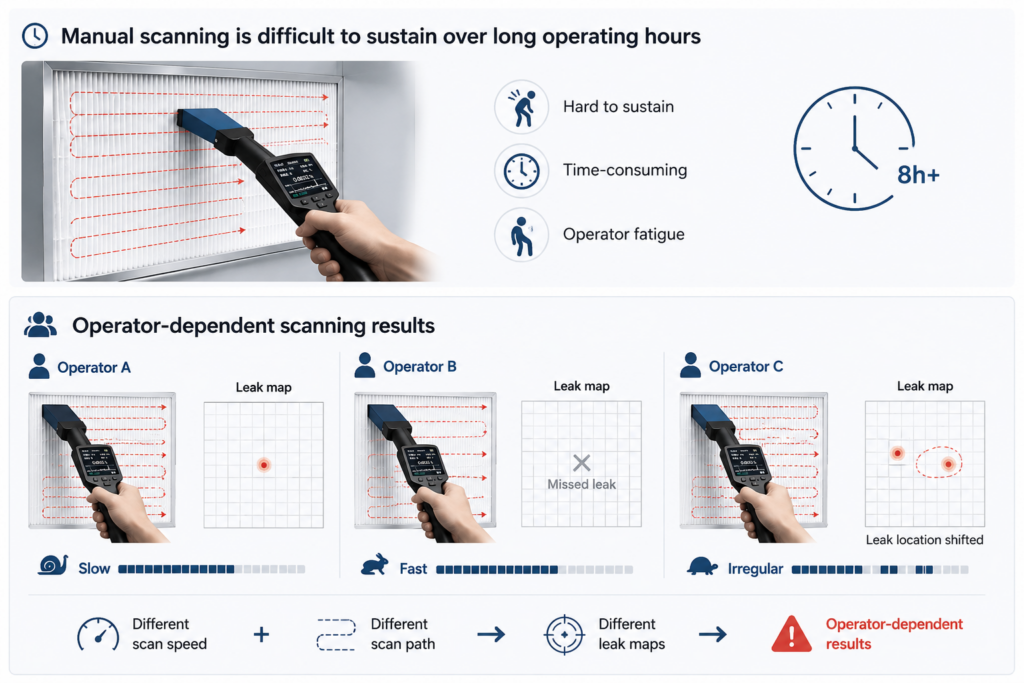
Manual inspection is difficult to sustain over long operating hours and cannot keep pace with modern production lines.
It also introduces variability between operators, making consistent quality control difficult.
High-Speed Automated Filter Scanning:
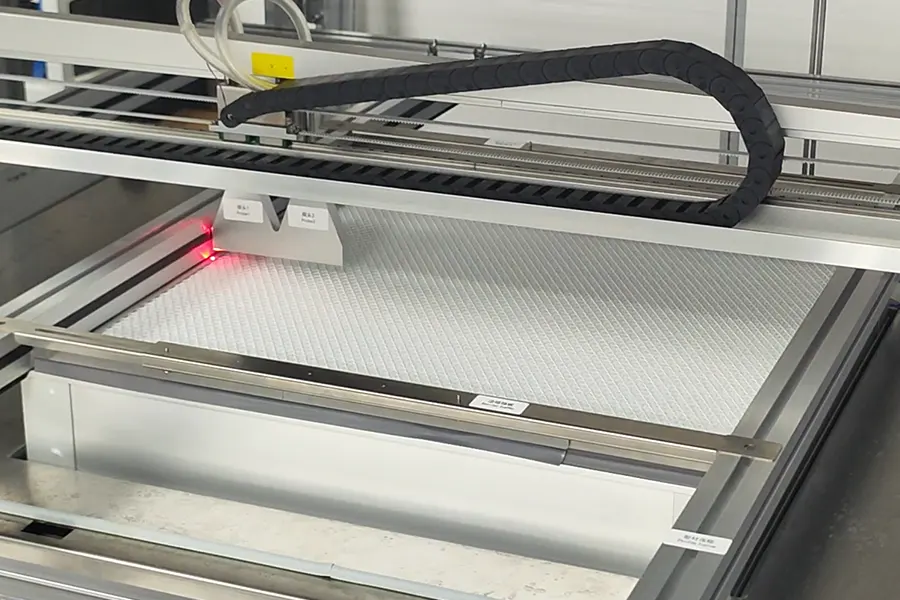
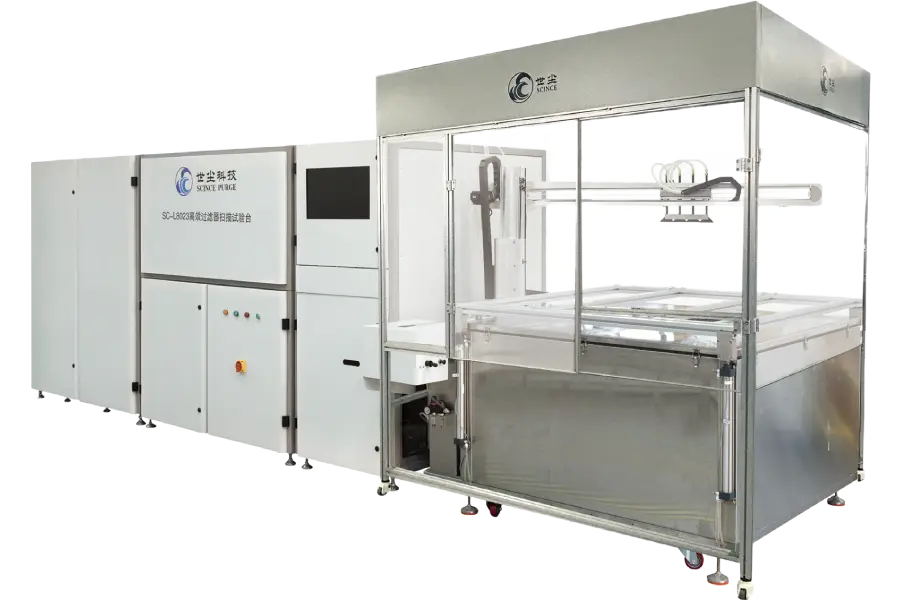
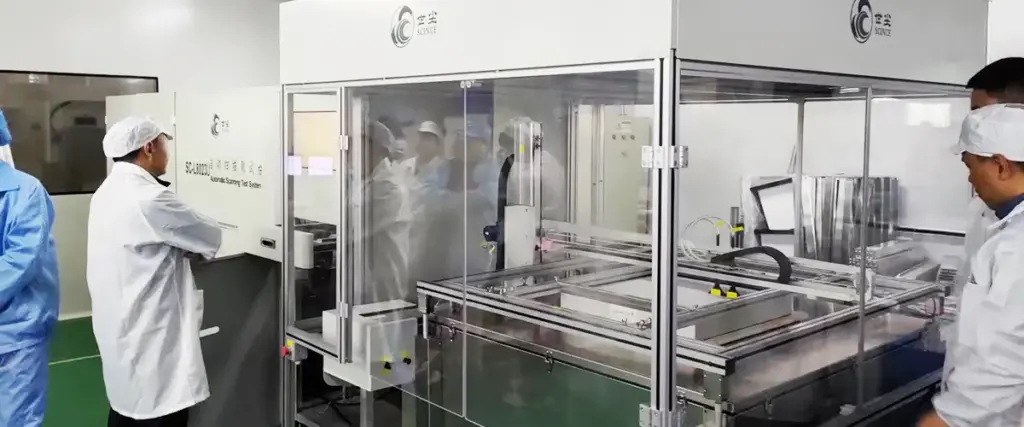
Our automated scanning system delivers consistent inspection results at production speed.
With controlled motion and data acquisition, every filter is tested under the same conditions — ensuring repeatability and reliable quality verification.
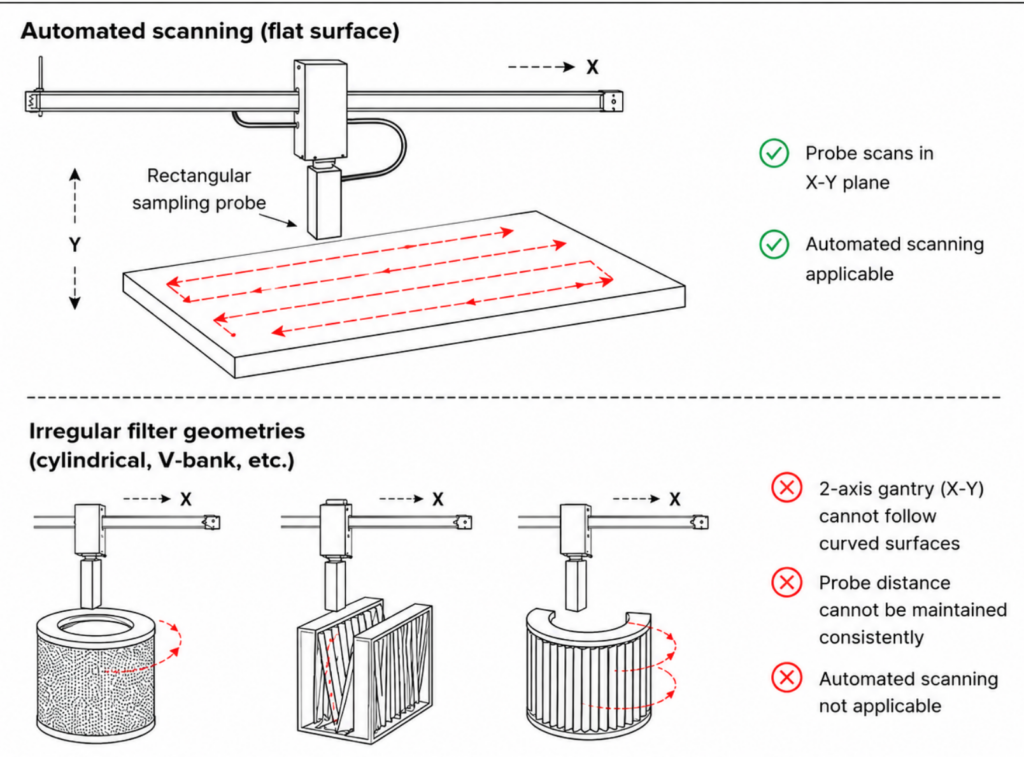
Common automated scanning methods cannot fully cover irregular filter geometries.
For structures such as V-bank or cylindrical filters, probe positioning becomes inconsistent, leading to missed areas and unreliable test results.
Combined Testing Approach for Irregular Filter Structures
For irregular filter geometries, a single method is often not sufficient.
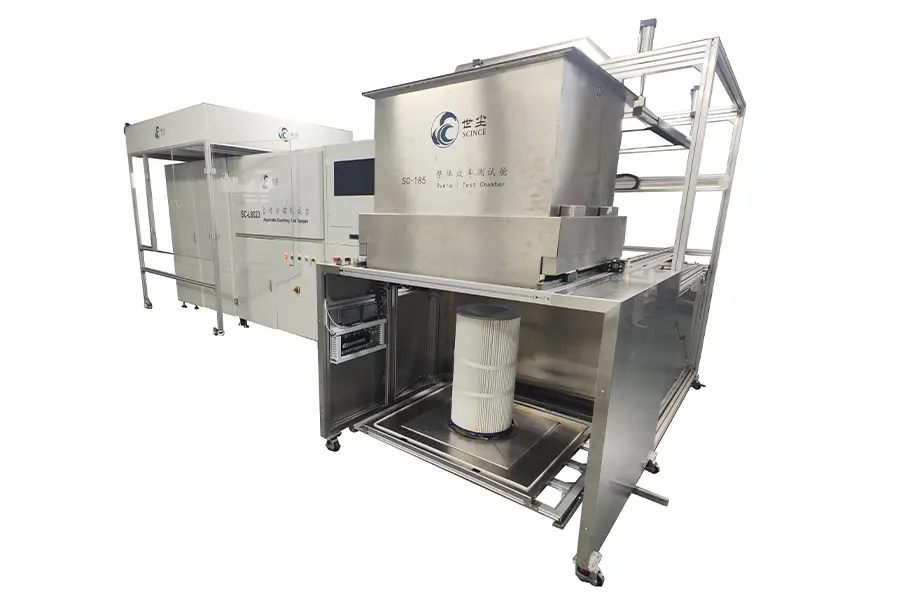
Our solution combines integral testing with manual scanning to ensure full coverage of complex areas.This approach maintains the reliability of automated testing while allowing flexible inspection where automated scanning is not applicable.
Manual inspection is difficult to sustain over long operating hours and cannot keep pace with modern production lines.
It also introduces variability between operators, making consistent quality control difficult.
Digital Data and Traceable Testing Results
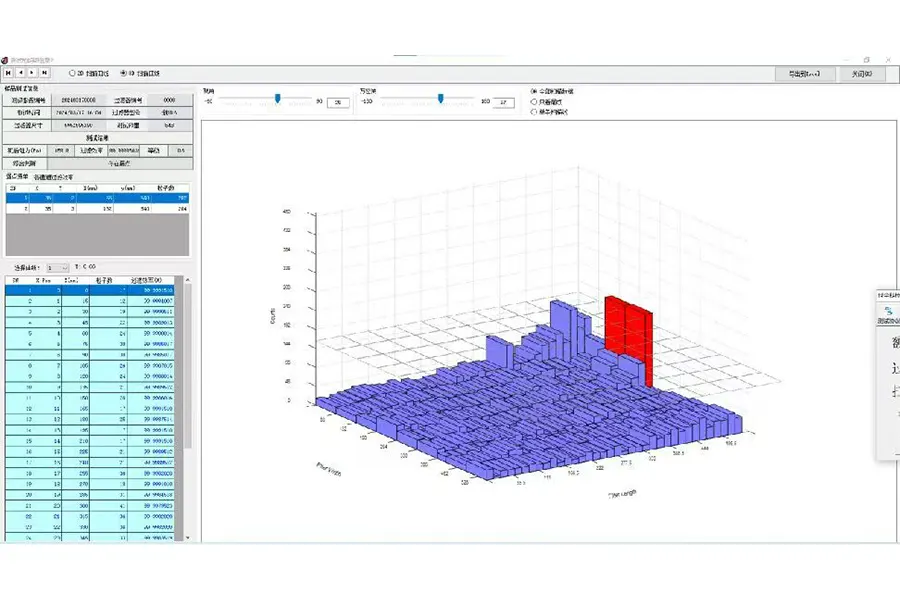
Our software automatically records all test data and generates visualized results, including 2D and 3D leak distribution maps.
Each test is fully traceable, enabling efficient review, comparison, and verification across production batches.
This creates a reliable data foundation for quality control and long-term process analysis.
Integrated HEPA & ULPA Filter Testing for Production
This system is designed for HEPA & ULPA (H13–U17) filter validation in production and R&D environments.
It integrates automated scanning with MPPS efficiency testing, enabling comprehensive verification of filter performance.
With controlled testing conditions and automated data acquisition, the system ensures consistent, repeatable results with full data traceability.
For irregular filter geometries, the system supports combined testing approaches, including manual scanning where needed to ensure complete coverage.
Where Our Testing Systems Are Used
Our systems are used by filter manufacturers, cleanroom suppliers, and laboratories requiring reliable performance verification.
HEPA / ULPA Filter Manufacturing
Automated efficiency and leak testing for high-throughput production of HEPA and ULPA filters.
Cleanroom Filter Suppliers
Verification of filter performance for cleanroom applications requiring consistent air cleanliness levels.
Filtration R&D and Product Development
Flexible testing platforms for filter design validation and MPPS efficiency evaluation.
Independent Testing Laboratories
Configurable testing systems for certification and third-party performance verification.
From oil-thread inspection to automated scan testing
A manufacturer of H13/H14 HEPA filters supplying pharmaceutical and semiconductor cleanroom markets faced increasing quality control bottlenecks. By introducing automated scanning equipment, the inspection process moved from manual leak checking to standardized quantitative testing, improving consistency and production efficiency.
The Challenge
Limitations of Traditional Leak Testing
Traditional oil-thread or DOP leak tests are primarily designed to detect filter integrity defects.
However, these methods focus only on leak detection and do not provide broader performance evaluation such as filtration efficiency characterization or pressure drop monitoring.
As a result, manufacturers often require multiple separate test systems to fully verify filter performance.
Limited Diagnostic Information:
Traditional DOP inspection often focuses on pass/fail judgement and provides limited structured defect data, making systematic repair management and quality traceability difficult.
Our Solution
Automated Quantitative Scanning:Robotic XYZ-axis scanning performs consistent downstream particle sampling, enabling quantitative leak detection with high repeatability.
Defect Mapping and Repair Verification:Precise leak location mapping supports a structured Detect–Repair–Verify workflow, improving repair efficiency and quality consistency.
Integrated Performance Verification
Modern automated testing systems combine leak detection with airflow control, pressure drop monitoring, and particle counting, enabling a more complete and traceable evaluation of filter performance.
“Reliable quality control requires more than leak detection. Quantitative scanning enables defects to be located, repaired, and verified through a consistent and traceable testing process.”
Full Life Cycle Support Beyond Hardware
Custom Engineering & Integration
We adapt software interfaces, test fixtures, and system configurations to integrate seamlessly with your production line and facility layout.

Professional System Commissioning
Our engineers support installation, system commissioning, and operator training to ensure reliable and efficient system operation from day one.
Calibration and Maintenance Support
Regular calibration services and spare parts support help maintain measurement accuracy, system reliability, and long-term operational stability.