Understanding EN 1822 HEPA and ULPA Filter Testing

The European Standard for HEPA & ULPA Filter Evaluation.
1822

Overview of the EN 1822 Standard

EN 1822 is a European standard series for the classification and performance testing of high-efficiency air filters. It applies to EPA, HEPA and ULPA filters used in ventilation, air-conditioning and technical processes, including cleanroom and pharmaceutical applications.

The standard evaluates performance at the most penetrating particle size, or MPPS. It should not be described as a general standard for ordinary residential or commercial HVAC filters, and it is not the same as an installed cleanroom integrity test.

Industrial Ventilation Systems

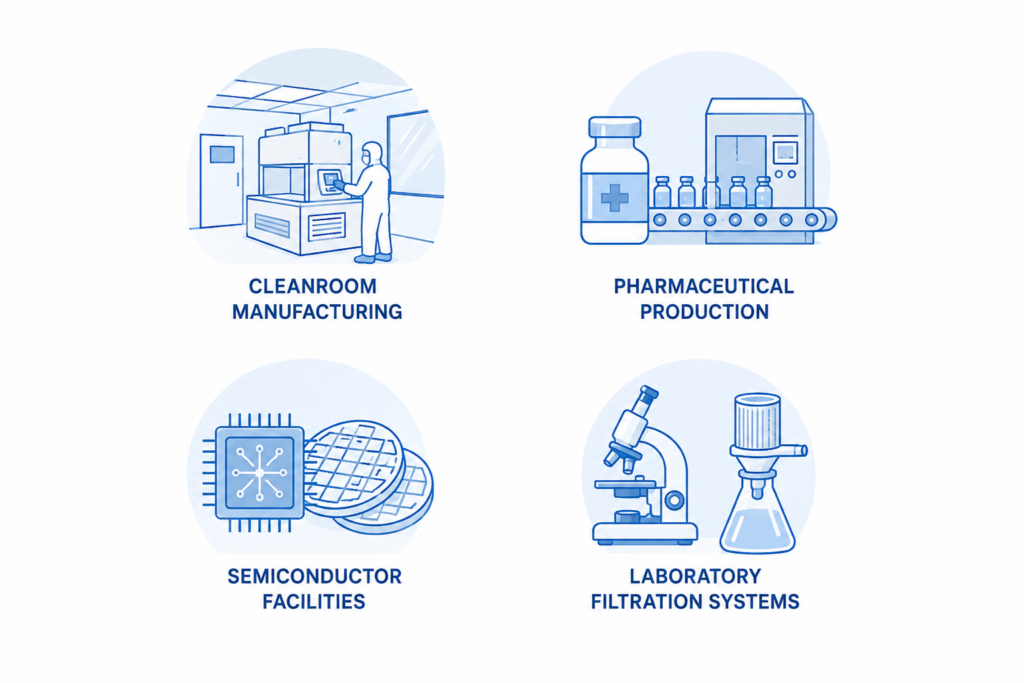
Cleanroom Manufacturing

医疗机构

Pharmaceutical Production

HEPA Filtration for Semiconductor Manufacturing

Semiconductor Facilities

显微镜

Laboratory Filtration Systems

How EN 1822 Testing Works

MPPS Efficiency Measurement
  1. Determine the relevant MPPS performance of the filter medium or use the MPPS information required by the test programme.
  2. Install the finished filter in a sealed test rig and establish the specified airflow.
  3. Generate a stable upstream aerosol and confirm the concentration and sampling conditions.
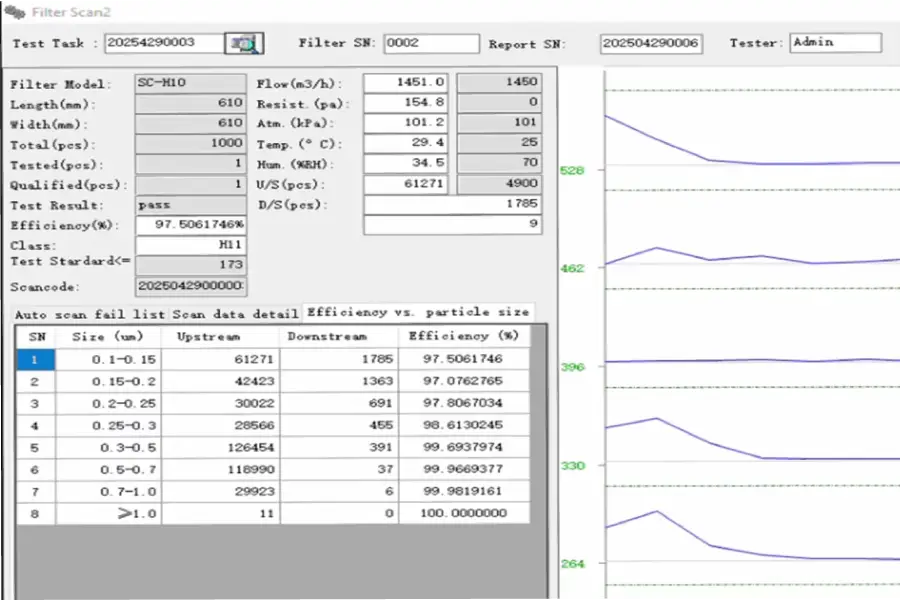
  1. Measure the integral efficiency or penetration of the complete filter at the required particle size or MPPS.
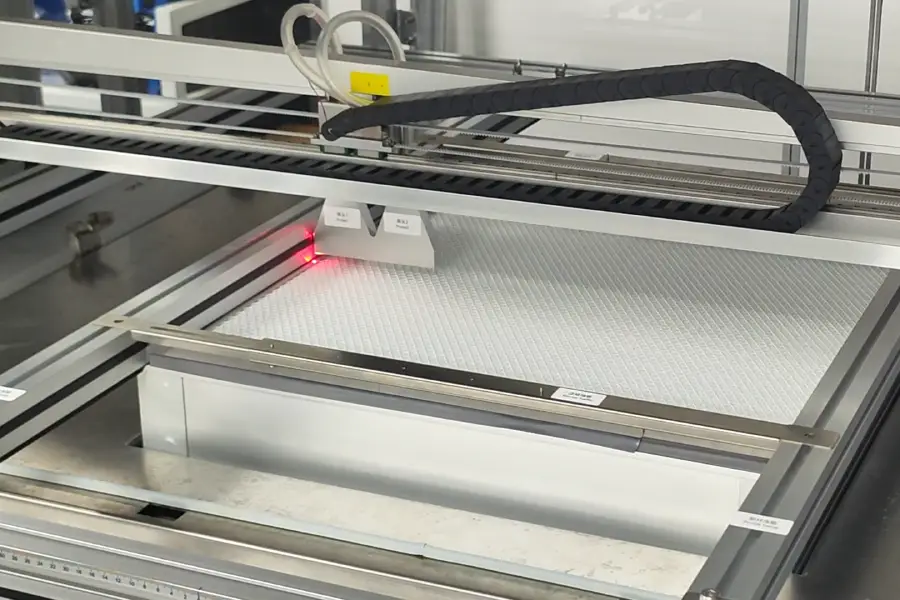
  2. For applicable H and U classes, scan the downstream filter face and relevant sealant areas to identify excessive local penetration.
  3. Record pressure drop, test conditions, integral results, local results and the final classification.
Leak Detection Test

Filter Groups and Classes

EN 1822 separates high-efficiency filters into three groups. The required evidence becomes more demanding as penetration decreases.
Group Classes Classification evidence
EPA E10-E12 Integral efficiency at MPPS. Local leak testing is not required for classification.
HEPA H13-H14 Integral efficiency and the applicable local leakage requirement.
ULPA U15-U17 Stricter integral efficiency and local leakage requirements at MPPS.

A report should identify the class, nominal airflow, test aerosol, MPPS, integral efficiency or penetration and the leak-test method used. Class names should not be converted casually from another standard or from a fixed 0.3 micrometre result.

Integral Efficiency and Local Leakage

Integral efficiency is the average performance of the complete filter. Local leak scanning checks individual positions across the downstream surface. A filter can satisfy its integral efficiency requirement and still fail the local limit because of a pinhole, damaged medium, sealant discontinuity or frame-related defect. These results must therefore remain separate in the report. Group E filters are classified by integral efficiency, while applicable H and U classes also require local leakage evidence.
Aerosol Generator

Aerosol Generator

Upstream Sampling System

Upstream Sampling System

Particle Counter

Particle Counter

Scanning Probe For Leak Detection

Scanning Probe For Leak Detection

Controlled Airflow System

Controlled Airflow System

Designed for Real World Operation

Factory Testing and Installed Integrity

EN 1822 factory testing evaluates an individual filter element before installation. After the filter is mounted in a ceiling, housing or air-handling system, an installed integrity test also checks the gasket, gel seal, frame and possible bypass paths. Installed-system verification uses a separate project or cleanroom test procedure and does not replace the manufacturer’s filter classification.

Selecting the Test Equipment

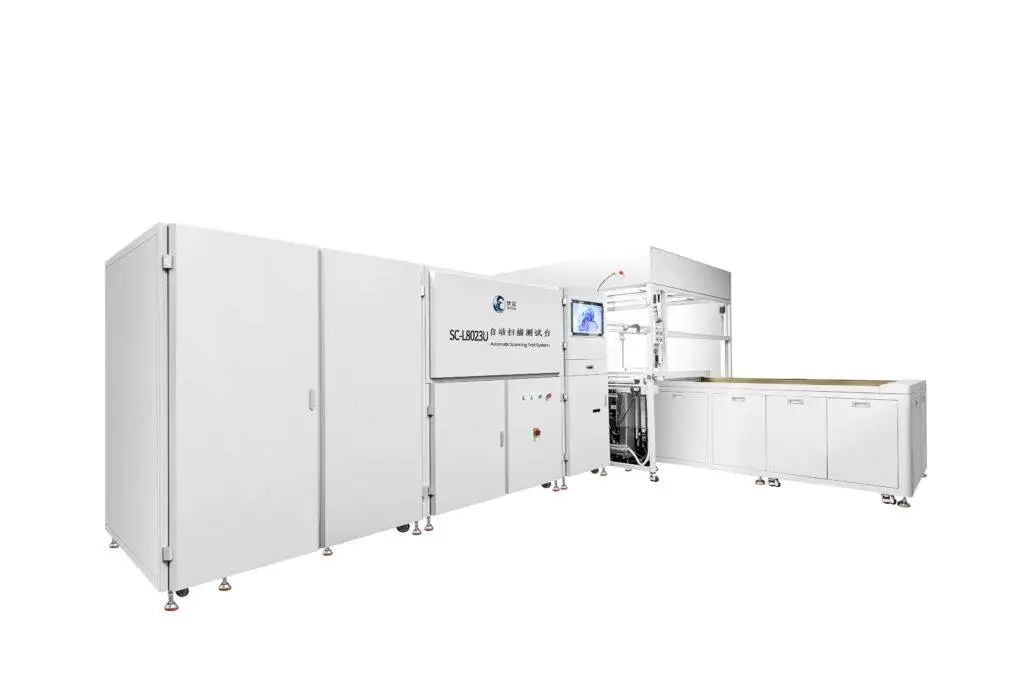
A complete configuration may require controlled airflow, aerosol generation, upstream reference sampling, a detector with sufficient particle-size range and sensitivity, automatic scanning motion, leak mapping and report generation. The correct detector and aerosol arrangement depend on the filter class and the lowest penetration that must be measured.

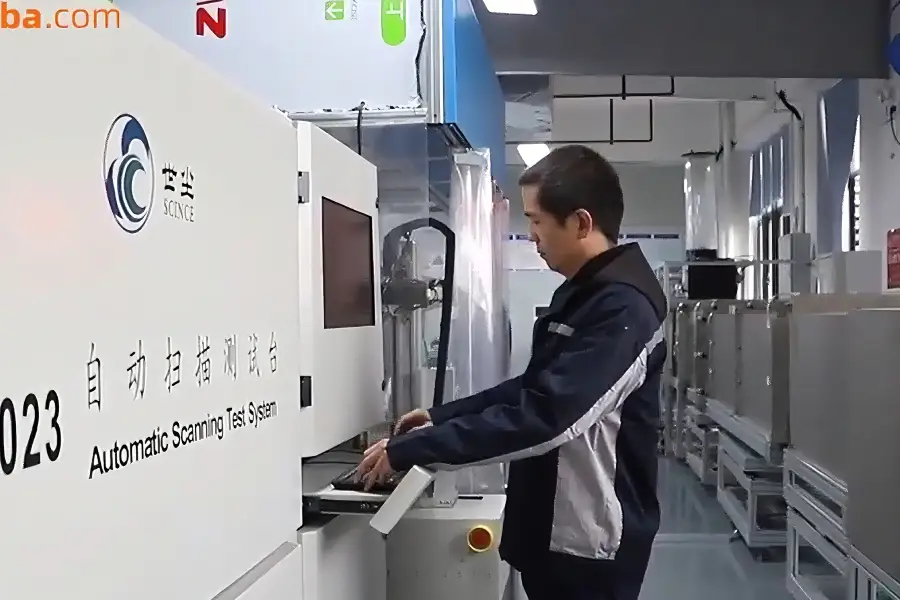
SCPUR configures the SC-L8023 and SC-L8023U systems according to filter class, dimensions, airflow, particle range, scanning arrangement and production throughput.

Tell us the filter class, size, rated airflow and required EN 1822 test result. Our engineering team will help define the appropriate system configuration.
8023整体含自动上料2026

Discuss Your Filtration Testing Requirements

Tell us your filter type, testing standard, and application scenario.

Our engineers will help you identify the most suitable testing solution — from standard systems to fully customized platforms.

Validate Your Quality with Global Standard Testing Systems

Our experts are ready to engineer a custom solution for you. Tell us about your project, and let’s verify your quality with precision and speed.

Custom R&D & Tailored Solutions

Custom R&D & Tailored Solutions

Compliance with Global Standards

Compliance with Global Standards

100% Self developed Software System

100% Self-developed Software System

Remote Calibration & Global Support

Remote Calibration & Global Support

Contact Us

*We respect your confidentiality and all information is protected.

Before You Go...

Unsure which international standard applies to your project? Speak with our senior engineers for a personalized technical assessment based on our 10-year industry expertise.

*We respect your confidentiality and all information is protected.