


High-Efficiency Filters and Filter Media for Removing Particles in Air
Understanding the ISO 29463 standard for evaluating HEPA and ULPA filters.
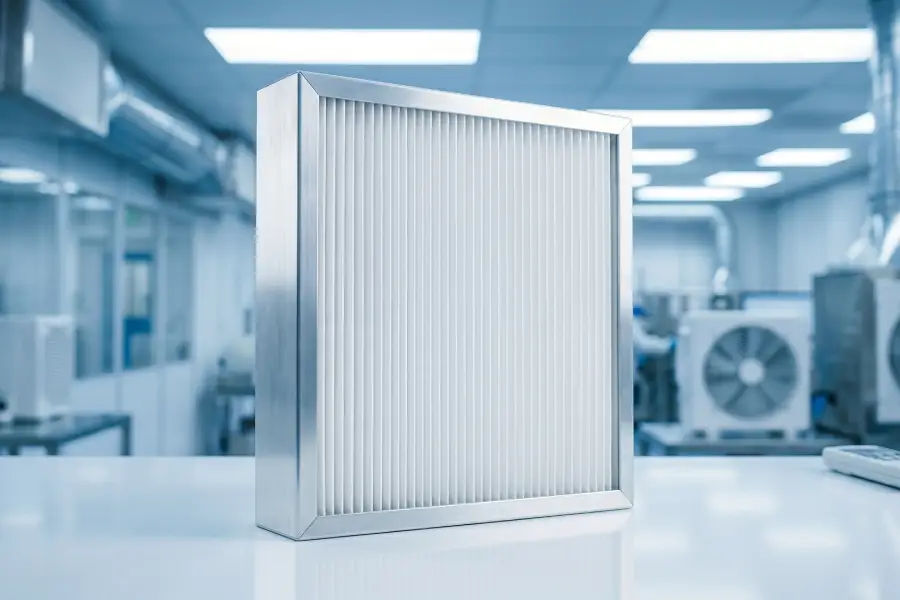
Overview of the ISO 29463 Standard
ISO 29463 is an international standard series for classifying and testing high-efficiency filters and filter media used to remove particles from air. It covers filter-media testing, overall filter efficiency, local leak testing, classification and marking.
The standard is used for HEPA and ULPA filters in cleanrooms, pharmaceutical production, semiconductor manufacturing, ventilation systems, controlled environments and other applications requiring high-efficiency particle filtration.

Semiconductor Manufacturing

Pharmaceutical Production

Cleanroom Environments
Key Test Methods in ISO 29463
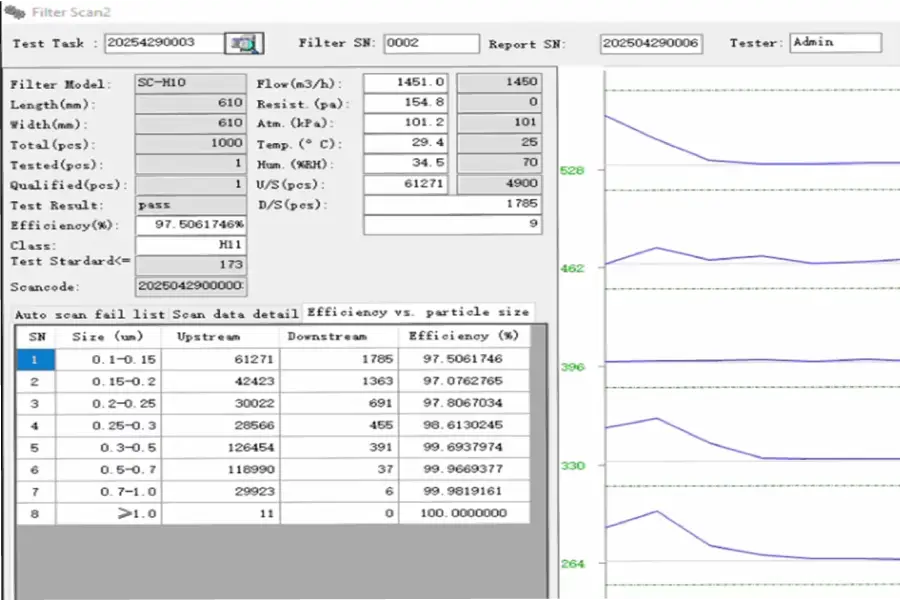
Key Testing Principle: MPPS
MPPS means the most penetrating particle size—the particle size or size range at which the filter media shows its highest penetration, or lowest filtration efficiency, under the specified test conditions.
MPPS is not a fixed value such as 0.3 μm or 0.12 μm for every filter. It depends on the filter media, face velocity, aerosol and test conditions. ISO 29463 therefore uses MPPS-based measurements rather than assigning one universal test particle size to every HEPA or ULPA filter.
Flat-sheet filter media are tested to determine fractional efficiency and identify the MPPS under controlled face-velocity conditions. Media-test results cannot replace testing of the completed filter.
Overall Filter Efficiency
Overall efficiency represents the average penetration of the complete filter at the specified airflow. It evaluates the finished filter as a whole but does not identify the exact location of a small defect.
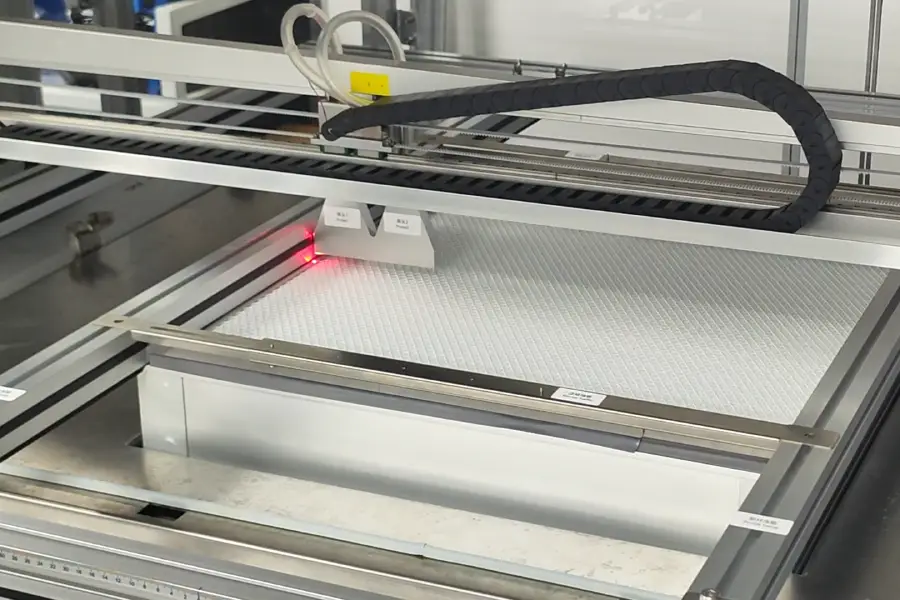
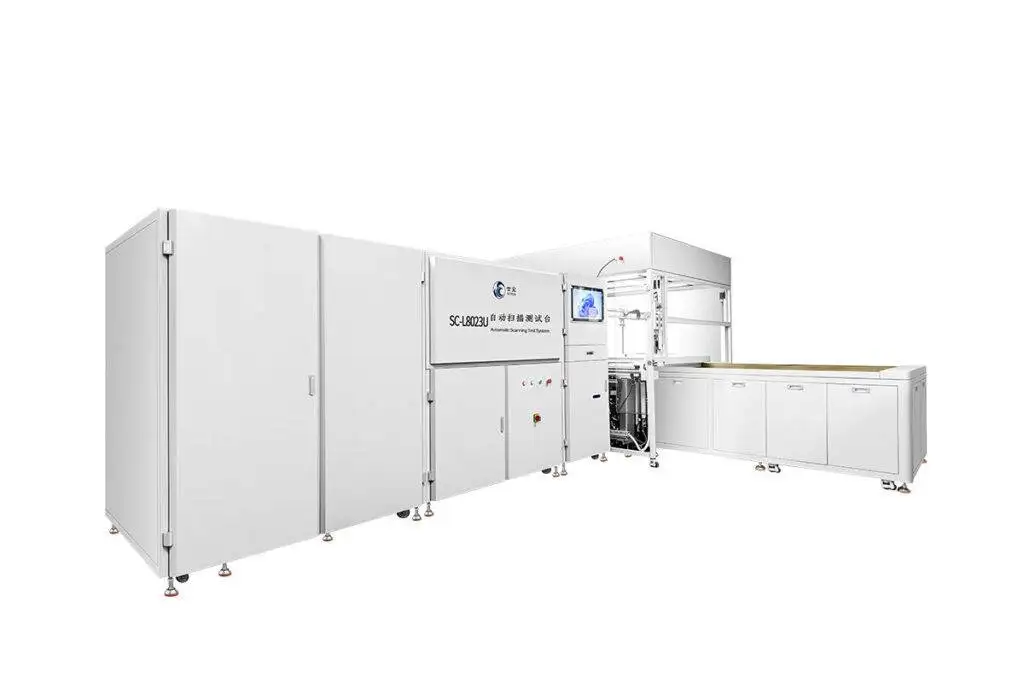
A scan test measures local downstream penetration while the probe moves across the filter face and relevant sealing areas. It is used to locate defects that may not be apparent from the overall efficiency result.
Leak Detection and Integrity Testing
ISO 29463 includes methods for evaluating local leakage in applicable filter classes and constructions. The scan method moves a sampling probe across the downstream filter surface to identify areas of excessive local penetration.
The required procedure depends on the filter class, construction and applicable part of the standard. Automatic scanning should therefore not be presented as the only test required for every high-efficiency filter.
HEPA and ULPA Filter Classification Categories
Based on measured efficiency, filters are classified into different performance categories. Typical classification ranges include:
| Filter Group | General Description |
|---|---|
| EPA | Efficient particulate air filters |
| HEPA | High-efficiency particulate air filters |
| ULPA | Ultra-low penetration air filters |
The specific ISO class is determined from the applicable integral and local efficiency or penetration requirements. Class limits should be taken from the specified edition of ISO 29463-1 rather than inferred from the general EPA, HEPA or ULPA group name.
The classification reflects the filter’s ability to remove airborne particles under standardized testing conditions.
Structure and Parts of the ISO 29463 Standard
ISO 29463 is organized into several parts covering classification methods, test procedures, and filter integrity verification. Typical structure includes:
Part | Scope |
ISO 29463-1 | Classification, performance testing and marking |
ISO 29463-2 | Aerosol production, measuring equipment and particle counting methods |
ISO 29463-3 | Flat sheet filter media testing |
ISO 29463-4 | Determination of leakage and efficiency |
ISO 29463-5 | Filter element efficiency testing |
These parts collectively define how HEPA and ULPA filters should be tested and classified.
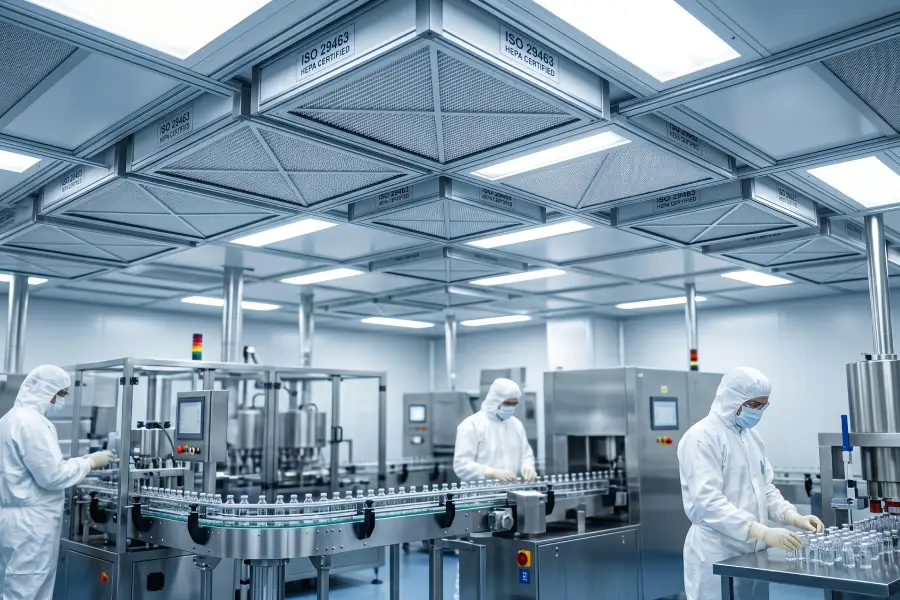
Application in High-Efficiency Filtration
Reliable and repeatable testing conditions are essential to ensure that efficiency and classification results reflect the actual performance of high-efficiency filters. ISO 29463 testing is essential for:
- Semiconductor Cleanrooms
- Pharmaceutical Manufacturing Facilities
- Biotechnology Laboratories
- Hospital Operating Rooms and Isolation Wards
- Precision Manufacturing Environments
ISO 29463 Testing Solutions
ISO 29463 provides a globally recognized framework for evaluating HEPA and ULPA filter performance. By defining standardized procedures for aerosol generation, particle measurement, and leakage detection, the standard ensures that filter performance results are consistent, comparable, and reliable across laboratories worldwide.
The required equipment depends on the test object and acceptance task:
- Filter media: fractional efficiency and MPPS measurement
- Complete filters: overall efficiency and airflow resistance
- Factory leak testing: controlled quantitative scanning
- Installed filters: on-site integrity testing of the filter and installation seal
These functions should not be treated as interchangeable simply because they all use an aerosol challenge and downstream measurement.
Relationship to Other Standards
ISO 29463 is closely related to several other filtration standards.
-
StandardEN1822
-
ApplicationEuropean HEPA/ULPA classification
-
StandardISO16890
-
ApplicationGeneral ventilation air filters
-
StandardASHRAE 52.2
-
ApplicationNorth American HVAC filtration testing
While ISO 16890 and ASHRAE 52.2 focus on general ventilation filters, ISO 29463 specifically addresses high-efficiency cleanroom filtration.
Discuss Your Filtration Testing Requirements
Tell us your filter type, testing standard, and application scenario.
Our engineers will help you identify the most suitable testing solution — from standard systems to fully customized platforms.