


Wysokowydajne filtry i media filtracyjne do usuwania cząstek z powietrza
Zrozumienie ISO 29463 standard oceny filtrów HEPA i ULPA.
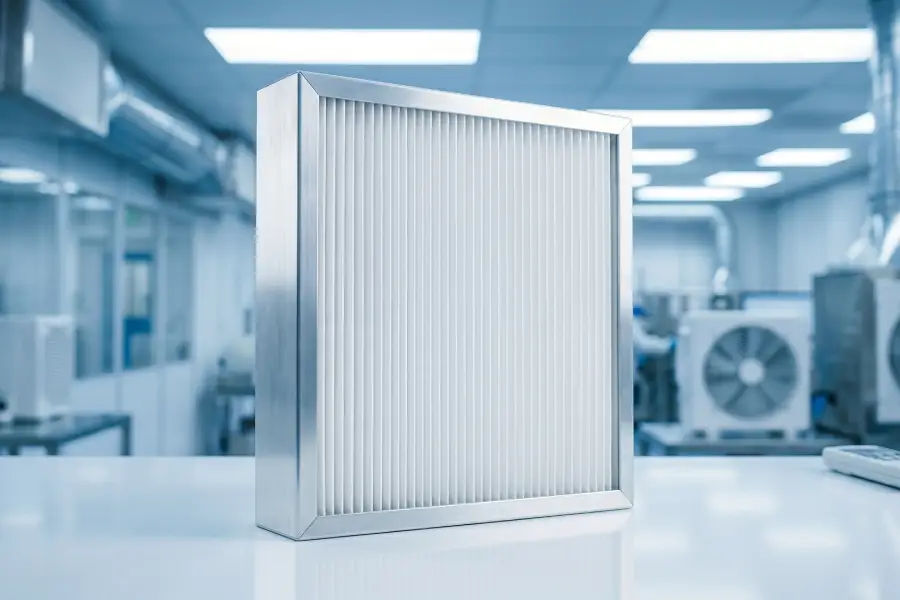
Przegląd ISO 29463 Standard
ISO 29463 is an international standard series for classifying and testing high-efficiency filters and filter media used to remove particles from air. It covers filter-media testing, overall filter efficiency, local leak testing, classification and marking.
The standard is used for HEPA and ULPA filters in cleanrooms, produkcja farmaceutyczna, semiconductor manufacturing, ventilation systems, controlled environments and other applications requiring high-efficiency particle filtration.

Produkcja półprzewodników

Produkcja farmaceutyczna

Środowiska pomieszczeń czystych
Kluczowe metody testowania w ISO 29463
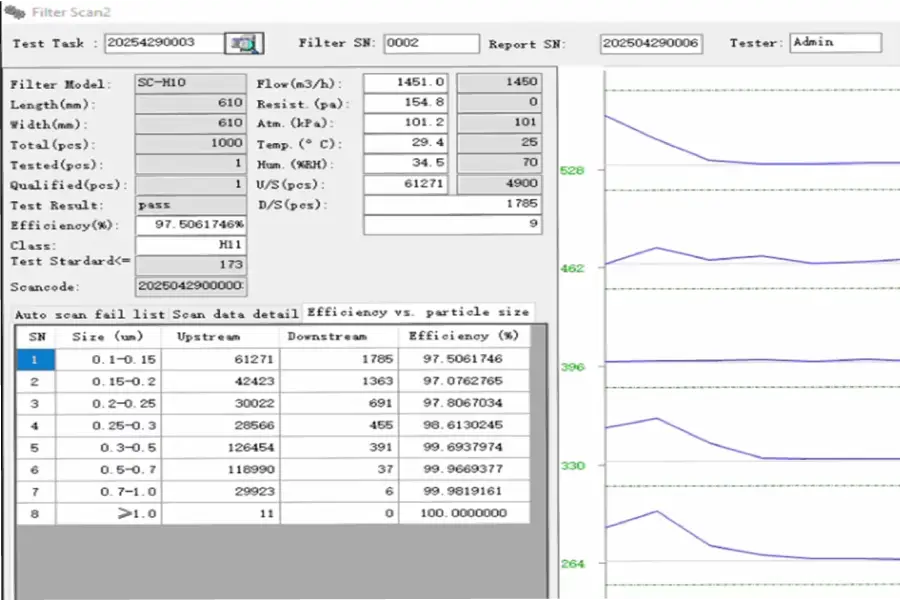
Zasada testowania klucza: MPPS
MPPS means the most penetrating particle size—the particle size or size range at which the filter media shows its highest penetration, or lowest filtration efficiency, under the specified test conditions.
MPPS is not a fixed value such as 0.3 μm or 0.12 μm for every filter. It depends on the filter media, face velocity, aerosol and test conditions. ISO 29463 therefore uses MPPS-based measurements rather than assigning one universal test particle size to every HEPA or ULPA filter.
Testowanie mediów filtracyjnych
Flat-sheet filter media are tested to determine fractional efficiency and identify the MPPS under controlled face-velocity conditions. Media-test results cannot replace testing of the completed filter.
Overall Filter Efficiency
Overall efficiency represents the average penetration of the complete filter at the specified airflow. It evaluates the finished filter as a whole but does not identify the exact location of a small defect.
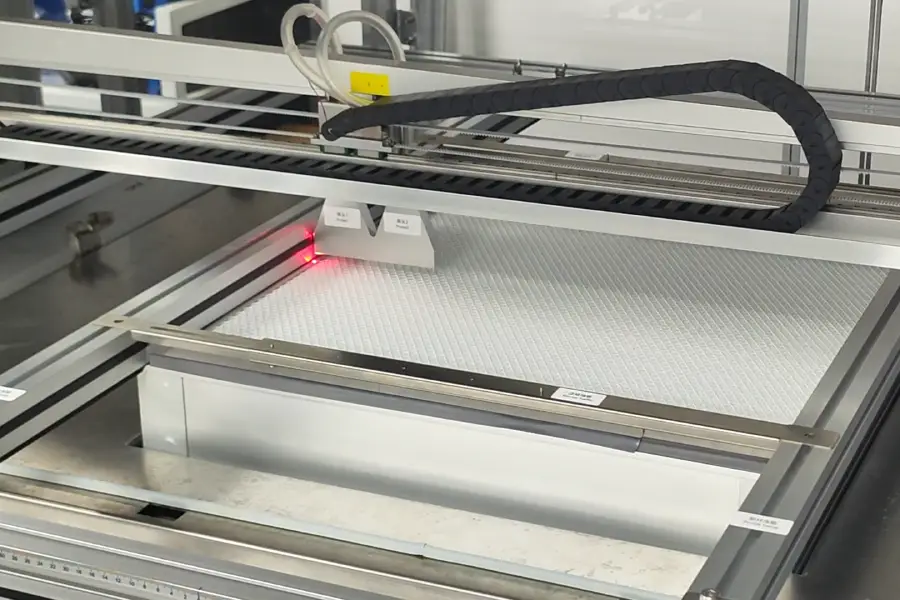
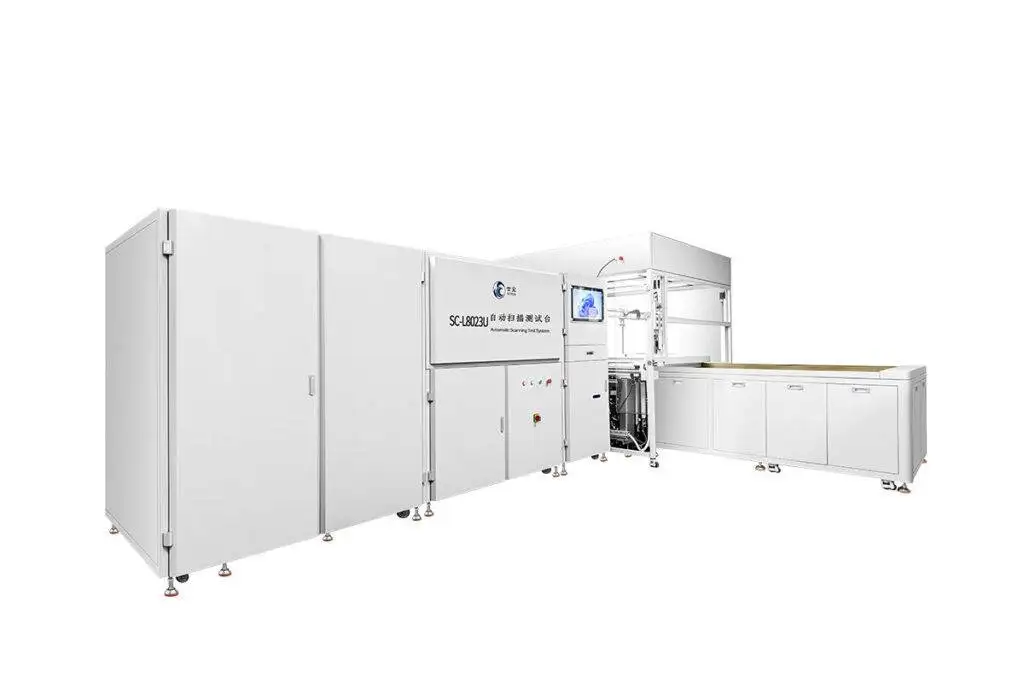
A scan test measures local downstream penetration while the probe moves across the filter face and relevant sealing areas. It is used to locate defects that may not be apparent from the overall efficiency result.
Wykrywanie wycieków i testowanie integralności
ISO 29463 includes methods for evaluating local leakage in applicable filter classes and constructions. The scan method moves a sampling probe across the downstream filter surface to identify areas of excessive local penetration.
The required procedure depends on the filter class, construction and applicable part of the standard. Automatic scanning should therefore not be presented as the only test required for every high-efficiency filter.
Kategorie klasyfikacji filtrów HEPA i ULPA
Na podstawie zmierzonej wydajności, filtry są podzielone na różne kategorie wydajności. Typowe zakresy klasyfikacji obejmują:
| Filter Group | General Description |
|---|---|
| EPA | Wydajne filtry cząstek stałych |
| HEPA | Wysokowydajne filtry cząstek stałych |
| ULPA | Filtry powietrza o bardzo niskiej penetracji |
The specific ISO class is determined from the applicable integral and local efficiency or penetration requirements. Class limits should be taken from the specified edition of ISO 29463-1 rather than inferred from the general EPA, HEPA or ULPA group name.
Klasyfikacja odzwierciedla zdolność filtra do usuwania cząstek unoszących się w powietrzu w standardowych warunkach testowych.
Struktura i części ISO 29463 Standard
ISO 29463 jest podzielony na kilka części obejmujących metody klasyfikacji, procedury testowe, i weryfikację integralności filtra. Typowa struktura obejmuje:
Część | Zakres |
ISO 29463-1 | Klasyfikacja, testowanie i znakowanie wydajności |
ISO 29463-2 | Produkcja aerozoli, measuring equipment and particle counting methods |
ISO 29463-3 | Testowanie płaskich mediów filtracyjnych |
ISO 29463-4 | Oznaczanie wycieków i sprawności |
ISO 29463-5 | Badanie wydajności elementu filtrującego |
Części te wspólnie definiują, w jaki sposób należy testować i klasyfikować filtry HEPA i ULPA.
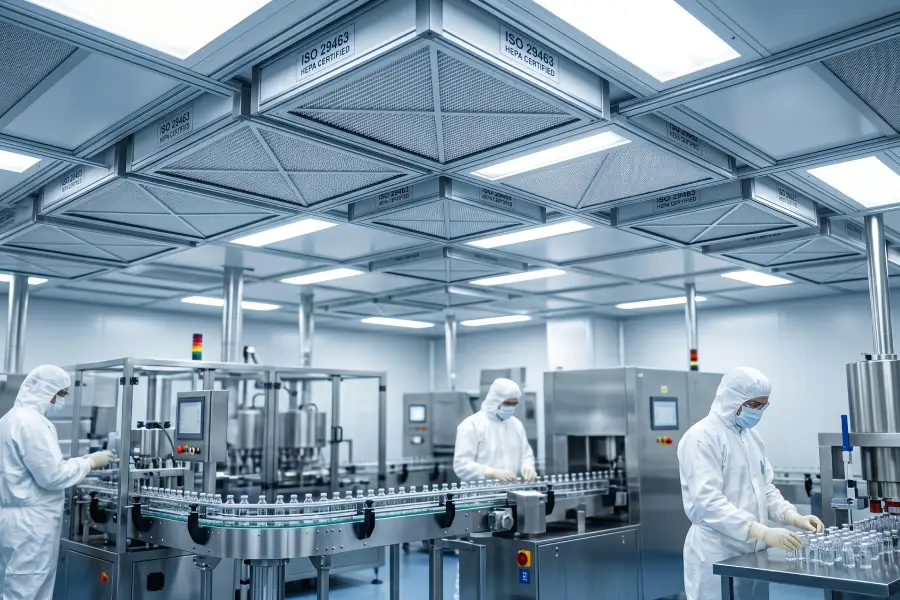
Zastosowanie w filtracji o wysokiej wydajności
Wiarygodne i powtarzalne warunki testowania są niezbędne, aby zapewnić, że wyniki skuteczności i klasyfikacji odzwierciedlają rzeczywistą wydajność filtrów o wysokiej wydajności. ISO 29463 testowanie jest niezbędne:
- Pomieszczenia czyste półprzewodników
- Zakłady produkcyjne farmaceutyczne
- Laboratoria Biotechnologiczne
- Szpitalne sale operacyjne i oddziały izolacyjne
- Precyzyjne środowiska produkcyjne
ISO 29463 Testowanie rozwiązań
ISO 29463 zapewnia uznane na całym świecie ramy oceny wydajności filtrów HEPA i ULPA. Poprzez zdefiniowanie standardowych procedur wytwarzania aerozolu, pomiar cząstek, i wykrywanie wycieków, norma gwarantuje, że wyniki działania filtrów są spójne, porównywalny, i niezawodne we wszystkich laboratoriach na całym świecie.
The required equipment depends on the test object and acceptance task:
- Filtruj media: fractional efficiency and MPPS measurement
- Complete filters: overall efficiency and airflow resistance
- Factory leak testing: controlled quantitative scanning
- Installed filters: on-site integrity testing of the filter and installation seal
These functions should not be treated as interchangeable simply because they all use an aerosol challenge and downstream measurement.
Związek z innymi standardami
ISO 29463 jest ściśle powiązany z kilkoma innymi standardami filtracji.
-
StandardEN1822
-
AplikacjaEuropejska klasyfikacja HEPA/ULPA
-
StandardISO16890
-
AplikacjaOgólne filtry powietrza wentylacyjnego
-
StandardASHRAE 52.2
-
AplikacjaTesty filtracji HVAC w Ameryce Północnej
Podczas gdy ISO 16890 i ASHRAE 52.2 skoncentruj się na ogólnych filtrach wentylacyjnych, ISO 29463 w szczególności dotyczy wysokowydajnej filtracji w pomieszczeniach czystych.
Omów wymagania dotyczące testów filtracji
Podaj nam swój typ filtra, norma testowa, i scenariusz zastosowania.
Nasi inżynierowie pomogą Ci wybrać najodpowiedniejsze rozwiązanie testowe — od systemów standardowych po w pełni dostosowane platformy.