


Filtri ad alta efficienza e mezzi filtranti per la rimozione di particelle nell'aria
Comprendere l'ISO 29463 standard per la valutazione dei filtri HEPA e ULPA.
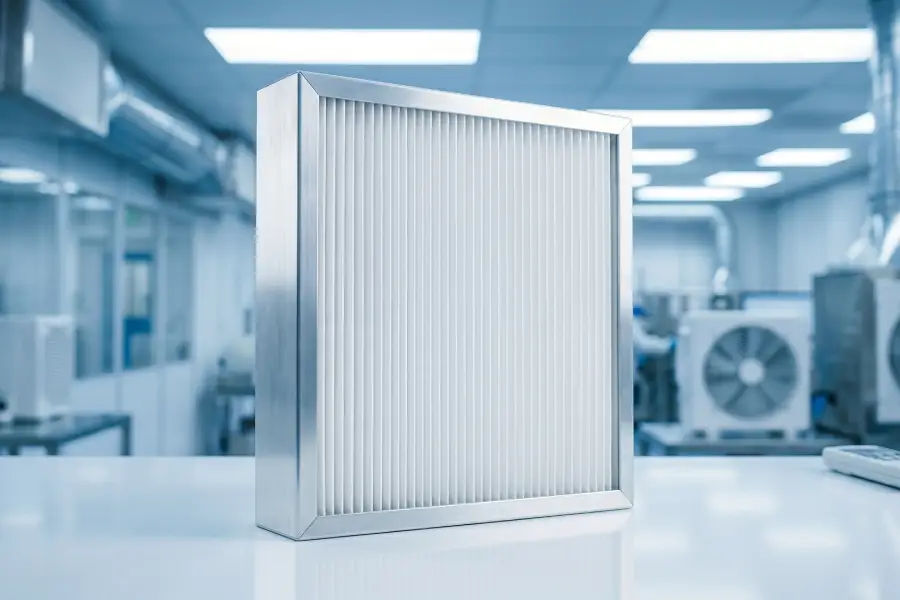
Panoramica dell'ISO 29463 Standard
ISO 29463 is an international standard series for classifying and testing high-efficiency filters and filter media used to remove particles from air. It covers filter-media testing, overall filter efficiency, local leak testing, classification and marking.
The standard is used for HEPA and ULPA filters in cleanrooms, produzione farmaceutica, semiconductor manufacturing, ventilation systems, controlled environments and other applications requiring high-efficiency particle filtration.

Produzione di semiconduttori

Produzione farmaceutica

Ambienti di camere bianche
Metodi di prova chiave in ISO 29463
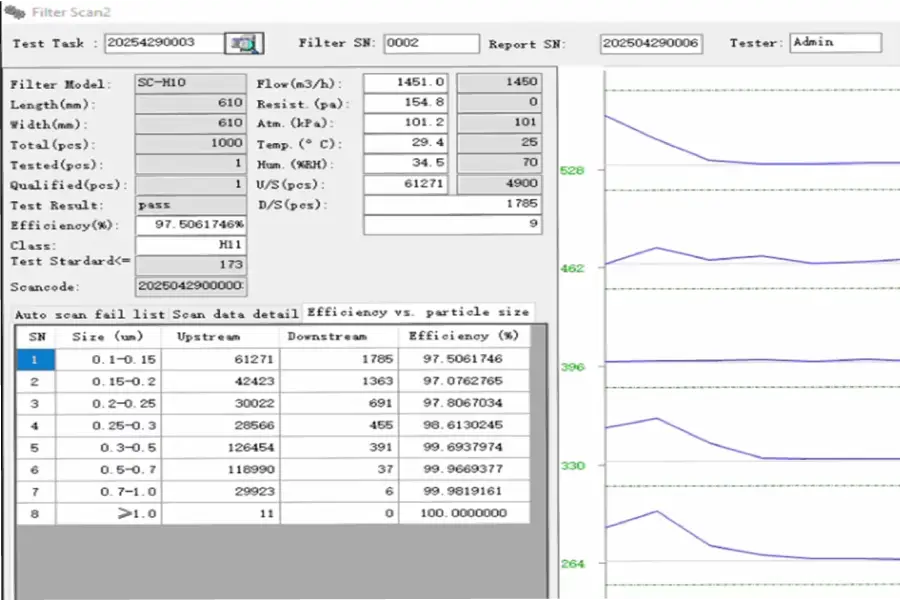
Principio chiave del test: MPPS
MPPS means the most penetrating particle size—the particle size or size range at which the filter media shows its highest penetration, or lowest filtration efficiency, under the specified test conditions.
MPPS is not a fixed value such as 0.3 μm or 0.12 μm for every filter. It depends on the filter media, face velocity, aerosol and test conditions. ISO 29463 therefore uses MPPS-based measurements rather than assigning one universal test particle size to every HEPA or ULPA filter.
Flat-sheet filter media are tested to determine fractional efficiency and identify the MPPS under controlled face-velocity conditions. Media-test results cannot replace testing of the completed filter.
Overall Filter Efficiency
Overall efficiency represents the average penetration of the complete filter at the specified airflow. It evaluates the finished filter as a whole but does not identify the exact location of a small defect.
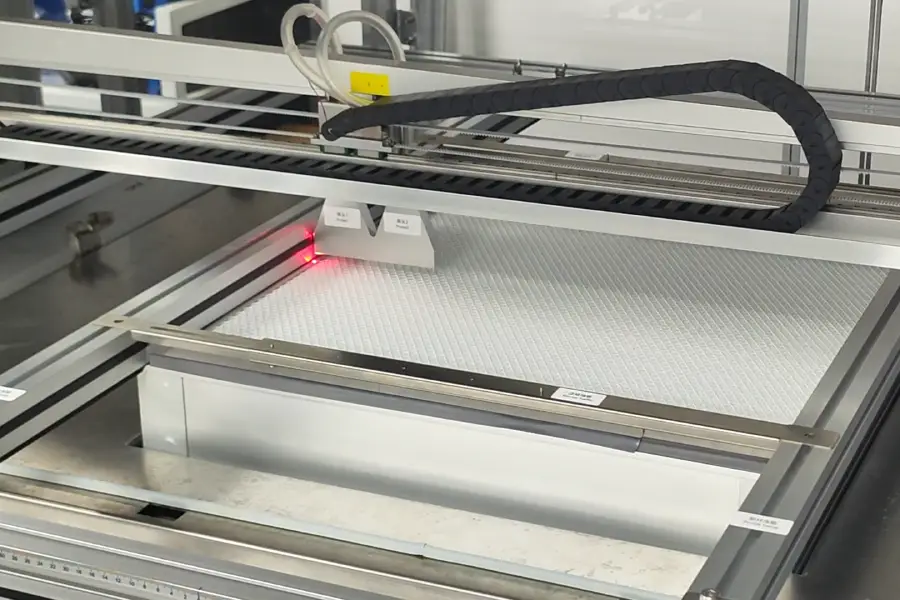
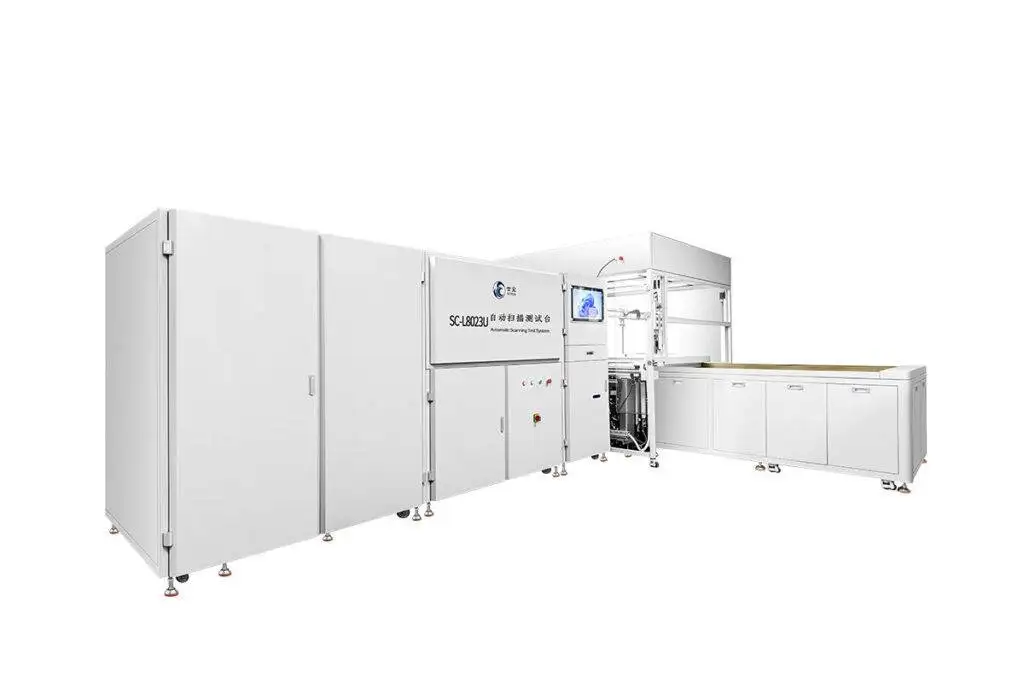
A scan test measures local downstream penetration while the probe moves across the filter face and relevant sealing areas. It is used to locate defects that may not be apparent from the overall efficiency result.
Rilevamento perdite e test di integrità
ISO 29463 includes methods for evaluating local leakage in applicable filter classes and constructions. The scan method moves a sampling probe across the downstream filter surface to identify areas of excessive local penetration.
The required procedure depends on the filter class, construction and applicable part of the standard. Automatic scanning should therefore not be presented as the only test required for every high-efficiency filter.
Categorie di classificazione dei filtri HEPA e ULPA
Basato sull'efficienza misurata, i filtri sono classificati in diverse categorie di prestazioni. Gli intervalli di classificazione tipici includono:
| Filter Group | General Description |
|---|---|
| EPA | Filtri antiparticolato efficienti |
| HEPA | Filtri antiparticolato ad alta efficienza |
| ULPA | Filtri dell'aria a bassissima penetrazione |
The specific ISO class is determined from the applicable integral and local efficiency or penetration requirements. Class limits should be taken from the specified edition of ISO 29463-1 rather than inferred from the general EPA, HEPA or ULPA group name.
La classificazione riflette la capacità del filtro di rimuovere le particelle sospese nell’aria in condizioni di test standardizzate.
Struttura e parti dell'ISO 29463 Standard
ISO 29463 è organizzato in diverse parti riguardanti i metodi di classificazione, procedure di prova, e verifica dell'integrità del filtro. La struttura tipica include:
Parte | Ambito |
ISO 29463-1 | Classificazione, test e valutazione delle prestazioni |
ISO 29463-2 | Produzione di aerosol, measuring equipment and particle counting methods |
ISO 29463-3 | Test sui media filtranti a lamiera piana |
ISO 29463-4 | Determinazione delle perdite e dell'efficienza |
ISO 29463-5 | Test di efficienza degli elementi filtranti |
Queste parti definiscono collettivamente come devono essere testati e classificati i filtri HEPA e ULPA.
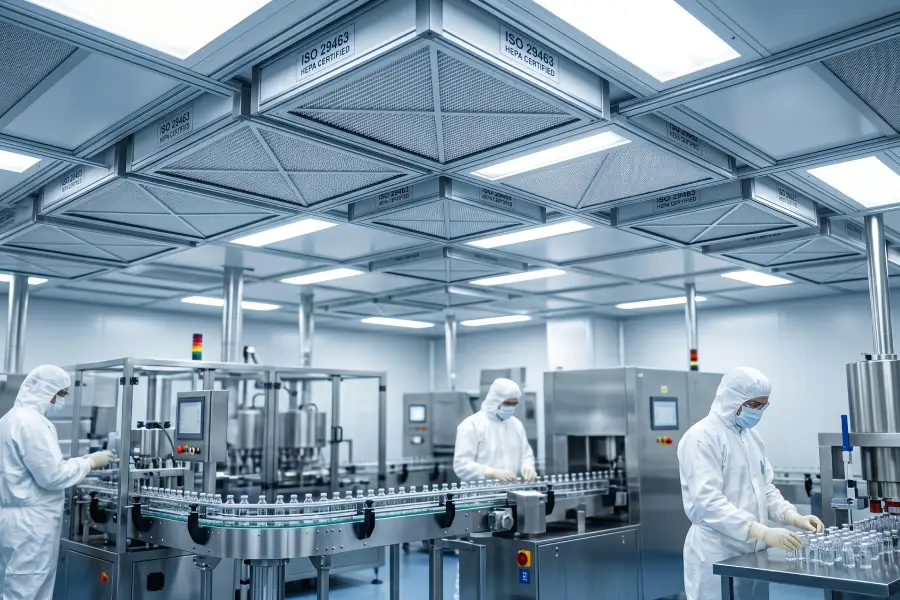
Applicazione nella filtrazione ad alta efficienza
Condizioni di test affidabili e ripetibili sono essenziali per garantire che i risultati di efficienza e classificazione riflettano le prestazioni effettive dei filtri ad alta efficienza. ISO 29463 il test è essenziale per:
- Camere bianche per semiconduttori
- Impianti di produzione farmaceutica
- Laboratori di biotecnologie
- Sale operatorie ospedaliere e reparti di isolamento
- Ambienti di produzione di precisione
ISO 29463 Soluzioni di test
ISO 29463 fornisce un quadro riconosciuto a livello mondiale per la valutazione delle prestazioni dei filtri HEPA e ULPA. Definendo procedure standardizzate per la generazione di aerosol, misurazione delle particelle, e rilevamento delle perdite, lo standard garantisce che i risultati delle prestazioni del filtro siano coerenti, paragonabile, e affidabile in tutti i laboratori di tutto il mondo.
The required equipment depends on the test object and acceptance task:
- Mezzi filtranti: fractional efficiency and MPPS measurement
- Complete filters: overall efficiency and airflow resistance
- Factory leak testing: controlled quantitative scanning
- Installed filters: on-site integrity testing of the filter and installation seal
These functions should not be treated as interchangeable simply because they all use an aerosol challenge and downstream measurement.
Relazione con altri standard
ISO 29463 è strettamente correlato a molti altri standard di filtrazione.
-
StandardEN1822
-
ApplicazioneClassificazione europea HEPA/ULPA
-
StandardISO16890
-
ApplicazioneFiltri dell'aria per ventilazione generale
-
StandardASHRAE 52.2
-
ApplicazioneTest di filtrazione HVAC nordamericano
Mentre l'ISO 16890 e ASHRAE 52.2 concentrarsi sui filtri di ventilazione generali, ISO 29463 si rivolge specificamente alla filtrazione per camere bianche ad alta efficienza.
Discuti i tuoi requisiti di test di filtrazione
Raccontaci il tuo tipo di filtro, norma di prova, e scenario applicativo.
I nostri ingegneri ti aiuteranno a identificare la soluzione di test più adatta, dai sistemi standard alle piattaforme completamente personalizzate.