Understanding ISO 16890 Air Filter Classification

The International Standard for General Ventilation Air Filters.
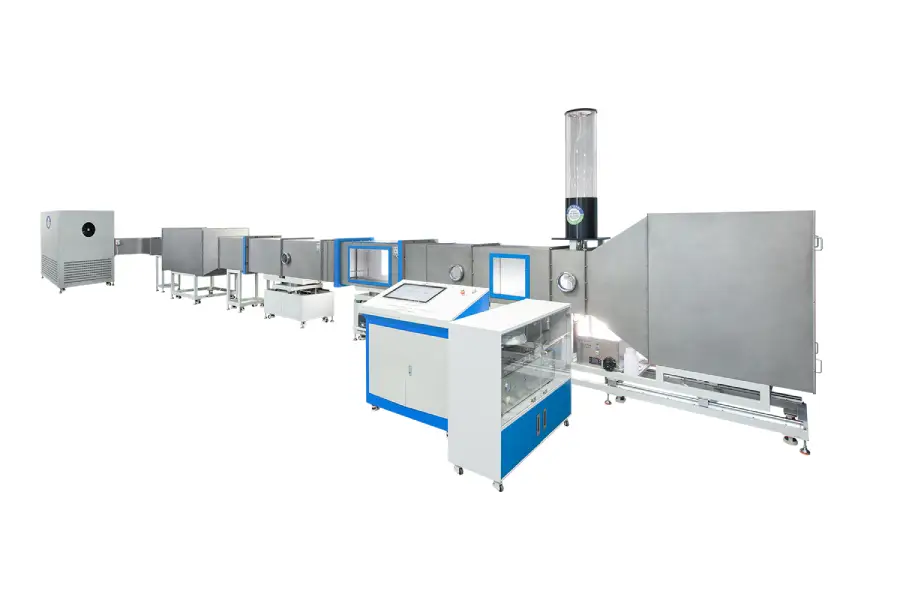
General Ventilation Filter Testing Systems

What ISO 16890 Covers

ISO 16890 is the international classification system for particulate air filters used in general ventilation. It is commonly applied to panel, bag, pocket, V-bank and other filters installed in HVAC and air-handling systems.

The standard reports filters as ISO ePM1, ISO ePM2.5, ISO ePM10 or ISO Coarse. These groups provide a common basis for comparing laboratory performance across a range of particle sizes.

建筑

Commercial Buildings

住宅

Residential Ventilation Systems

医院

Hospitals and Laboratories

工厂 01

Industrial HVAC Installations

What an ePM Rating Means

Particle Size Fractions in ISO 16890

The laboratory first measures fractional efficiency at defined particle-size intervals. The resulting efficiency curve is combined with standardized reference particle-size distributions to calculate the ePM values. The classification considers both initial performance and the minimum fractional test efficiency determined after the specified conditioning procedure.

An ISO ePM2.5 65 percent result is therefore a standardized calculated classification. It does not mean that the filter will remove exactly 65 percent of every real outdoor PM2.5 aerosol in every building. Field performance also depends on local particle distribution, airflow, loading, installation sealing and maintenance.

ISO 16890 Filter Testing Systems

The ISO 16890 Test Functions

Filters are classified according to their measured efficiency after a standardized test procedure. Typical classification examples include:
Function Purpose Important boundary
Fractional efficiency and resistance Measures upstream and downstream particle concentrations and airflow resistance. The result is an efficiency curve, not one value at 0.3 micrometres.
IPA-vapour conditioning Determines minimum fractional test efficiency after reducing removable electrostatic effects. It is not a simulation of a fixed period of field ageing.
ePM classification Uses the initial and conditioned data with the standard reference distributions. The value is a laboratory classification, not a direct field-removal guarantee.
Dust loading Measures gravimetric efficiency and resistance against captured test-dust mass. ISO 16890-3 data are reported separately and do not determine the ePM class.

To be classified as ePM1, ePM2.5, or ePM10, the filter must achieve a minimum average efficiency of 50% for the corresponding particle size fraction.

Typical Test Configuration

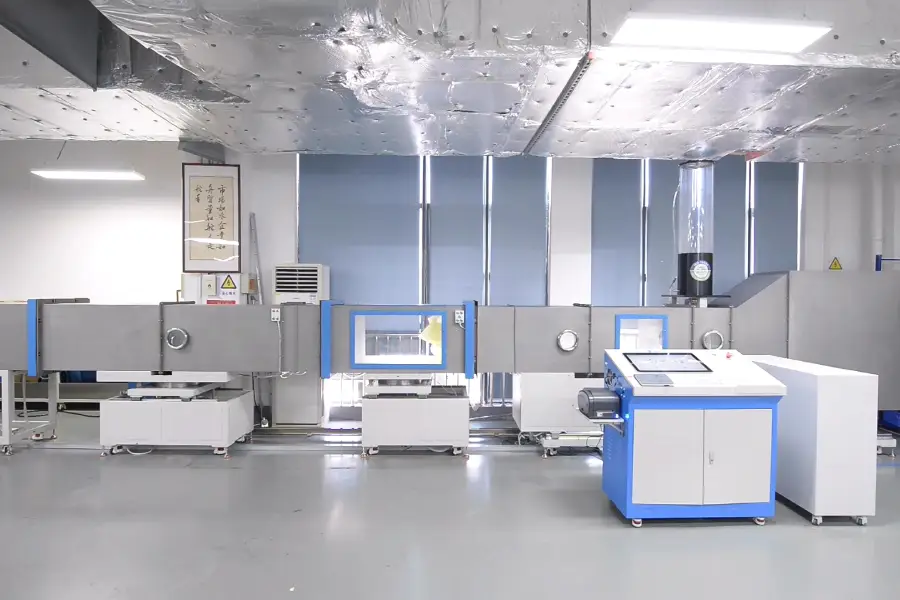
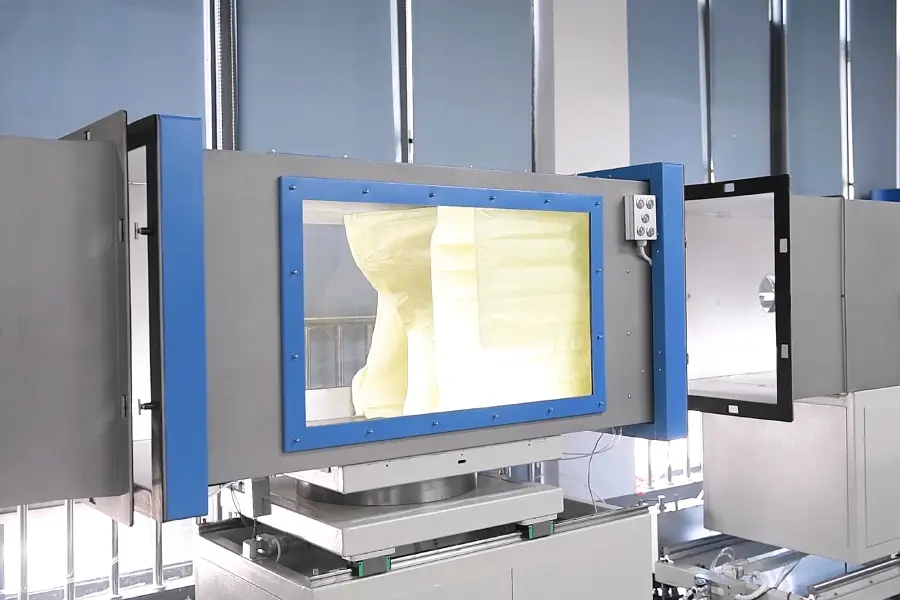
A typical ISO 16890 test system includes several key components. These elements work together to ensure stable aerosol generation and accurate particle measurement during testing.
风机 关

Controlled Airflow Systems

Aerosol Generator

Particle Generation and Measurement Units

Upstream Sampling System

Upstream and Downstream Sampling Systems

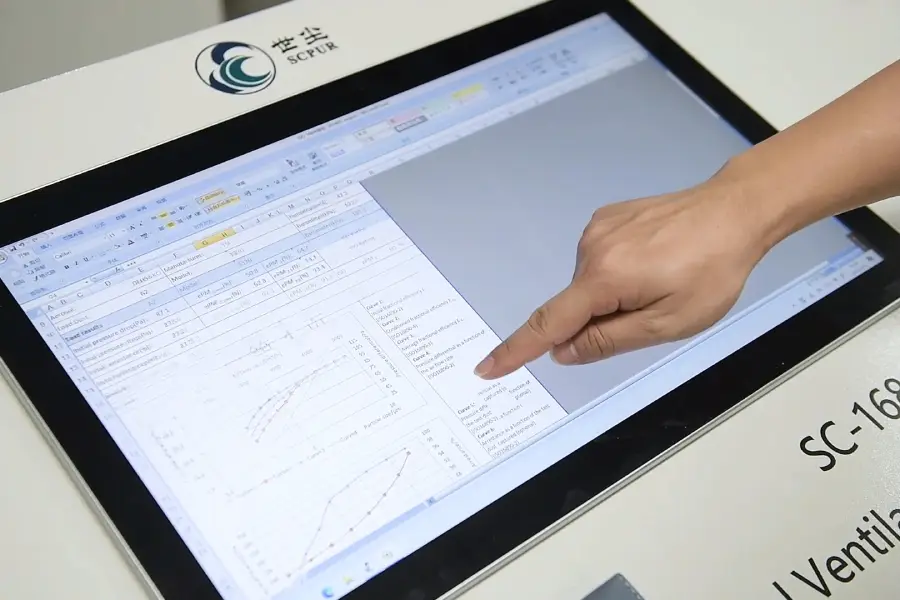
Automated Efficiency Calculation Software

Automated Efficiency Calculation Software

Application in Filter Manufacturin

What ISO 16890 Does Not Cover

  • It is not the classification method for HEPA and ULPA filters. EN 1822 or ISO 29463 is normally used for those products.
  • It is not a general test method for portable room-air cleaners.
  • It does not directly predict service life, indoor air quality or the performance of a complete installed ventilation system.


Selecting the Test Equipment

A complete ISO 16890 laboratory may require an airflow test duct, aerosol generators, particle measurement instruments, pressure and flow measurement, an IPA conditioning cabinet, dust-feeding and weighing equipment and software for test control and calculations. These functions may be provided by separate modules rather than one physical machine.

SCPUR configures ISO 16890 test systems according to filter size, airflow range, pressure drop, required test parts, daily throughput and reporting needs.

Send us the filter dimensions, airflow, resistance range and required parts of ISO 16890. We will identify the necessary test modules and laboratory utilities.

General Ventilation Filter Testing Systems

Discuss Your Filtration Testing Requirements

Tell us your filter type, testing standard, and application scenario.

Our engineers will help you identify the most suitable testing solution — from standard systems to fully customized platforms.

Validate Your Quality with Global Standard Testing Systems

Our experts are ready to engineer a custom solution for you. Tell us about your project, and let’s verify your quality with precision and speed.

Custom R&D & Tailored Solutions

Custom R&D & Tailored Solutions

Compliance with Global Standards

Compliance with Global Standards

100% Self developed Software System

100% Self-developed Software System

Remote Calibration & Global Support

Remote Calibration & Global Support

Contact Us

*We respect your confidentiality and all information is protected.

Before You Go...

Unsure which international standard applies to your project? Speak with our senior engineers for a personalized technical assessment based on our 10-year industry expertise.

*We respect your confidentiality and all information is protected.