
High-Efficiency Filters and Filter Media for Removing Particles in Air
Understanding the ISO 29463 standard for evaluating HEPA and ULPA filters.
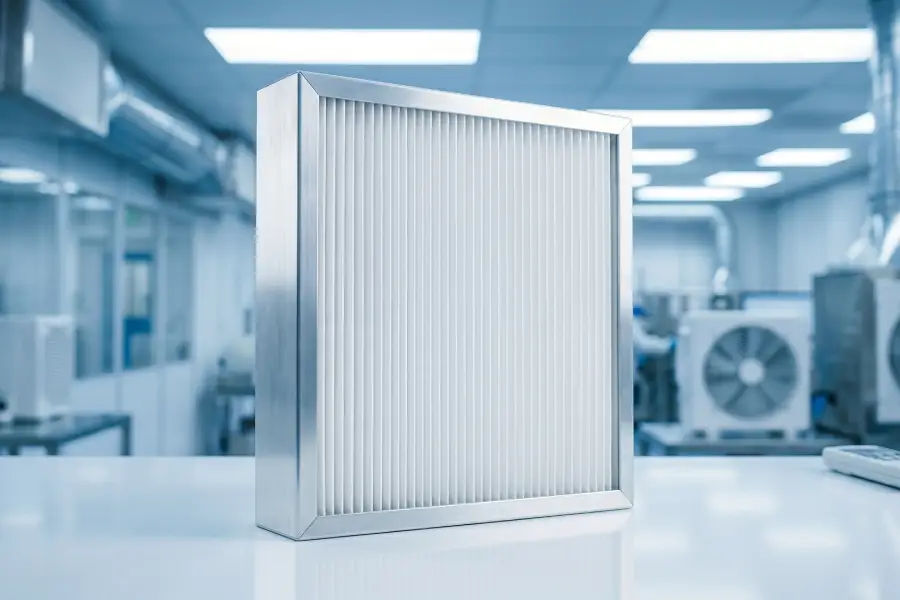
Overview of the ISO 29463 Standard
ISO 29463 is an international standard that specifies the classification, testing methods, and performance evaluation procedures for HEPA and ULPA filters. The standard is widely used in industries requiring strict air cleanliness.
“ISO 29463 is largely harmonized with the European standard EN 1822 and defines the testing principles used to evaluate high-efficiency air filtration performance.”

Semiconductor Manufacturing

Pharmaceutical Production

Cleanroom Environments
Key Test Methods in ISO 29463
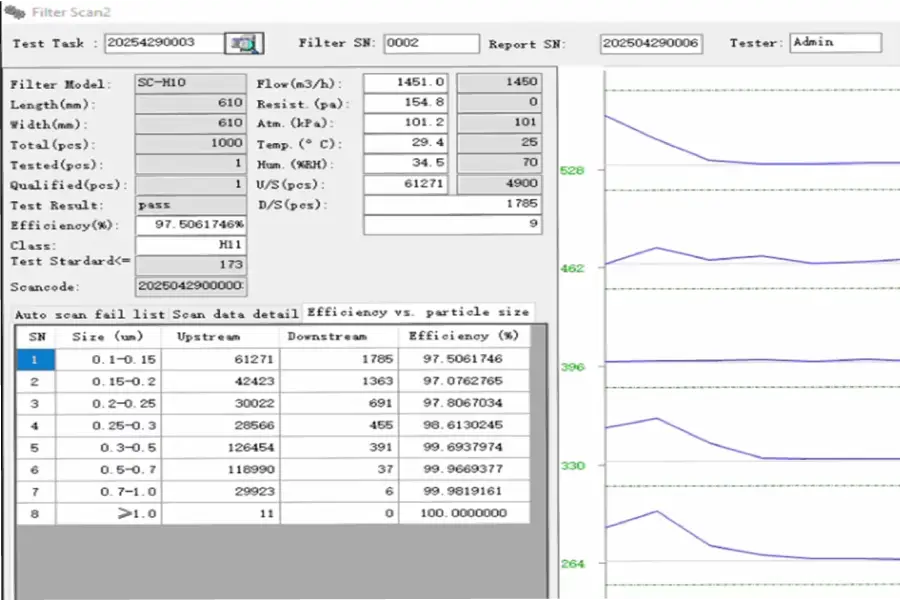
Key Testing Principle: MPPS
A central concept in ISO 29463 is the Most Penetrating Particle Size (MPPS). Instead of evaluating efficiency at a fixed particle size, the filter is tested at the particle size where filtration efficiency is lowest. This ensures that the measured efficiency represents the most critical filtration condition. MPPS testing provides a more accurate assessment of filter performance compared to fixed particle-size testing.
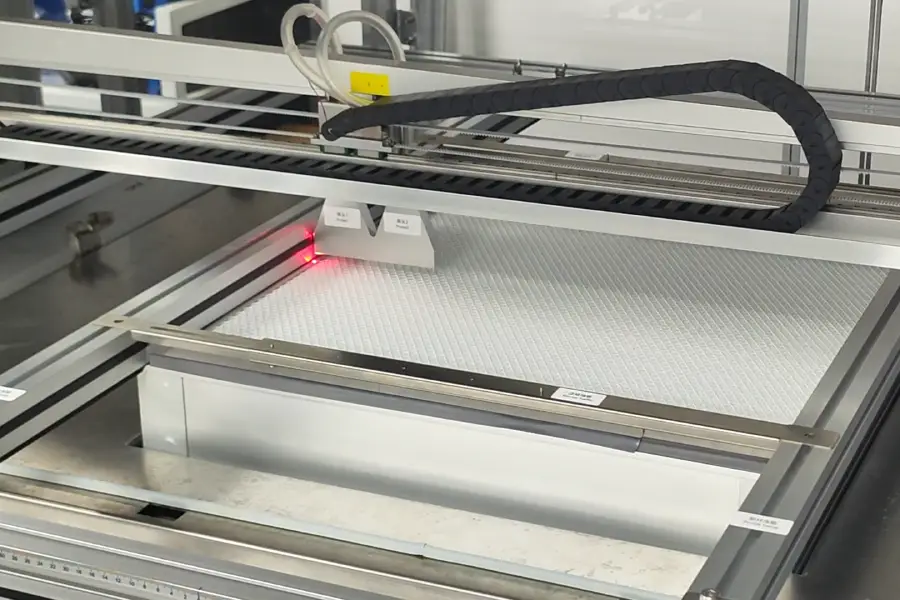
Leak Detection and Integrity Testing
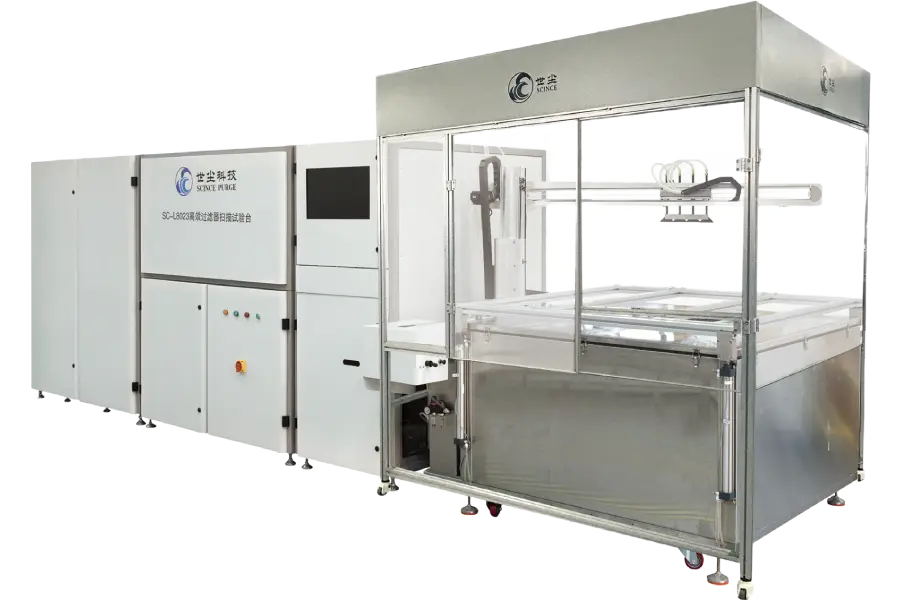
ISO 29463 also specifies procedures for detecting local leakage defects in filter elements. A scanning probe is used to measure particle concentration downstream of the filter surface. Localized increases in particle concentration may indicate defects in the filter media, frame, or sealing areas. Leak detection testing is essential for verifying the integrity of high-efficiency filters before installation in critical environments.
HEPA and ULPA Filter Classification Categories
Based on measured efficiency, filters are classified into different performance categories. Typical classification ranges include:
| Class | Typical Efficiency Range |
|---|---|
| EPA | Efficient particulate air filters |
| HEPA | High-efficiency particulate air filters |
| ULPA | Ultra-low penetration air filters |
The classification reflects the filter’s ability to remove airborne particles under standardized testing conditions.
Structure and Parts of the ISO 29463 Standard
ISO 29463 is organized into several parts covering classification methods, test procedures, and filter integrity verification. Typical structure includes:
Part | Description |
ISO 29463-1 | Classification, performance testing, and marking |
ISO 29463-2 | Aerosol production, measuring equipment, and particle counting methods |
ISO 29463-3 | Flat sheet filter media testing |
ISO 29463-4 | Determination of leakage and efficiency |
ISO 29463-5 | Filter element efficiency testing |
These parts collectively define how HEPA and ULPA filters should be tested and classified.
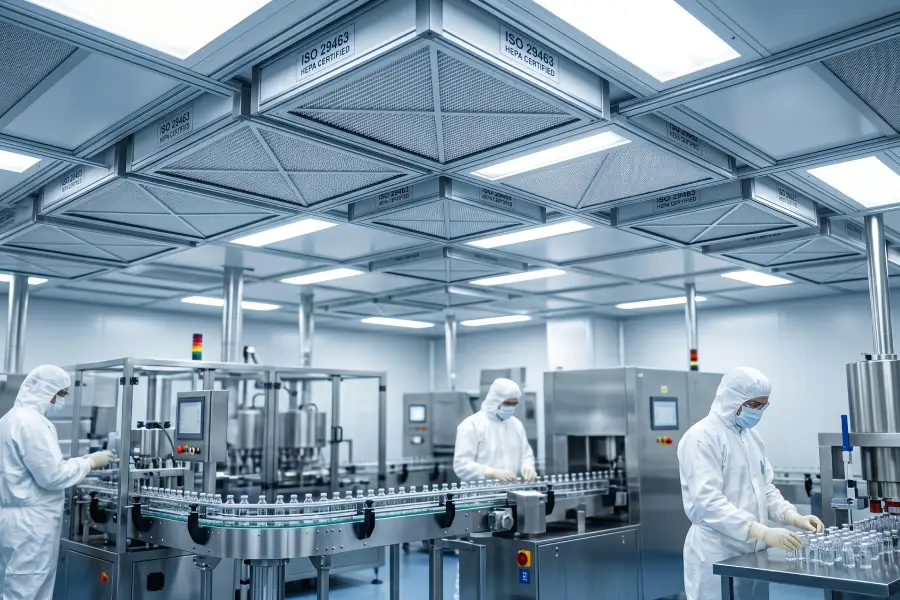
Application in High-Efficiency Filtration
Reliable and repeatable testing conditions are essential to ensure that efficiency and classification results reflect the actual performance of high-efficiency filters. ISO 29463 testing is essential for:
- Semiconductor Cleanrooms
- Pharmaceutical Manufacturing Facilities
- Biotechnology Laboratories
- Hospital Operating Rooms and Isolation Wards
- Precision Manufacturing Environments
ISO 29463 Testing Solutions
ISO 29463 provides a globally recognized framework for evaluating HEPA and ULPA filter performance. By defining standardized procedures for aerosol generation, particle measurement, and leakage detection, the standard ensures that filter performance results are consistent, comparable, and reliable across laboratories worldwide.
Relationship to Other Standards
ISO 29463 is closely related to several other filtration standards.
-
StandardEN1822
-
ApplicationEuropean HEPA/ULPA classification
-
StandardISO16890
-
ApplicationGeneral ventilation air filters
-
StandardASHRAE 52.2
-
ApplicationNorth American HVAC filtration testing
While ISO 16890 and ASHRAE 52.2 focus on general ventilation filters, ISO 29463 specifically addresses high-efficiency cleanroom filtration.
Discuss Your Filtration Testing Requirements
Tell us your filter type, testing standard, and application scenario.
Our engineers will help you identify the most suitable testing solution — from standard systems to fully customized platforms.