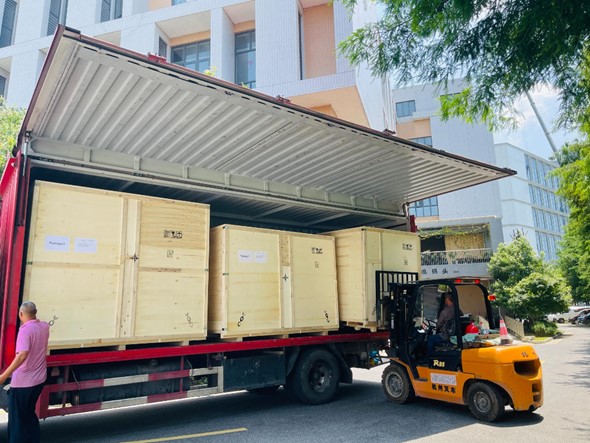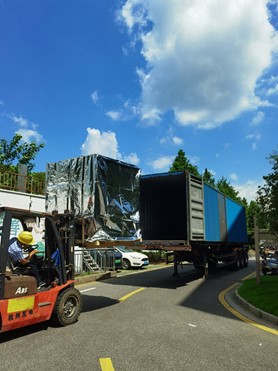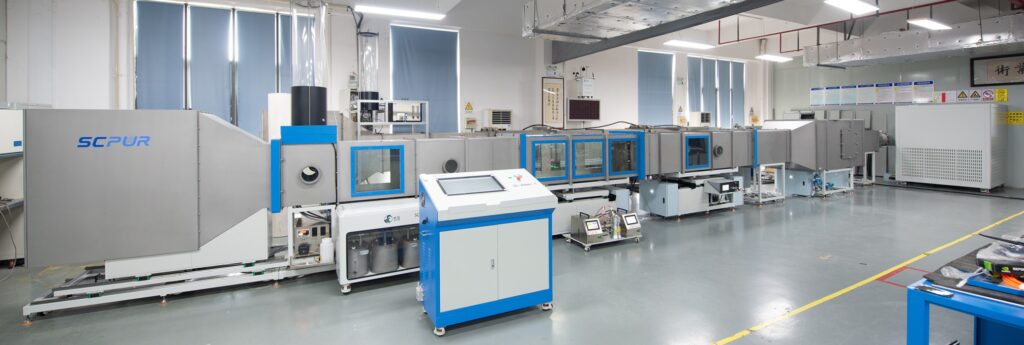


Over the past two years, SCPUR’s equipment deliveries have continued to grow, this growth has increased demand for air filter testing equipment technical support, including installation guidance, training and ongoing service. Working with customers across different site conditions, technical backgrounds and operating practices has also helped us improve both our service and our equipment.
Alongside recent overseas shipments, we have continued to update installation guides, equipment manuals and operating videos based on actual installation experience and customer feedback. Clearer photographs of connections, more detailed explanations of key steps and video demonstrations all help make the process easier for the next customer to follow.
As these resources improve, customers have greater flexibility in arranging installation. They can review the documents and videos in advance, understand the work required on site, and then choose between installation by their own team with remote commissioning support, or an on-site visit from SCPUR engineers. Most customers now successfully complete installation and commissioning with the help of our documentation and remote support.
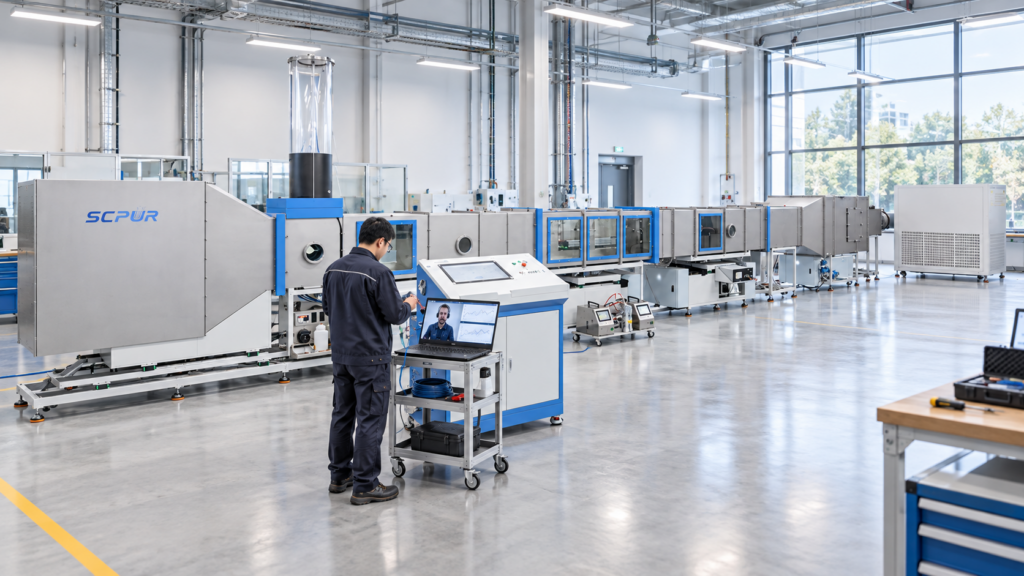
This process involves close cooperation between the customer’s team and our engineers. Once the customer has completed equipment assembly and cable and tubing connections, our engineers remotely review the installation before guiding the first power-up, component operation checks, communication checks and trial runs. Remote software provides access to operating parameters and test data, while an on-site camera allows engineers to observe equipment movements. Together, these tools support commissioning and operator training.
The same communication continues after the equipment enters service. Customers can contact our engineers with questions about operation, testing or maintenance. When further investigation is needed, remote access and live video help our engineers assess the situation and guide the customer through the necessary checks.
These ongoing exchanges also reveal opportunities to improve the equipment itself. A frequently asked question may point to a need for clearer on-screen guidance. An easily overlooked check may be incorporated into an automatic sequence. A recurring fault calls for further investigation and improvements to the design or control logic.
These lessons feed into software updates, equipment improvements and revised documentation. As deliveries grow, our aim is to turn practical service experience into clearer instructions, more effective automatic checks and equipment that is easier to use—helping future customers avoid problems already encountered and resolved.