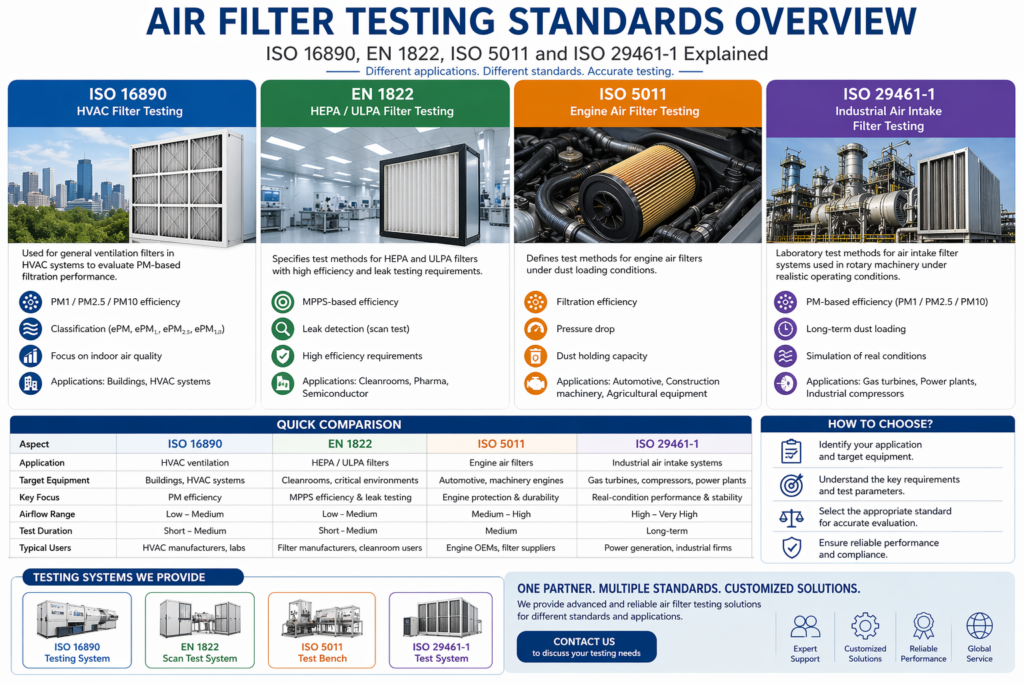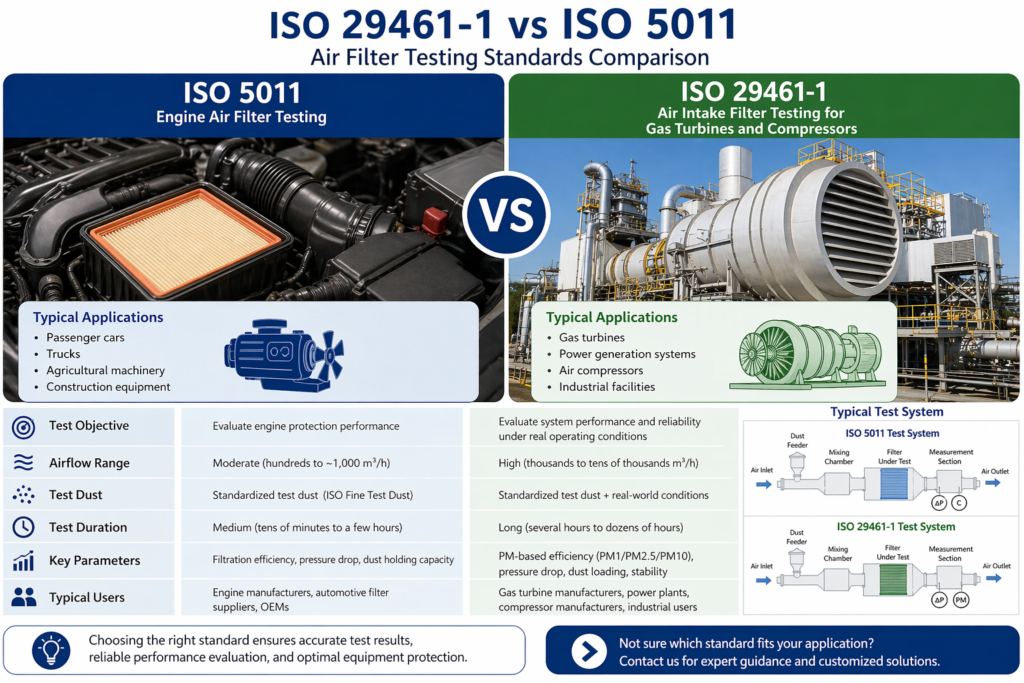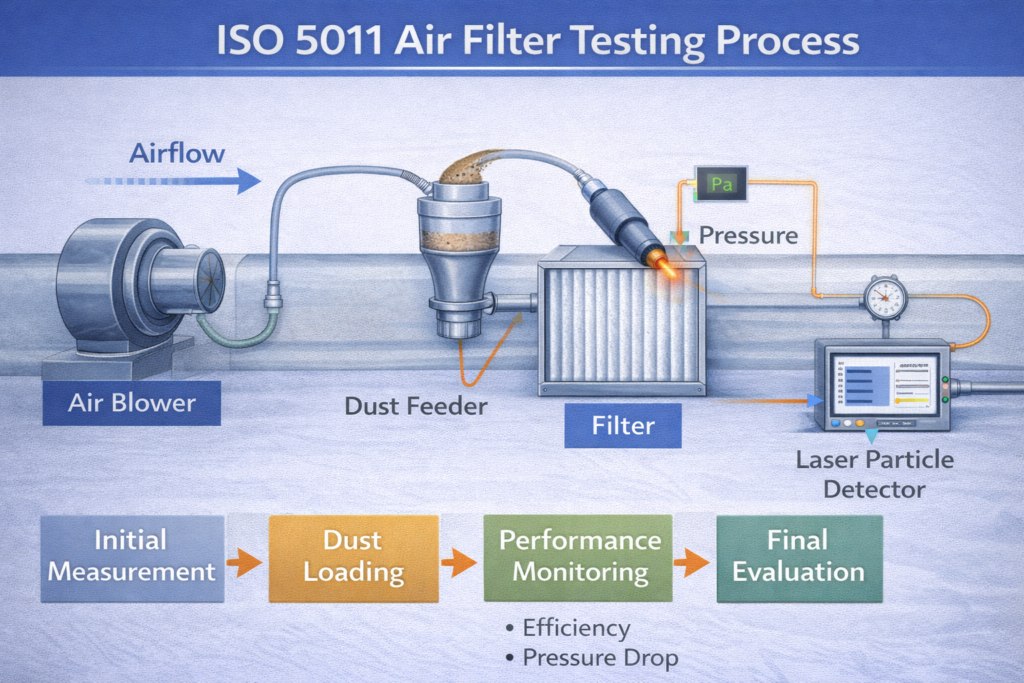
A légszűrés kritikus szerepet játszik a beltéri levegőminőség fenntartásában a HVAC rendszerekben, ipari környezetek, és kereskedelmi épületek. A megbízható teljesítmény biztosítása érdekében, az általános légszűrőket szabványosított vizsgálati módszerek és osztályozási rendszerek szerint kell értékelni.
Ez a cikk áttekintést nyújt arról tesztelési szabványok, szűrő osztályozás, és tesztberendezés-rendszerek, segíti a gyártókat és a laboratóriumokat a megfelelő megoldások kiválasztásában a teljesítményellenőrzéshez.
1. Mik azok az általános légszűrők?
Az általános légszűrőket elsősorban HVAC és szellőztető rendszerekben használják a levegőben lévő részecskék eltávolítására, mint pl:
- Por
- Pollen
- Finom részecskék (PM10, PM2,5, PM1)
Ellentétben a HEPA szűrőkkel, általános szellőztető szűrők összpontosítanak valós szemcseméret-eloszlás, tesztelési szabványaikat alkalmazás-orientáltabbá téve.
2. Az általános légszűrők legfontosabb vizsgálati szabványai
2.1 ISO 16890
A ISO 16890 szabvány jelenleg az általános szellőzőszűrők legszélesebb körben elfogadott globális szabványa.
Főbb jellemzők:
- alapján osztályozza a szűrőket PM1, PM2,5, és a PM10 hatékonyságát
- A valós légköri porviszonyokat tükrözi
- Felváltja a régebbi szabványokat, például az EN-t 779
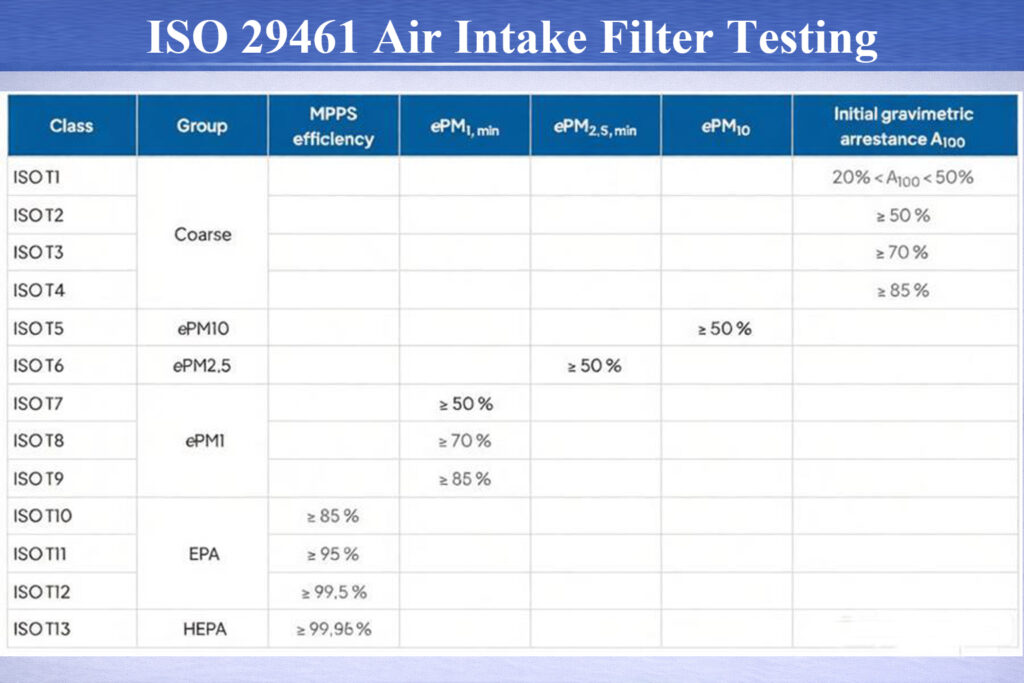
Osztályozási rendszer:
- ePM1
- ePM2.5
- ePM10
- Durva
👉 Ez a szabvány reálisabb értékelést biztosít a hagyományos módszerekhez képest.
2.2 IN 779 (Legacy Standard)
IN 779 korábban Európában is használták, a szűrők osztályozása:
- G1–G4 (durva szűrők)
- F5–F9 (finom szűrők)
Bár ma már nagyrészt ISO váltotta fel 16890, egyes piacokon és régebbi rendszereken még mindig hivatkoznak rá.
3. Szűrőosztályozás áttekintése
A modern osztályozás középpontjában szemcseméret hatékonyság, nem pedig csak letartóztatás:
| Osztályozás | Részecskeméret-tartomány | Alkalmazás |
|---|---|---|
| Durva | >10 μm | Előszűrés |
| ePM10 | ≤10 μm | Kereskedelmi HVAC |
| ePM2.5 | ≤2,5 μm | Beltéri levegőminőség ellenőrzés |
| ePM1 | ≤1 μm | Nagy teljesítményű szellőzés |
Ez az eltolódás lehetővé teszi a mérnökök számára, hogy a szűrőket jobban hozzáigazítsák a valós környezetvédelmi követelményekhez.
4. Vizsgálati módszerek és kulcsparaméterek
Általános légszűrők értékeléséhez, több paramétert mérnek:
4.1 Szűrés hatékonysága
- A részecskeméret-eloszlás alapján
- Több mérettartományban mérve
4.2 Nyomásesés
- A légáramlás ellenállását jelzi
- Közvetlenül befolyásolja az energiafogyasztást
4.3 Pormegtartó képesség
- Meghatározza az élettartamot
- Rakodási tesztekkel értékelve
4.4 Kiürítési/kondicionálási folyamat
- ISO-ban kötelező 16890
- Valós működési feltételeket szimulál
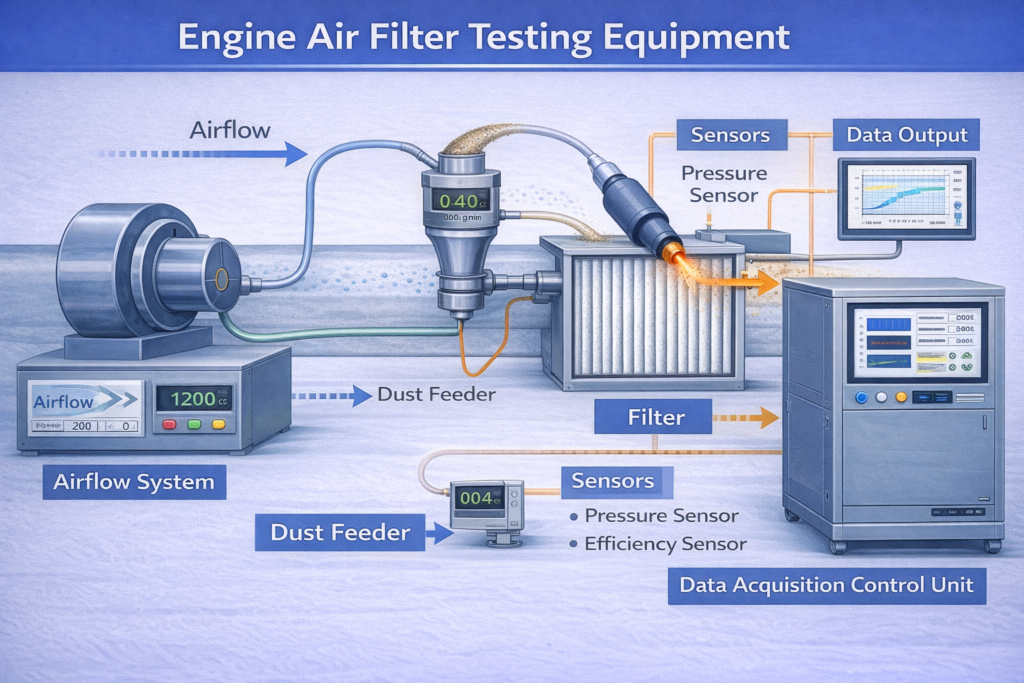
5. Tesztberendezés-rendszerek légszűrő-értékeléshez
A teljes légszűrő tesztrendszer általában tartalmazza:
- Aeroszolgeneráló rendszer
- Részecskemérő műszerek
- Légáramlás-szabályozó rendszer
- Por adagoló rendszer
- Adatgyűjtő szoftver
Ezeknek a rendszereknek biztosítaniuk kell:
✔ Stabil légáramlás szabályozás
✔ Pontos részecskemérés
✔ Megismételhető vizsgálati feltételek
6. Ajánlott megoldás: SCPUR SC-16890 tesztrendszer
Laboratóriumok és gyártók számára, akik megfelelnek az ISO szabványnak 16890, a
SC-16890 általános szellőzőszűrő tesztrendszer az SCPUR-tól egy rendkívül megbízható megoldás.
Főbb előnyök
- Teljesen megfelel az ISO-nak 16890
- Pontos PM1 / PM2,5 / PM10 hatékonyságmérés
- Automatizált vizsgálati eljárások a jobb konzisztencia érdekében
- Stabil légáramlás és porterhelés szabályozás
- Felhasználóbarát szoftver adatelemzéshez
Tipikus alkalmazások
- HVAC szűrő gyártók
- Harmadik felek vizsgálólaboratóriumai
- Kutatóintézetek
- Minőségellenőrzési osztályok
👉 Az SC-16890 rendszer biztosítja pontos, megismételhető, és a szabványoknak megfelelő tesztelés, segíti a felhasználókat a termékminőség javításában és a nemzetközi követelmények teljesítésében.
7. Miért fontos a megfelelő tesztelés?
Az általános légszűrők pontos tesztelése biztosítja:
- A nemzetközi szabványoknak való megfelelés
- Javított beltéri levegőminőség
- Csökkentett energiafogyasztás
- Jobb termék versenyképesség
Gyártóknak, a fejlett tesztrendszerekbe való befektetés elengedhetetlen ahhoz, hogy versenyképes maradjon a globális piacon.
8. Következtetés
elfogadásával ISO 16890, Az általános légszűrő tesztelése a valósághűbb irányába tolódott el, részecske alapú értékelési módszerek.
A tesztelési szabványok megértése, osztályozási rendszerek, és a megfelelő tesztberendezés – például az SC-16890 – kiválasztása kritikus lépések a megbízható szűrőteljesítmény és a piaci megfelelés biztosításában..