Luchtfiltratie speelt een cruciale rol bij het handhaven van de luchtkwaliteit binnenshuis in HVAC-systemen, industriële omgevingen, en commerciële gebouwen. Om betrouwbare prestaties te garanderen, algemene luchtfilters moeten worden beoordeeld volgens gestandaardiseerde testmethoden en classificatiesystemen.
Dit artikel geeft een overzicht van testnormen, filterclassificatie, en testopstellingsystemen, helpt fabrikanten en laboratoria bij het selecteren van de juiste oplossingen voor prestatievalidatie.
1. Wat zijn algemene luchtfilters?
Algemene luchtfilters worden voornamelijk gebruikt in HVAC- en ventilatiesystemen om deeltjes uit de lucht te verwijderen, zoals:
- Stof
- Stuifmeel
- Fijn stof (PM10, PM2,5, PM1)
In tegenstelling tot HEPA-filters, algemene ventilatiefilters richten zich op deeltjesgrootteverdeling in de echte wereld, hun teststandaarden meer toepassingsgericht maken.
2. Belangrijke testnormen voor algemene luchtfilters
2.1 ISO 16890
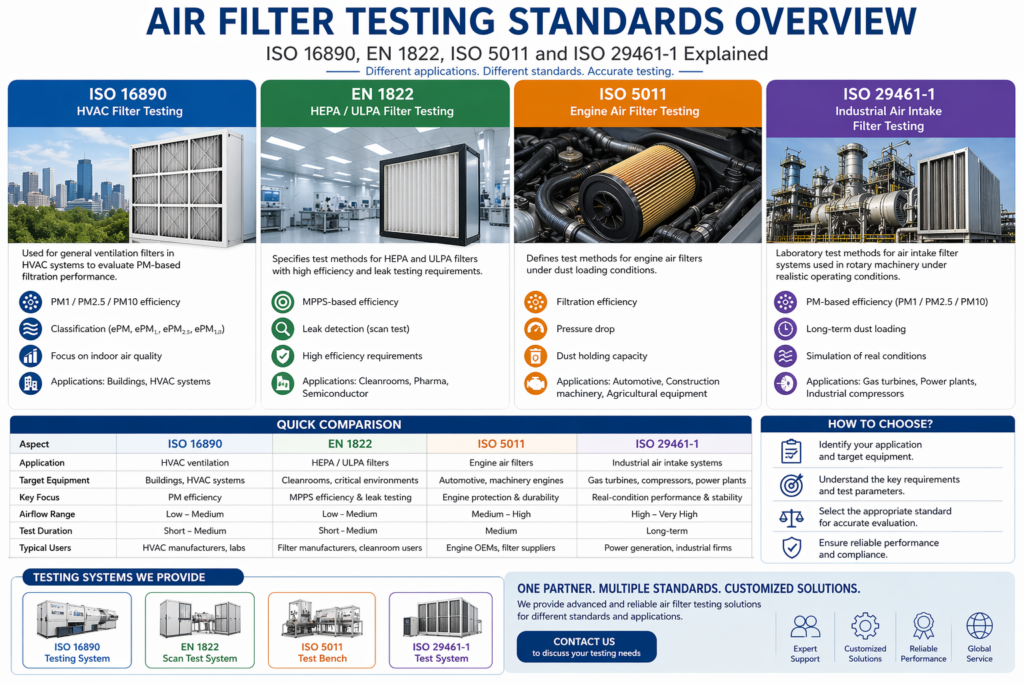
De ISO 16890 standaard is momenteel de meest algemeen aanvaarde mondiale standaard voor algemene ventilatiefilters.
Belangrijkste kenmerken:
- Classificeert filters op basis van PM1, PM2,5, en PM10-efficiëntie
- Weerspiegelt echte atmosferische stofomstandigheden
- Vervangt oudere normen zoals EN 779
Classificatiesysteem:
- ePM1
- ePM2.5
- ePM10
- Ruw
👉 Deze standaard biedt een realistischere evaluatie vergeleken met traditionele methoden.
2.2 IN 779 (Legacy-standaard)
IN 779 werd eerder in Europa gebruikt, filters classificeren als:
- G1–G4 (grove filters)
- F5–F9 (fijne filters)
Hoewel nu grotendeels vervangen door ISO 16890, In sommige markten en oudere systemen wordt er nog steeds naar verwezen.
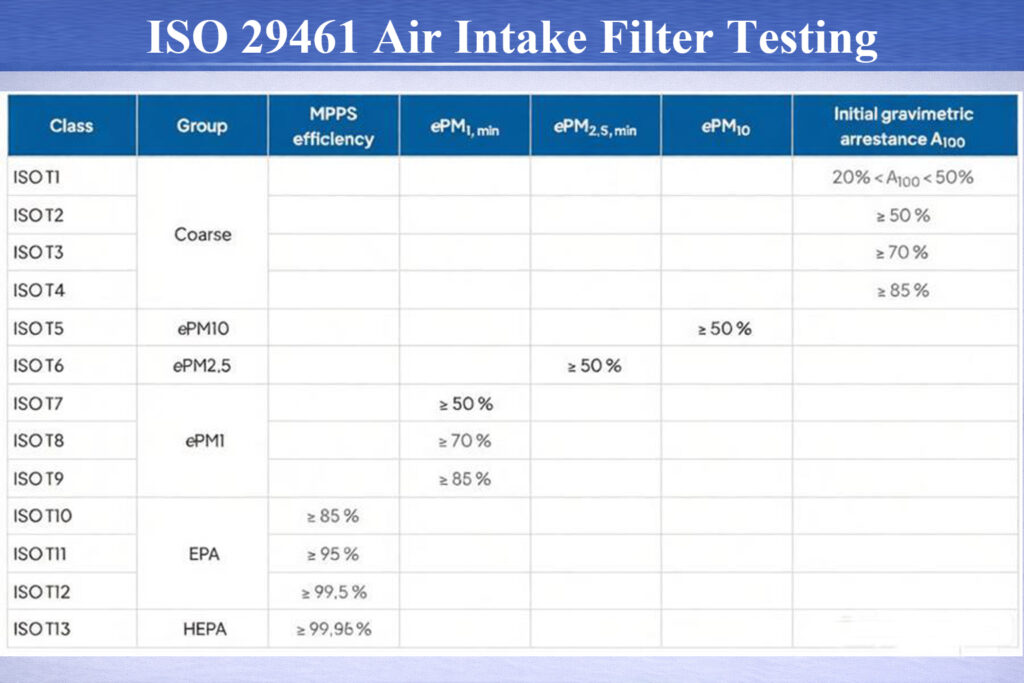
3. Overzicht filterclassificatie
Moderne classificatie richt zich op efficiëntie van de deeltjesgrootte, in plaats van alleen arrestatie:
| Classificatie | Deeltjesgroottebereik | Sollicitatie |
|---|---|---|
| Ruw | >10 urn | Voorfiltratie |
| ePM10 | ≤10 μm | Commerciële HVAC |
| ePM2.5 | ≤2,5 μm | Controle van de luchtkwaliteit binnenshuis |
| ePM1 | ≤1 μm | Hoogwaardige ventilatie |
Deze verschuiving stelt ingenieurs in staat filters beter af te stemmen op reële omgevingseisen.
4. Testmethoden en sleutelparameters
Om algemene luchtfilters te evalueren, Er worden verschillende parameters gemeten:
4.1 Filtratie-efficiëntie
- Gebaseerd op deeltjesgrootteverdeling
- Gemeten over meerdere maatbereiken
4.2 Drukdaling
- Geeft de luchtstroomweerstand aan
- Heeft een directe invloed op het energieverbruik
4.3 Stofopnamecapaciteit
- Bepaalt de levensduur
- Geëvalueerd via belastingtests
4.4 Ontlading/conditioneringsproces
- Vereist in ISO 16890
- Simuleert echte bedrijfsomstandigheden
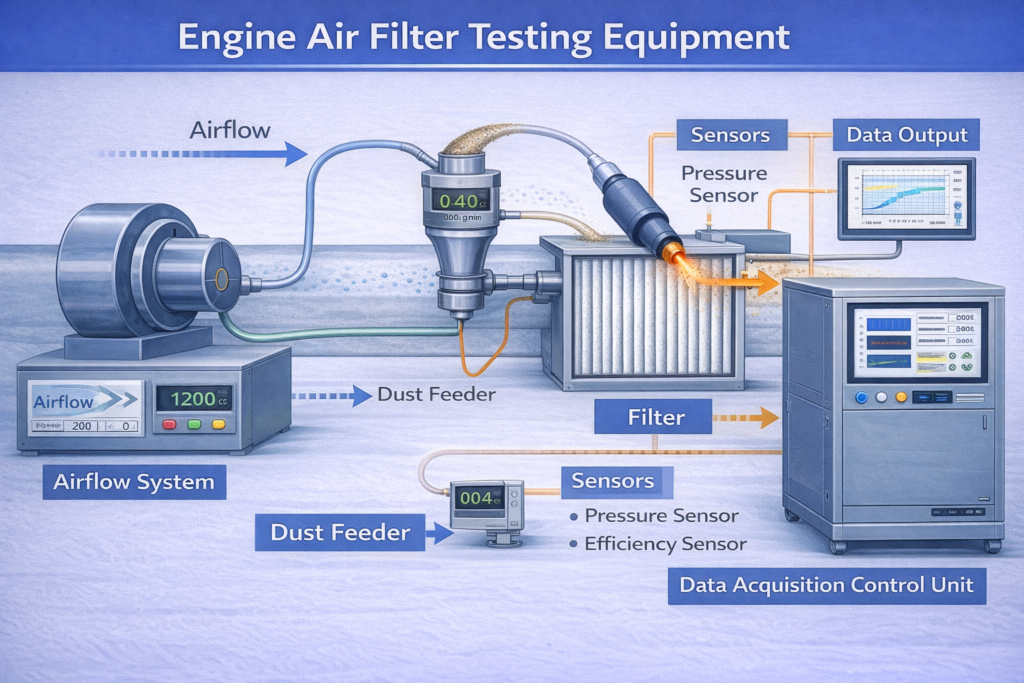
5. Testopstellingsystemen voor luchtfilterevaluatie
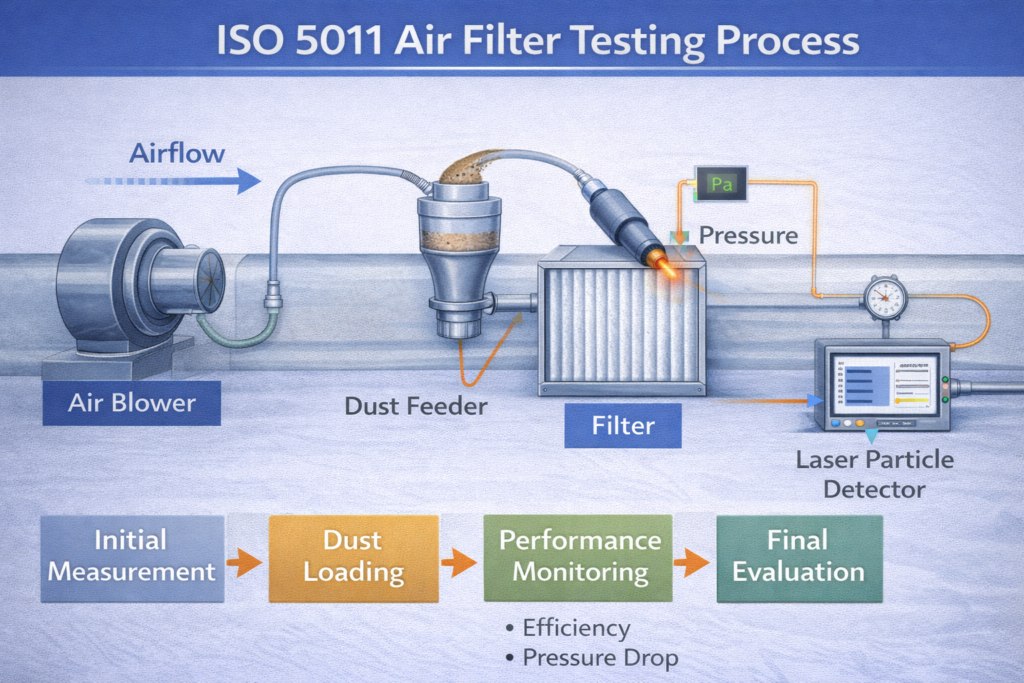
Een compleet luchtfiltertestsysteem omvat doorgaans::
- Systeem voor het genereren van aerosolen
- Instrumenten voor deeltjesmeting
- Luchtstroomcontrolesysteem
- Stoftoevoersysteem
- Software voor gegevensverzameling
Deze systemen moeten voorzien:
✔ Stabiele luchtstroomregeling
✔ Nauwkeurige deeltjesmeting
✔ Herhaalbare testomstandigheden
6. Aanbevolen oplossing: SCPUR SC-16890-testsysteem
Voor laboratoria en fabrikanten die willen voldoen aan ISO 16890, de
SC-16890 Algemeen ventilatiefiltertestsysteem van SCPUR is een zeer betrouwbare oplossing.
Belangrijkste voordelen
- Volledig ISO-conform 16890
- Nauwkeurige PM1 / PM2,5 / PM10-efficiëntiemeting
- Geautomatiseerde testprocedures voor verbeterde consistentie
- Stabiele luchtstroom en controle over de stofbelasting
- Gebruiksvriendelijke software voor data-analyse
Typische toepassingen
- Fabrikanten van HVAC-filters
- Testlaboratoria van derden
- Onderzoeksinstellingen
- Kwaliteitscontrole afdelingen
👉Het SC-16890-systeem zorgt ervoor nauwkeurig, herhaalbaar, en testen die voldoen aan de normen, gebruikers helpen de productkwaliteit te verbeteren en aan internationale eisen te voldoen.
7. Waarom goed testen belangrijk is
Nauwkeurig testen van algemene luchtfilters garandeert:
- Naleving van internationale normen
- Verbeterde luchtkwaliteit binnenshuis
- Verminderd energieverbruik
- Beter productconcurrentievermogen
Voor fabrikanten, Investeren in geavanceerde testsystemen is essentieel om concurrerend te blijven op de wereldmarkt.
8. Conclusie
Met de adoptie van ISO 16890, algemene luchtfiltertests zijn realistischer geworden, op deeltjes gebaseerde evaluatiemethoden.
Testnormen begrijpen, classificatiesystemen, en het selecteren van de juiste testopstelling, zoals de SC-16890, zijn cruciale stappen bij het garanderen van betrouwbare filterprestaties en marktconformiteit.