공기 필터 효율과 압력 강하: What Manufacturers Should Test

공유하다:

목차

Filtration efficiency and pressure drop are two of the most important performance characteristics of an air filter.

Efficiency describes how effectively the filter removes particles. Pressure drop describes the resistance created as air passes through the filter.

These results must be evaluated together, but the relationship is not as simple as “higher efficiency always means higher pressure drop.”

Why Efficiency and Pressure Drop Are Related

A filter must bring airborne particles into contact with fibres or other collection surfaces. Increasing fibre density or reducing pore size can improve particle capture, but it can also restrict airflow.

하지만, filter design provides other ways to improve performance. A manufacturer may increase effective media area, optimize fibre structure or improve pleat geometry to achieve higher efficiency without the same increase in resistance.

This is why two filters with the same ISO ePM classification may have different pressure drops.

Five Factors That Affect the Result

1. Filter-Media Structure

Fibre diameter, packing density, thickness and electrostatic properties influence both efficiency and resistance.

A dense mechanical medium and a charged synthetic medium can achieve similar initial efficiency through different capture mechanisms. Their conditioned performance may be different.

2. Effective Media Area

Increasing the amount of media reduces the average velocity through the media at the same filter airflow.

Lower media velocity can reduce pressure drop and may change fractional efficiency. The effect depends on particle size and the dominant capture mechanism.

3. Pleat Geometry

Pleat height, spacing and stability determine how much of the installed media is used effectively.

Pleats that are too close together can restrict airflow and create uneven flow channels. Deformed pleats may reduce the useful media area even when the total installed media quantity is unchanged.

4. Test Airflow

Pressure drop increases as airflow increases. Fractional efficiency can also change with face velocity and media velocity.

Efficiency and resistance should therefore always be compared at the same airflow, filter size and test condition.

A result measured at a lower airflow cannot be used as though it were obtained at the product’s rated airflow.

5. 먼지 로딩

먼지가 쌓이면서, pressure drop normally increases. Efficiency may also change as particles deposit within or on the filter medium.

The result depends on the media, dust, airflow and loading procedure. Laboratory dust-loading data provide a controlled comparison, but they do not directly predict the exact service life of a filter in every installation.

What Should Be Measured?

For a complete product evaluation, manufacturers should consider:

  • 입자 크기에 따른 분수 효율
  • 초기 효율성
  • Conditioned efficiency where required
  • Pressure drop at rated airflow
  • Pressure-drop curve over the required airflow range
  • Resistance versus captured dust mass
  • Dust capacity at the specified endpoint
  • Filter construction and sealing integrity

ISO 16890 uses initial and conditioned fractional-efficiency data for ePM classification. Dust loading is a separate test that evaluates gravimetric performance and resistance development.

How Should Two Filters Be Compared?

A valid comparison requires the same:

  • Test standard
  • 필터 측정기준
  • 기류
  • Aerosol or test dust
  • Conditioning state
  • Loading endpoint
  • Measurement procedure

Comparing only the advertised efficiency percentage can be misleading. A filter with a slightly higher efficiency but substantially higher resistance may not be the best design for the intended system.

Manufacturers should instead look for a stable combination of:

  • Required particle-removal performance
  • Acceptable initial resistance
  • Controlled resistance development
  • Suitable dust capacity
  • Repeatable production quality

What Must the Test System Control?

Accurate efficiency and pressure-drop testing requires:

  • 안정적인 공기 흐름
  • 대표적인 업스트림 및 다운스트림 샘플링
  • Uniform aerosol concentration
  • Suitable particle-counter ranges
  • Correct dilution when required
  • Calibrated pressure measurement
  • Low duct and fixture leakage
  • Reliable data calculation

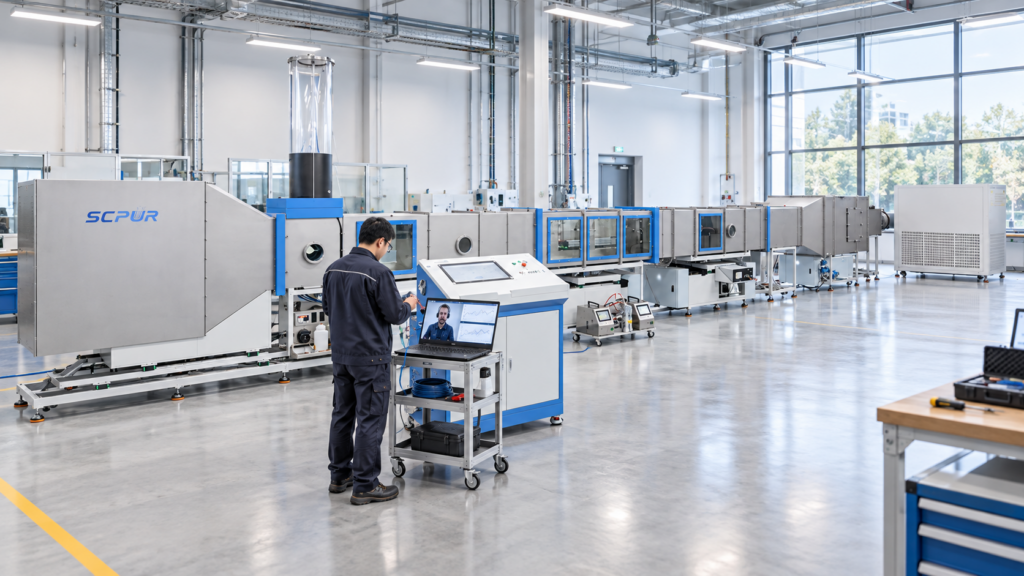
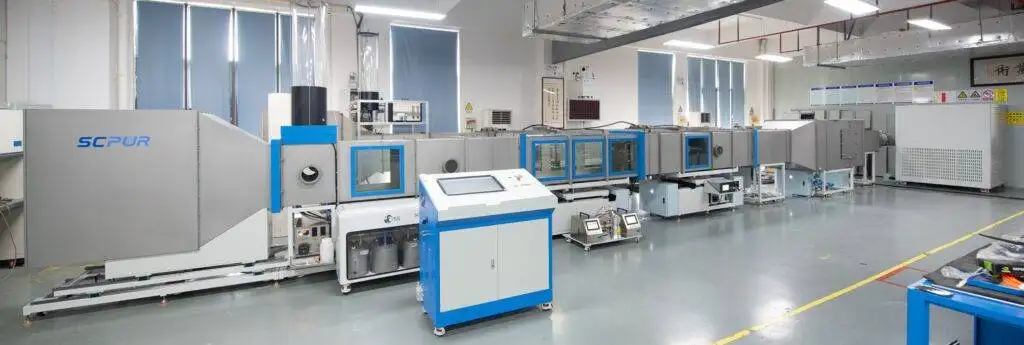
SCPUR test systems help filter manufacturers compare media, pleat design and complete-filter construction under controlled airflow and particle conditions. This allows design decisions to be based on measured performance rather than efficiency or pressure drop alone.

ISO 16890

연락하세요

가기 전에...

귀하의 프로젝트에 어떤 국제 표준이 적용되는지 확실하지 않음? 당사의 10년 업계 전문 지식을 바탕으로 한 맞춤형 기술 평가를 위해 수석 엔지니어와 상담하세요..

502 나쁜 게이트웨이

502 나쁜 게이트웨이


nginx
*우리는 귀하의 기밀성을 존중하며 모든 정보는 보호됩니다.

글로벌 표준 테스트 시스템으로 품질을 검증하세요

우리 전문가들은 귀하를 위한 맞춤형 솔루션을 설계할 준비가 되어 있습니다.. 귀하의 프로젝트에 대해 알려주십시오., 정확하고 빠르게 품질을 검증해 드립니다..

커스텀 R&디 & 맞춤형 솔루션

커스텀 R&디 & 맞춤형 솔루션

글로벌 스탠다드 준수

글로벌 스탠다드 준수

100% 자체 개발 소프트웨어 시스템

100% 자체 개발 소프트웨어 시스템

원격 교정 & 글로벌 지원

원격 교정 & 글로벌 지원

문의하기

*우리는 귀하의 기밀성을 존중하며 모든 정보는 보호됩니다.

This page has been automatically translated from the English original for convenience. Product models, standards, numerical values and technical limits should be verified against the English version. Please contact SCPUR for project-specific confirmation.