Filter Media Testing Guide: 능률, Pressure Drop and MPPS

공유하다:

목차

Filter media testing compares the material itself before pleating, bonding and framing. It helps manufacturers screen materials and shorten development cycles, but it does not replace testing of the finished filter. A media-efficiency table alone cannot determine a cleanroom class, final product life or leak-free performance.

Five results that matter

Five results that matter

  • Fractional-efficiency curve: Shows how capture performance changes with particle size instead of reducing the result to one particle diameter.
  • Pressure drop at face velocity: The same material can perform very differently at another face velocity, so the test condition must match the intended design.
  • MPPS: HEPA 그리고 ULPA media should be evaluated near the most penetrating particle size. MPPS should not automatically be assumed to be 0.3 μm.
  • Before-and-after conditioning: A high initial efficiency in charged synthetic media does not guarantee the same performance after the removable charge is reduced.
  • Batch consistency: Fixed sampling locations and test conditions reveal meaningful variation in raw material, production process and supply batches.

Different applications need different emphasis

Different applications need different emphasis

For general-ventilation synthetic or electret media, compare initial performance, conditioned performance and pressure drop. For glass-fiber, PTFE and other high-efficiency media, MPPS, very low downstream concentration, instrument dynamic range and holder bypass become more important. Engine-intake and gas-turbine media can be screened as flat sheets, but dust capacity, resistance growth and sealing must still be verified on the complete element under the applicable finished-filter standard.

Why can good media still produce a poor filter?

Why can good media still produce a poor filter?

Pleat height and spacing change effective area and airflow distribution. Adhesive lines, frames and seals can introduce local leakage, while assembly stress may damage the media. Media testing therefore answers whether a material deserves to move into the next development stage. Finished-filter testing answers whether the final product meets its declared performance.

What should you check when choosing a media tester?

What should you check when choosing a media tester?

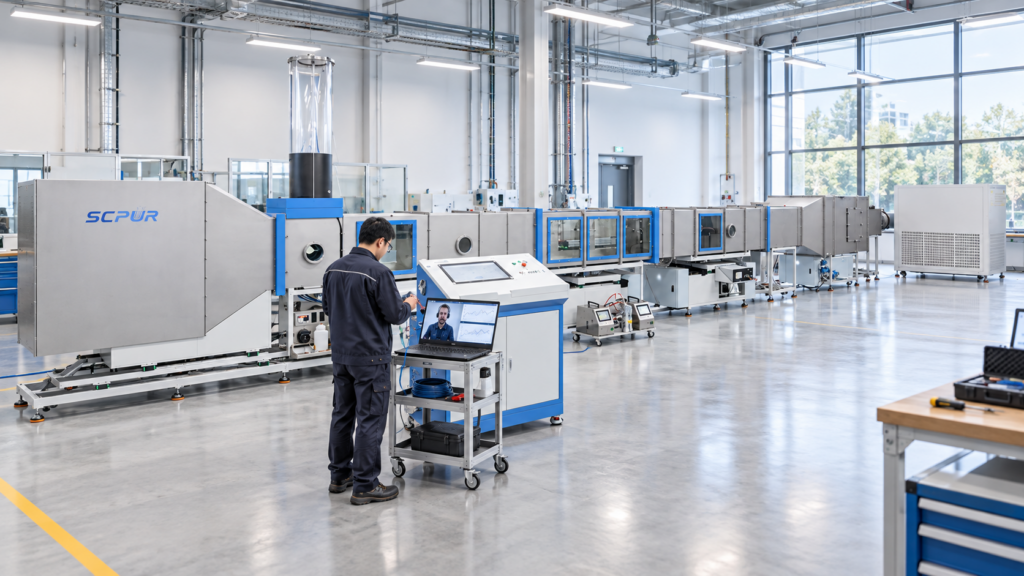
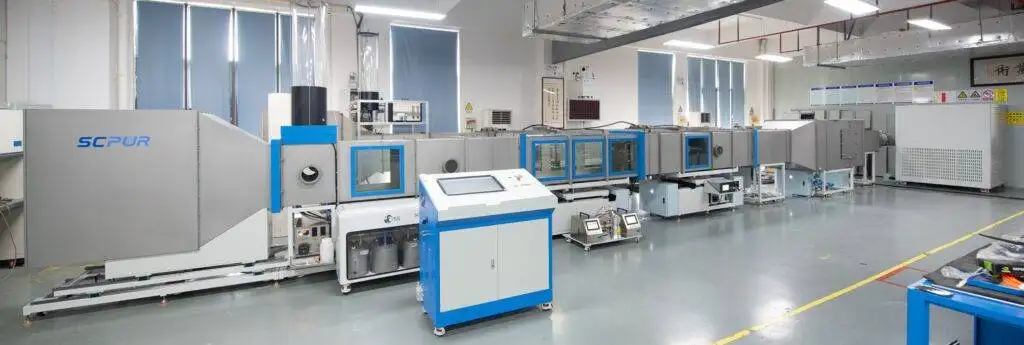
Define the target efficiency range, particle size or aerosol, sample area and face velocity first. Then evaluate upstream and downstream counting capability, dilution, holder sealing, 반복성, calibration and data traceability. SCPUR SC-FT-1406D, SC-FT-1406DH 그리고 SC-FT-1406DU are configured for flat-sheet media across different efficiency ranges. They are not finished-filter test benches, and selection should start with the sample and test objective rather than the labels HEPA 또는 ULPA alone.

필터

연락하세요

가기 전에...

귀하의 프로젝트에 어떤 국제 표준이 적용되는지 확실하지 않음? 당사의 10년 업계 전문 지식을 바탕으로 한 맞춤형 기술 평가를 위해 수석 엔지니어와 상담하세요..

*우리는 귀하의 기밀성을 존중하며 모든 정보는 보호됩니다.

글로벌 표준 테스트 시스템으로 품질을 검증하세요

우리 전문가들은 귀하를 위한 맞춤형 솔루션을 설계할 준비가 되어 있습니다.. 귀하의 프로젝트에 대해 알려주십시오., 정확하고 빠르게 품질을 검증해 드립니다..

커스텀 R&디 & 맞춤형 솔루션

커스텀 R&디 & 맞춤형 솔루션

글로벌 스탠다드 준수

글로벌 스탠다드 준수

100% 자체 개발 소프트웨어 시스템

100% 자체 개발 소프트웨어 시스템

원격 교정 & 글로벌 지원

원격 교정 & 글로벌 지원

문의하기

*우리는 귀하의 기밀성을 존중하며 모든 정보는 보호됩니다.

This page has been automatically translated from the English original for convenience. Product models, standards, numerical values and technical limits should be verified against the English version. Please contact SCPUR for project-specific confirmation.