

Sự khác biệt chính là mức độ thâm nhập cần thiết
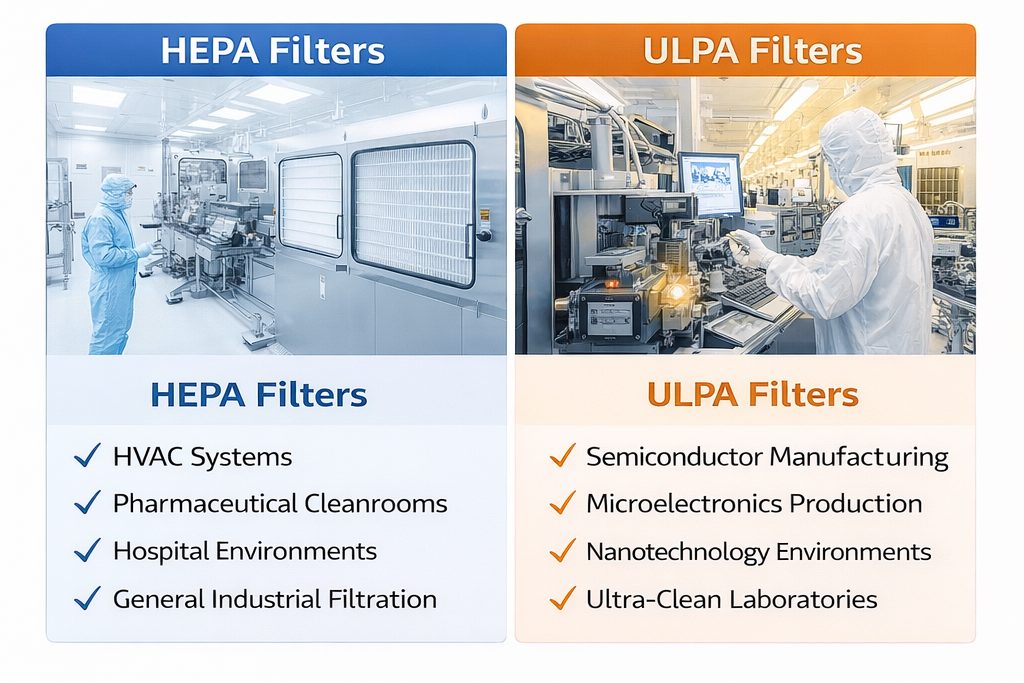
Bộ lọc HEPA và ULPA đều là bộ lọc hiệu quả cao, nhưng các lớp ULPA cho phép thâm nhập thấp hơn nhiều. Dưới EN 1822, Bộ lọc HEPA được phân loại là H13 và H14, trong khi bộ lọc ULPA được phân loại là U15, U16 và U17. Cả hai nhóm đều được đánh giá ở kích thước hạt xuyên thấu nhất, hoặc MPPS.
Biểu thức thường được trích dẫn 99.97 phần trăm tại 0.3 micromet thuộc về định nghĩa cụ thể của quốc gia hoặc khách hàng về hiệu suất của HEPA. Nó không nên được sử dụng như một sự thay thế phổ biến cho EN 1822 hoặc ISO 29463 phân loại tại MPPS.
TRONG 1822 Tổng quan về phân loại
| Nhóm lọc | Lớp học | Hiệu suất tích phân tối thiểu tại MPPS |
| HEPA | H13 | 99.95 phần trăm |
| HEPA | H14 | 99.995 phần trăm |
| ULPA | U15 | 99.9995 phần trăm |
| ULPA | U16 | 99.99995 phần trăm |
| ULPA | U17 | 99.999995 phần trăm |
Các lớp H và U áp dụng cũng có yêu cầu thâm nhập cục bộ. Một bộ lọc hoàn chỉnh có thể vượt qua yêu cầu về hiệu suất tích hợp trung bình của nó và vẫn thất bại do một vị trí được quét vượt quá mức thâm nhập cục bộ được phép.
Tại sao kích thước hạt không được cố định
MPPS phụ thuộc vào phương tiện lọc, cấu trúc sợi hoặc màng, điều kiện tĩnh điện và tốc độ thử nghiệm. Nó thường nằm trong phạm vi dưới micromet, nhưng nó không nên tự động được sửa tại 0.3 hoặc 0.12 micromet.
Đối với EN chính thức 1822 hoặc ISO 29463 phân loại, báo cáo phải xác định kích thước hạt áp dụng hoặc quy trình MPPS. Một cố định 0.3 thử nghiệm micromet vẫn có thể hữu ích cho phương pháp sàng lọc sản xuất nội bộ đã được xác nhận, nhưng báo cáo phải nêu rõ mục đích hạn chế đó.
Hiệu quả tích hợp và quét rò rỉ
Hiệu suất tích phân đo lường mức độ thâm nhập trung bình của bộ lọc hoàn chỉnh. Quét cục bộ di chuyển đầu dò qua mặt phía dưới và các khu vực bịt kín có liên quan để xác định lỗ kim, phương tiện bị hư hỏng, khoảng trống bịt kín và khuyết tật lắp ráp.
Cả hai kết quả trở nên khó đo lường hơn khi độ thâm nhập giảm. Thử nghiệm ULPA yêu cầu nồng độ đủ ở thượng nguồn, số lượng nền rất thấp, pha loãng có kiểm soát, luồng không khí ổn định, phạm vi bao phủ đầu dò hoàn chỉnh và đủ thời gian lấy mẫu để có được số liệu thống kê đáng tin cậy.
ULPA luôn có mức giảm áp suất cao hơn
KHÔNG. Lớp bộ lọc cao hơn thường yêu cầu phương tiện hiệu quả hơn, nhưng độ giảm áp của bộ lọc thành phẩm cũng phụ thuộc vào độ thấm của vật liệu, khu vực phương tiện được cài đặt, độ sâu nếp gấp, khoảng cách nếp gấp, thiết kế khung và luồng không khí định mức. Bộ lọc ULPA được thiết kế tốt có thể giảm áp suất thấp hơn bộ lọc HEPA được thiết kế kém ở luồng khí khác.
Do đó, hiệu quả và sức cản phải được so sánh ở cùng một luồng không khí và với kích thước bộ lọc tương đương.. Chỉ riêng lớp bộ lọc không xác định mức tiêu thụ năng lượng.
Yêu cầu về thiết bị
| Nhiệm vụ kiểm tra | Yêu cầu HEPA | Mối quan tâm bổ sung đối với ULPA |
| Đo hạt | Phạm vi máy dò phù hợp với loại H và kích thước hạt áp dụng | Độ nhạy cao hơn và phép đo dưới micromet đáng tin cậy |
| Thử thách ngược dòng | Nồng độ khí dung ổn định và lấy mẫu đại diện | Nồng độ phải hỗ trợ khả năng thâm nhập hạ lưu cực thấp mà không làm quá tải máy dò |
| Quét rò rỉ | Đường dẫn thăm dò được kiểm soát, tốc độ và phạm vi phủ sóng | Giới hạn thâm nhập cục bộ thấp hơn yêu cầu số liệu thống kê và kiểm soát nền mạnh hơn |
| Báo cáo | Kết quả tích phân, kết quả cục bộ, luồng không khí, bình xịt và lớp học | MPPS, giới hạn máy dò, pha loãng và tính hợp lệ ở số lượng thấp cần được xem xét kỹ hơn |
Cách chọn hệ thống đúng
- Xác định EN cần thiết 1822 hoặc ISO 29463 lớp và phiên bản.
- Xác nhận xem tác vụ có phải là kiểm tra phương tiện hay không, hiệu quả tích hợp, quét rò rỉ nhà máy hoặc kiểm tra tính toàn vẹn của hệ thống được cài đặt.
- Cung cấp kích thước bộ lọc, hình học, luồng không khí định mức và sức cản tối đa.
- Xác định khí dung, phạm vi hạt, sự thâm nhập dự kiến và độ nhạy của máy dò cần thiết.
- Nêu sản lượng sản xuất, số lượng đầu dò quét và yêu cầu báo cáo.
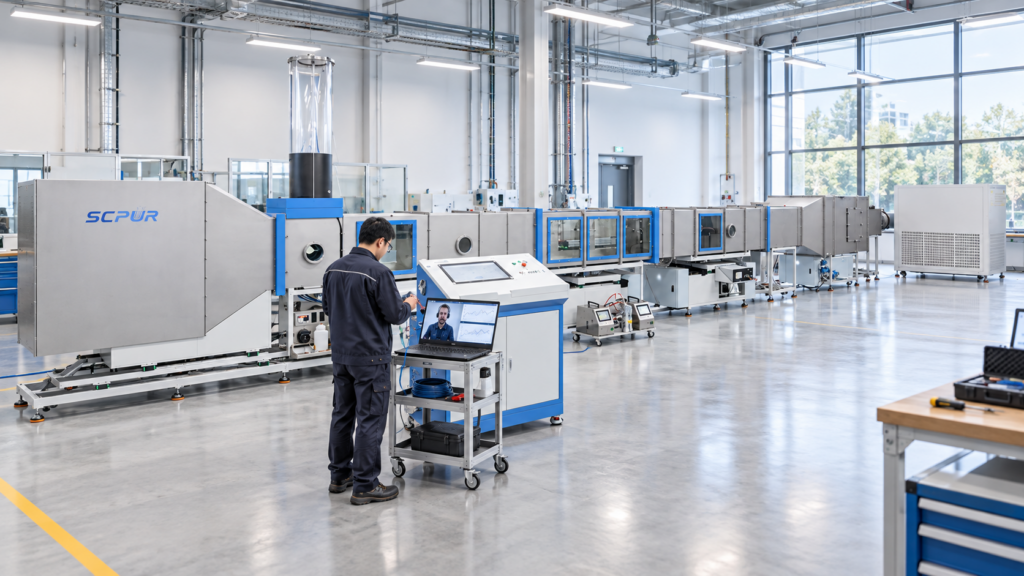
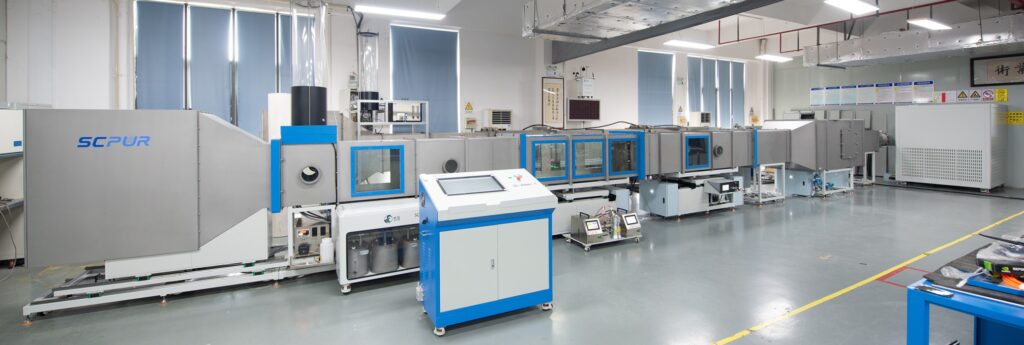
SCPUR SC-L8023 được thiết kế để thử nghiệm sản xuất HEPA thông thường với 0.3 cấu hình đo hạt micromet. SC-L8023U mở rộng phép đo hạt tới 0.1 micromet cho các ứng dụng HEPA và ULPA liên quan đến MPPS. Cấu hình cuối cùng phải được chọn từ lớp và phương thức thử nghiệm được yêu cầu.