

La principale différence est le niveau de pénétration requis
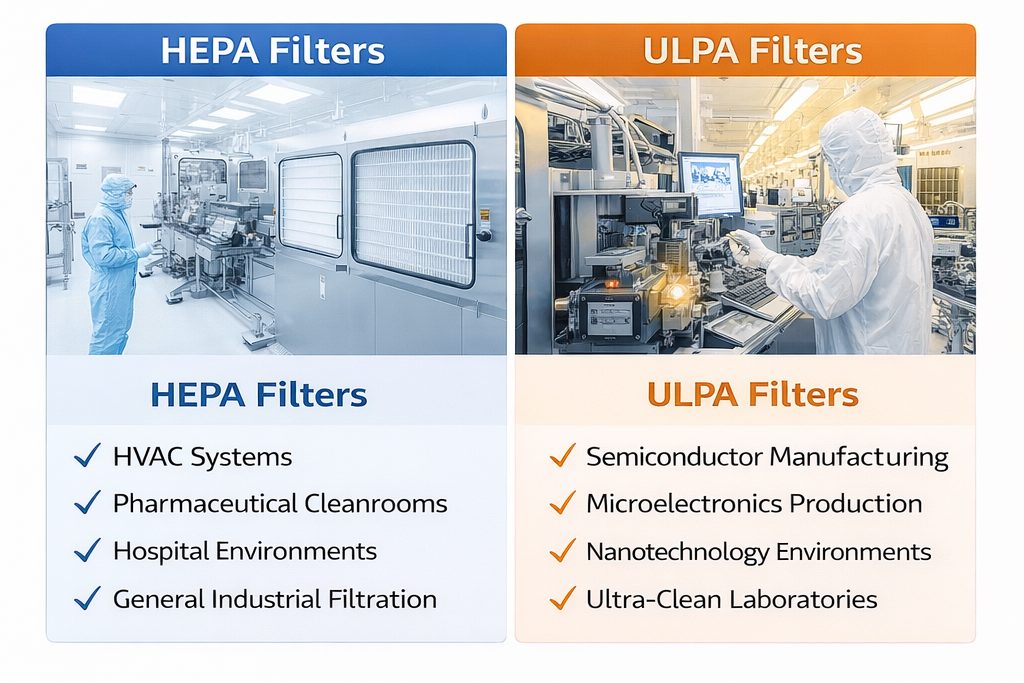
Les filtres HEPA et ULPA sont tous deux des filtres à haute efficacité, mais les classes ULPA permettent une pénétration beaucoup plus faible. Sous EN 1822, Les filtres HEPA sont classés H13 et H14, tandis que les filtres ULPA sont classés U15, U16 et U17. Les deux groupes sont évalués à la taille de particule la plus pénétrante, ou MPPS.
L'expression couramment citée 99.97 pour cent à 0.3 les micromètres appartiennent à des définitions nationales ou client particulières de la performance HEPA. Il ne doit pas être utilisé comme un remplacement universel pour EN 1822 ou ISO 29463 classement au MPPS.
DANS 1822 Aperçu de la classification
| Groupe de filtres | Classe | Efficacité intégrale minimale au MPPS |
| HEPA | H13 | 99.95 pour cent |
| HEPA | H14 | 99.995 pour cent |
| ULPA | U15 | 99.9995 pour cent |
| ULPA | U16 | 99.99995 pour cent |
| ULPA | U17 | 99.999995 pour cent |
Les classes H et U applicables ont également des exigences de pénétration locales. Un filtre complet peut satisfaire à ses exigences moyennes d'efficacité intégrale et échouer quand même parce qu'un emplacement analysé dépasse la pénétration locale autorisée..
Pourquoi la taille des particules ne doit pas être fixée
Le MPPS dépend du média filtrant, structure fibreuse ou membranaire, condition électrostatique et vitesse d'essai. Il se situe souvent dans la plage submicrométrique, mais il ne devrait pas être automatiquement corrigé à 0.3 ou 0.12 micromètres.
Pour EN formel 1822 ou ISO 29463 classification, le rapport doit identifier la taille des particules ou la procédure MPPS applicable. Un fixe 0.3 le test micrométrique peut toujours être utile pour une méthode de sélection de production interne validée, mais le rapport doit indiquer que cet objectif limité.
Efficacité intégrale et détection des fuites
L'efficacité intégrale mesure la pénétration moyenne du filtre complet. Le balayage local déplace une sonde sur la face aval et les zones d'étanchéité pertinentes pour identifier les trous d'épingle., support endommagé, manques de mastic et défauts d'assemblage.
Les deux résultats deviennent plus difficiles à mesurer à mesure que la pénétration diminue. Les tests ULPA nécessitent une concentration suffisante en amont, très faible nombre d'arrière-plans, dilution contrôlée, flux d'air stable, couverture complète de la sonde et temps d'échantillonnage suffisant pour obtenir des statistiques de comptage fiables.
L'ULPA a-t-elle toujours une chute de pression plus élevée
Non. Une classe de filtre supérieure nécessite souvent un média plus efficace, mais la chute de pression du filtre fini dépend également de la perméabilité du milieu, zone multimédia installée, profondeur des plis, espacement des plis, conception du cadre et débit d'air nominal. Un filtre ULPA bien conçu peut avoir une perte de charge plus faible qu'un filtre HEPA mal conçu à un débit d'air différent.
L'efficacité et la résistance doivent donc être comparées à même débit d'air et à dimensions de filtre équivalentes.. La classe de filtre à elle seule ne détermine pas la consommation d'énergie.
Exigences en matière d'équipement
| Tâche de test | Exigence HEPA | Préoccupation supplémentaire pour l'ULPA |
| Mesure des particules | Gamme de détecteurs adaptée à la classe H et à la taille des particules applicables | Sensibilité plus élevée et mesure submicrométrique fiable |
| Défi en amont | Concentration d'aérosol stable et échantillonnage représentatif | La concentration doit permettre une pénétration en aval extrêmement faible sans surcharge du détecteur |
| Analyse des fuites | Chemin de sonde contrôlé, vitesse et couverture | Des limites de pénétration locales inférieures nécessitent des statistiques de comptage et un contrôle d'arrière-plan plus forts |
| Rapports | Résultat intégral, résultat local, flux d'air, aérosol et classe | MPPS, limites du détecteur, la dilution et la validité du faible nombre nécessitent un examen plus approfondi |
Comment choisir le bon système
- Définir l'EN requis 1822 ou ISO 29463 cours et édition.
- Confirmez si la tâche consiste en un test multimédia, efficacité intégrale, analyse des fuites en usine ou test d'intégrité du système installé.
- Fournir les dimensions du filtre, géométrie, débit d'air nominal et résistance maximale.
- Définir l'aérosol, gamme de particules, pénétration attendue et sensibilité requise du détecteur.
- Indiquer le débit de production, nombre de sondes de numérisation et exigences en matière de rapports.
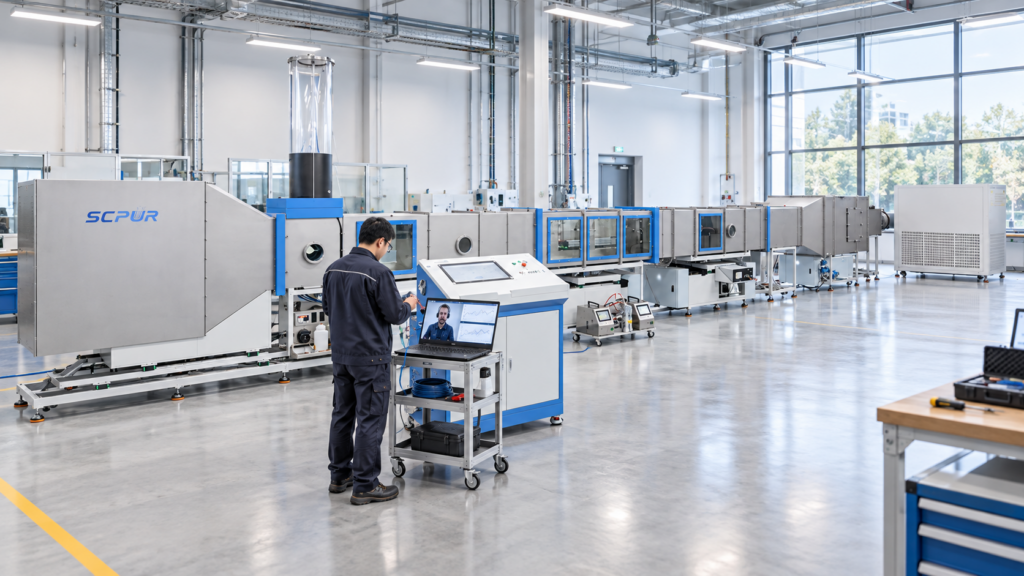
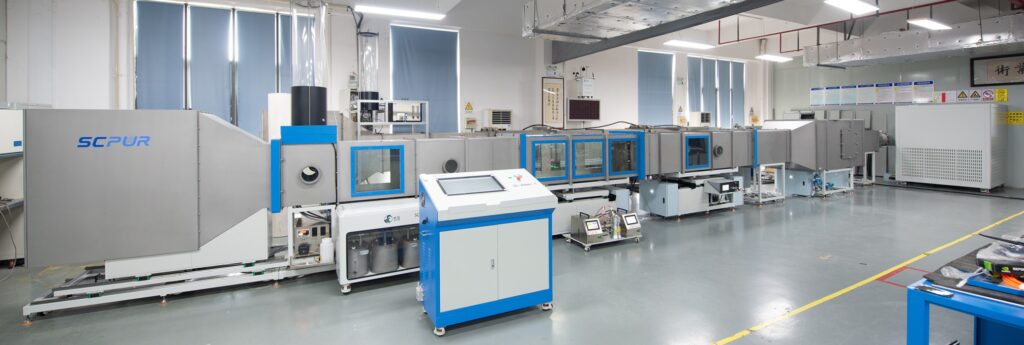
SCPUR SC-L8023 est destiné aux tests de production HEPA de routine avec un 0.3 configuration de mesure de particules micrométriques. Le SC-L8023U étend la mesure des particules à 0.1 micromètres pour les applications HEPA et ULPA liées aux MPPS. La configuration finale doit être sélectionnée parmi la classe et la méthode de test requises.