

A fő különbség a szükséges penetrációs szint
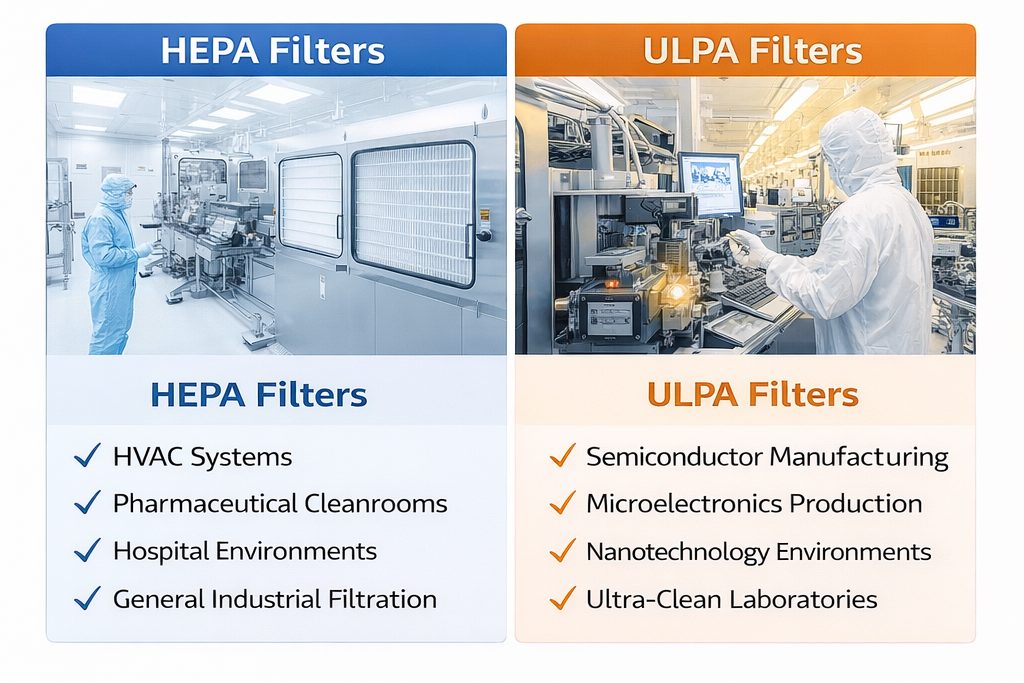
A HEPA és az ULPA szűrők egyaránt nagy hatásfokú szűrők, de az ULPA osztályok sokkal alacsonyabb penetrációt tesznek lehetővé. EN alatt 1822, A HEPA szűrők H13 és H14 osztályozásúak, míg az ULPA szűrők U15 besorolásúak, U16 és U17. Mindkét csoportot a leginkább áthatoló részecskeméret szerint értékeljük, vagy MPPS.
A gyakran idézett kifejezés 99.97 százalék at 0.3 A mikrométer a HEPA-teljesítmény bizonyos nemzeti vagy fogyasztói definícióihoz tartozik. Nem használható az EN univerzális helyettesítőjeként 1822 vagy ISO 29463 osztályozás az MPPS-nél.
IN 1822 Osztályozás áttekintése
| Szűrőcsoport | Osztály | Minimális integrált hatékonyság MPPS-nél |
| HEPA | H13 | 99.95 százalékos |
| HEPA | H14 | 99.995 százalékos |
| ULPA | U15 | 99.9995 százalékos |
| ULPA | U16 | 99.99995 százalékos |
| ULPA | U17 | 99.999995 százalékos |
Az alkalmazandó H és U osztályoknak helyi penetrációs követelmények is vannak. Előfordulhat, hogy egy komplett szűrő teljesíti az átlagos integrálhatékonysági követelményét, de még mindig meghibásodik, mert egy szkennelt hely meghaladja a megengedett helyi penetrációt.
Miért nem szabad a részecskeméretet rögzíteni?
Az MPPS a szűrőközegtől függ, rost vagy membrán szerkezet, elektrosztatikus állapot és vizsgálati sebesség. Gyakran a mikrométeres tartományon belül van, de nem szabad automatikusan rögzíteni 0.3 vagy 0.12 mikrométer.
A hivatalos EN 1822 vagy ISO 29463 osztályozás, a jelentésnek meg kell határoznia az alkalmazandó részecskeméretet vagy MPPS eljárást. Egy fix 0.3 A mikrométeres teszt továbbra is hasznos lehet egy validált belső gyártási szűrési módszerhez, de a jelentésnek fel kell tüntetnie azt a korlátozott célt.
Integrált hatékonyság és szivárgásvizsgálat
Az integrált hatékonyság a teljes szűrő átlagos behatolását méri. A helyi szkennelés egy szondát mozgat az alsó oldalon és a megfelelő tömítési területeken, hogy azonosítsa a tűlyukakat, sérült közeg, tömítési hézagok és szerelési hibák.
Mindkét eredményt nehezebb mérni, ahogy a penetráció csökken. Az ULPA teszteléséhez elegendő felfelé irányuló koncentráció szükséges, nagyon alacsony háttérszám, szabályozott hígítású, stabil légáramlás, a szonda teljes lefedettsége és elegendő mintavételi idő a megbízható számlálási statisztikák készítéséhez.
Az ULPA-nak mindig nagyobb a nyomásesése?
Nem. A magasabb szűrőosztály gyakran hatékonyabb közeget igényel, de a kész szűrő nyomásesése függ a közegáteresztő képességtől is, telepített médiaterület, ránc mélysége, redőközök, vázkialakítás és névleges légáramlás. Egy jól megtervezett ULPA szűrő alacsonyabb nyomásesést mutathat, mint egy rosszul megtervezett HEPA szűrő eltérő légáramlás mellett.
Ezért a hatékonyságot és az ellenállást azonos légáramlás mellett és egyenértékű szűrőméretekkel kell összehasonlítani. A szűrőosztály önmagában nem határozza meg az energiafogyasztást.
Felszerelési követelmények
| Tesztfeladat | HEPA követelmény | További gond az ULPA-val kapcsolatban |
| Részecskemérés | Az alkalmazható H osztálynak és részecskeméretnek megfelelő érzékelő tartomány | Nagyobb érzékenység és megbízható szubmikrométeres mérés |
| Upstream kihívás | Stabil aeroszolkoncentráció és reprezentatív mintavétel | A koncentrációnak támogatnia kell a rendkívül alacsony behatolást az érzékelő túlterhelése nélkül |
| Szivárgás szkennelés | Ellenőrzött szondaútvonal, sebesség és lefedettség | Az alacsonyabb helyi penetrációs határok erősebb számlálási statisztikákat és háttérvezérlést igényelnek |
| Jelentés | Integrált eredmény, helyi eredmény, légáramlás, aeroszol és osztály | MPPS, detektor határértékei, a hígítás és az alacsony számú érvényesség alaposabb vizsgálatot igényel |
Hogyan válasszuk ki a megfelelő rendszert
- Határozza meg a szükséges EN-t 1822 vagy ISO 29463 osztály és kiadás.
- Ellenőrizze, hogy a feladat médiateszt-e, integrált hatékonyság, gyári szivárgásvizsgálat vagy a telepített rendszer integritásának tesztelése.
- Adja meg a szűrő méreteit, geometria, névleges légáramlás és maximális ellenállás.
- Határozza meg az aeroszolt, részecsketartomány, a várható penetráció és a szükséges detektor érzékenység.
- Adja meg a termelési teljesítményt, szkennelő szondák száma és jelentési követelmények.
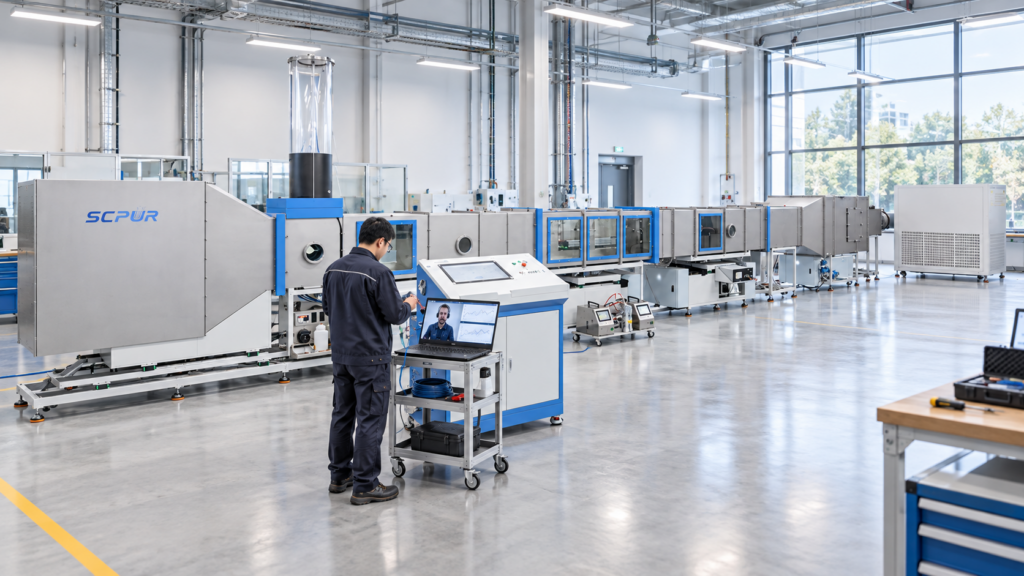
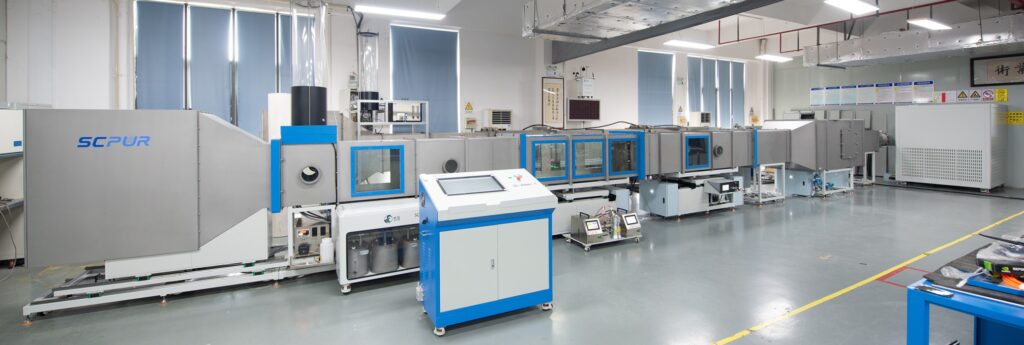
Az SCPUR SC-L8023 rutin HEPA gyártási tesztelésre szolgál a 0.3 mikrométeres részecskemérési konfiguráció. Az SC-L8023U kiterjeszti a részecskemérést 0.1 mikrométer az MPPS-hez kapcsolódó HEPA és ULPA alkalmazásokhoz. A végső konfigurációt a kívánt osztályból és vizsgálati módszerből kell kiválasztani.