

Het belangrijkste verschil is het vereiste penetratieniveau
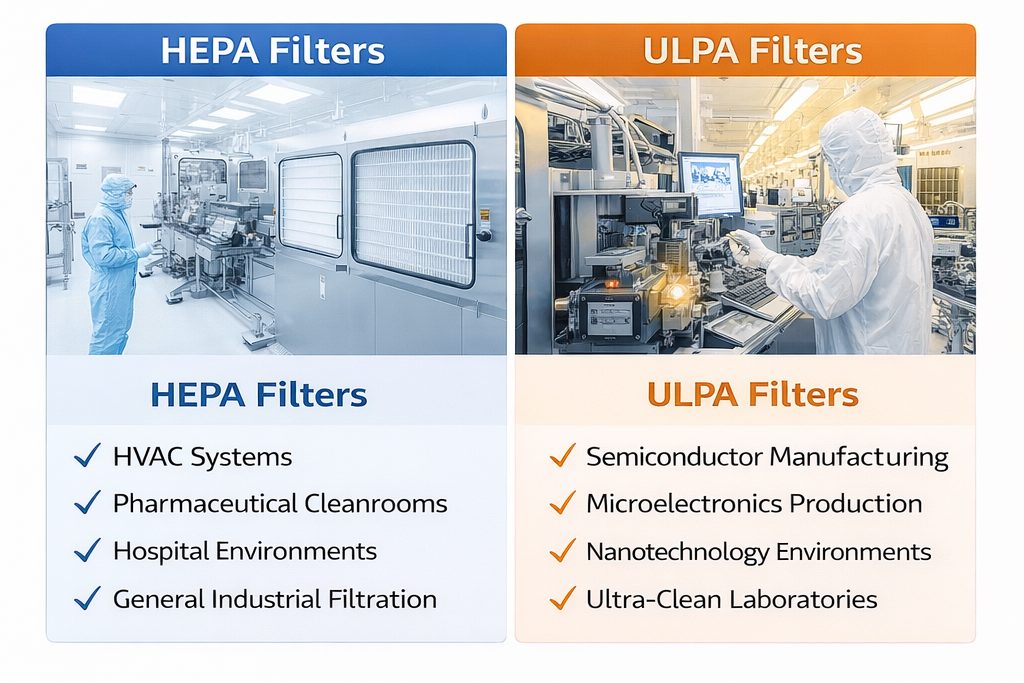
HEPA- en ULPA-filters zijn beide zeer efficiënte filters, maar ULPA-klassen laten een veel lagere penetratie toe. Onder EN 1822, HEPA-filters zijn geclassificeerd als H13 en H14, terwijl ULPA-filters zijn geclassificeerd als U15, U16 en U17. Beide groepen worden beoordeeld op de meest penetrerende deeltjesgrootte, of MPPS.
De vaak geciteerde uitdrukking 99.97 procent bij 0.3 micrometers behoren tot bepaalde nationale of klantdefinities van HEPA-prestaties. Het mag niet worden gebruikt als universele vervanging voor EN 1822 of ISO 29463 classificatie bij MPPS.
IN 1822 Classificatieoverzicht
| Groep filteren | Klas | Minimale integrale efficiëntie bij MPPS |
| HEPA | H13 | 99.95 procent |
| HEPA | H14 | 99.995 procent |
| ULPA | U15 | 99.9995 procent |
| ULPA | U16 | 99.99995 procent |
| ULPA | U17 | 99.999995 procent |
Voor de toepasselijke H- en U-klassen gelden ook lokale penetratie-eisen. Een compleet filter kan aan de gemiddelde integrale efficiëntie-eis voldoen en toch falen omdat één gescande locatie de toegestane lokale penetratie overschrijdt.
Waarom de deeltjesgrootte niet mag worden vastgesteld
De MPPS is afhankelijk van het filtermedium, vezel- of membraanstructuur, elektrostatische toestand en testsnelheid. Het ligt vaak binnen het submicrometerbereik, maar het mag niet automatisch worden vastgesteld op 0.3 of 0.12 micrometer.
Voor formeel NL 1822 of ISO 29463 classificatie, het rapport moet de toepasselijke deeltjesgrootte of MPPS-procedure identificeren. Een vaste 0.3 micrometertesten kunnen nog steeds nuttig zijn voor een gevalideerde interne productie-screeningsmethode, maar het rapport moet dat beperkte doel vermelden.
Integrale efficiëntie en lekkagescannen
Integrale efficiëntie meet de gemiddelde penetratie van het volledige filter. Lokaal scannen beweegt een sonde over het stroomafwaartse vlak en relevante afdichtingsgebieden om gaatjes te identificeren, beschadigd medium, afdichtingsspleten en montagefouten.
Beide resultaten worden moeilijker te meten naarmate de penetratie afneemt. ULPA-testen vereisen voldoende stroomopwaartse concentratie, zeer lage achtergrondaantallen, gecontroleerde verdunning, stabiele luchtstroom, volledige sondedekking en voldoende bemonsteringstijd om betrouwbare telstatistieken te verkrijgen.
Heeft ULPA altijd een hogere drukval?
Nee. Een hogere filterklasse vereist vaak een efficiënter medium, maar de drukval van het voltooide filter hangt ook af van de mediapermeabiliteit, geïnstalleerd mediagebied, plooi diepte, plooiafstand, frameontwerp en nominale luchtstroom. Een goed ontworpen ULPA-filter kan bij een andere luchtstroom een lagere drukval hebben dan een slecht ontworpen HEPA-filter.
Efficiëntie en weerstand moeten daarom worden vergeleken bij dezelfde luchtstroom en met gelijkwaardige filterafmetingen. De filterklasse alleen bepaalt niet het energieverbruik.
Apparatuurvereisten
| Test taak | HEPA-vereiste | Extra zorg voor ULPA |
| Deeltjesmeting | Detectorbereik geschikt voor de geldende H-klasse en deeltjesgrootte | Hogere gevoeligheid en betrouwbare submicrometermeting |
| Stroomopwaartse uitdaging | Stabiele aerosolconcentratie en representatieve bemonstering | De concentratie moet een extreem lage stroomafwaartse penetratie ondersteunen zonder dat de detector overbelast raakt |
| Lekken scannen | Gecontroleerd sondepad, snelheid en dekking | Lagere lokale penetratielimieten vereisen sterkere tellingsstatistieken en achtergrondcontrole |
| Rapportage | Integraal resultaat, lokaal resultaat, luchtstroom, spuitbus en klasse | MPPS, detectorlimieten, verdunning en validiteit bij lage aantallen vereisen nadere beoordeling |
Hoe u het juiste systeem kiest
- Definieer de vereiste EN 1822 of ISO 29463 klasse en editie.
- Bevestig of de taak mediatests betreft, integrale efficiëntie, scannen op fabriekslekken of testen van de integriteit van geïnstalleerde systemen.
- Geef de filterafmetingen op, geometrie, nominale luchtstroom en maximale weerstand.
- Definieer de aërosol, deeltjes bereik, verwachte penetratie en vereiste detectorgevoeligheid.
- Vermeld de productiedoorvoer, aantal scansondes en rapportagevereisten.
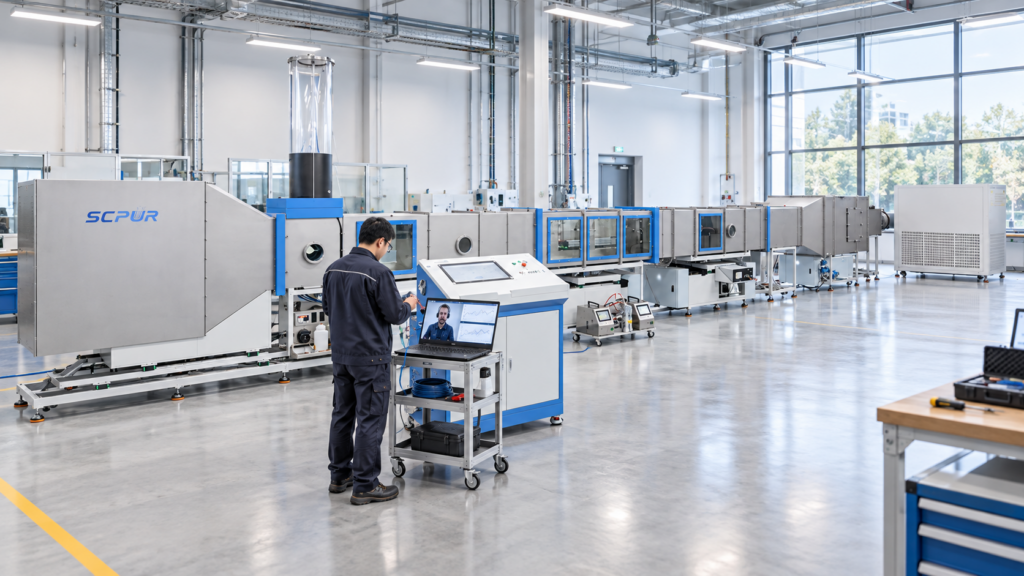
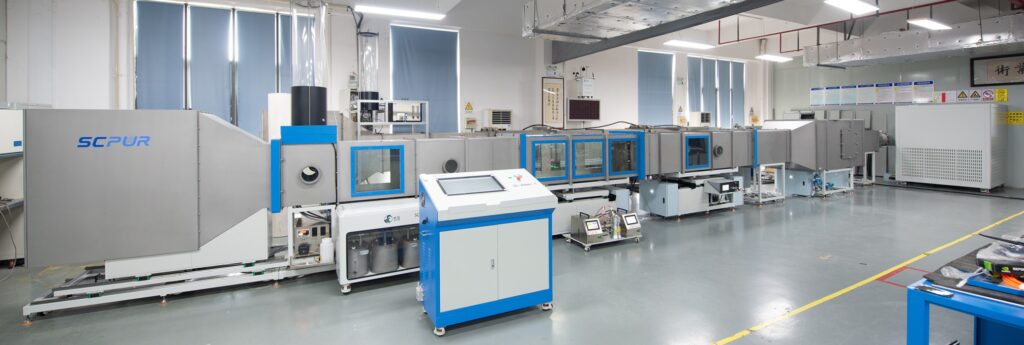
SCPUR SC-L8023 is bedoeld voor routinematige HEPA-productietests met een 0.3 configuratie voor micrometerdeeltjesmeting. SC-L8023U breidt deeltjesmeting uit naar 0.1 micrometers voor MPPS-gerelateerde HEPA- en ULPA-toepassingen. De uiteindelijke configuratie moet worden geselecteerd uit de vereiste klasse en testmethode.