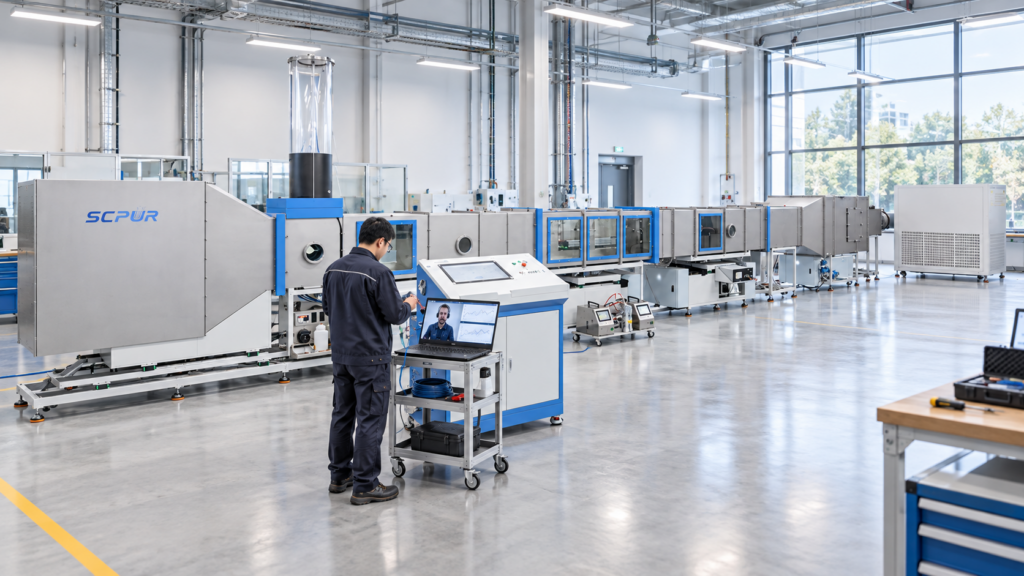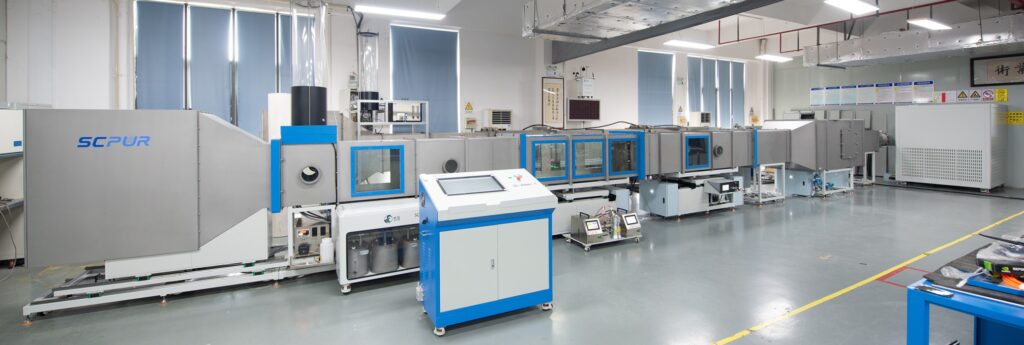


“ISO 16890 test equipment” does not refer to one instrument.
A complete laboratory can include fractional-efficiency measurement, sức cản luồng không khí, filter conditioning, tải bụi, weighing and data-processing functions. These functions may use connected modules, but they do not all perform the same test.
The correct configuration depends on whether the laboratory needs product development, routine quality control or complete testing according to the ISO 16890 loạt.
Define the Test Scope First
Trước khi lựa chọn thiết bị, determine which results are required:
- Initial fractional-efficiency curve
- Conditioned fractional efficiency
- ISO ePM classification
- Airflow–resistance curve
- Hiệu suất trọng lượng
- Sức đề kháng so với khối lượng bụi bị bắt
- Công suất bụi
- Internal production comparison
- Formal customer test report
A system configured only for efficiency and resistance testing cannot perform complete conditioning and dust-loading procedures without the corresponding modules.
1. Airflow Test Duct
The test duct provides controlled airflow through the filter.
Its configuration depends on:
- Kích thước bộ lọc tối đa
- Filter type
- Rated airflow
- Required pressure range
- Định hướng kiểm tra
- Available laboratory space
The duct should provide stable airflow, suitable flow distribution and low system leakage. The fan must overcome the resistance of the duct, filter and measurement components throughout the required operating range.
Airflow measurement and pressure sensors must cover both clean-filter and loaded-filter conditions.
2. Aerosol Generation and Mixing
Fractional-efficiency testing requires stable test aerosols over the required particle-size range.
The aerosol system must provide:
- Suitable particle-size distribution
- Stable concentration
- Adequate output at maximum airflow
- Effective mixing before upstream sampling
- Controlled switching and cleaning
Generator quantity and configuration cannot be selected from filter size alone. Maximum airflow and required concentration are also important.
3. Particle Measurement and Sampling
Upstream and downstream particle concentrations are measured across the required size range.
The system may require:
- Particle counters or particle-sizing instruments
- Upstream and downstream sampling probes
- Automatic sampling switching
- Dilution for higher upstream concentrations
- Controlled sampling tubing
- Background monitoring
Instrument range, resolution and counting statistics affect the efficiency result. A particle counter with the wrong concentration range cannot be corrected simply through software.
4. Filter-Conditioning Cabinet
ISO 16890 conditioning is performed in a dedicated cabinet according to ISO 16890-4.
Its purpose is to determine the minimum fractional test efficiency after reducing the influence of electrostatic charge. It is not a dust-loading process and should not be described as field-ageing simulation.
The conditioning cabinet is a separate functional module from the main test duct.
5. Dust-Loading and Weighing Equipment
ISO 16890-3 evaluates gravimetric efficiency and resistance versus captured dust mass.
The required equipment can include:
- Test-dust feeder
- Dust dispersion and injection system
- Dust preparation and handling area
- Thiết bị cân chính xác
- Resistance monitoring
- Exhaust or dust-collection arrangements
- Software for loading-stage data
Dust loading is separate from the ePM classification procedure. It provides comparative loading data rather than an exact prediction of field replacement time.
6. Phần mềm điều khiển và báo cáo
Software can coordinate:
- Kiểm soát luồng không khí
- Tạo khí dung
- Instrument switching
- Dilution settings
- Test sequences
- Data acquisition
- Efficiency calculation
- Phân loại
- Alarm handling
- Tạo báo cáo
Automation improves repeatability and traceability, but the calculation logic and measurement chain must still be validated.
Can One System Support Other Standards?
Some hardware may be shared between ISO 16890, ASHRAE 52.2 and legacy EN 779 thử nghiệm, bao gồm:
- Test duct
- Fan
- Airflow measurement
- Pressure measurement
- Part of the particle-sampling system
Tuy nhiên, the standards use different aerosols, conditioning or loading procedures, calculations and report formats.
A system should not be described as compliant with several standards unless the required hardware, instruments and software procedures for each method have been verified.
Information Required for Equipment Selection
An equipment supplier should request:
- Maximum filter size and construction
- Minimum and maximum airflow
- Maximum expected pressure drop
- Required parts of ISO 16890
- Target ePM range
- Required aerosol and instruments
- Test volume and automation level
- Laboratory dimensions and utilities
- Calibration and traceability requirements
- Future ASHRAE 52.2 hoặc VN 779 compatibility
SCPUR cấu hình ISO 16890 laboratories according to the filter, airflow range and required test scope. Hiệu quả phân số, conditioning and dust loading are treated as connected but separate capabilities, allowing manufacturers to select the modules they actually need.