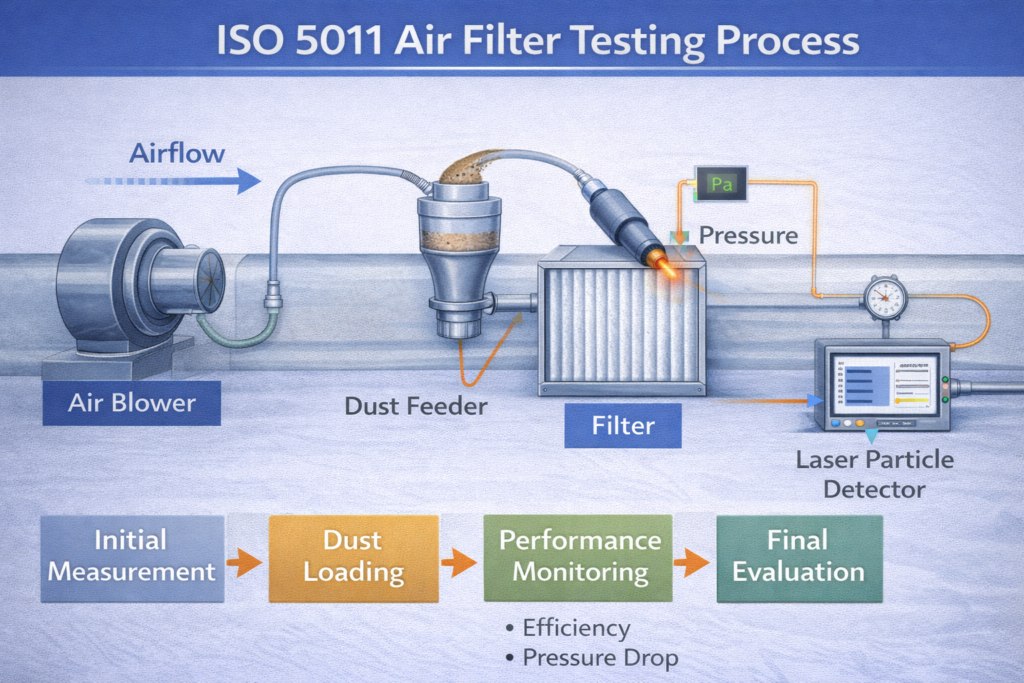
La filtration de l'air à haute efficacité joue un rôle essentiel dans les salles blanches, environnements de soins de santé, et applications industrielles. Pour garantir des performances constantes, Les filtres HEPA doivent être conformes aux normes internationalement reconnues.
Deux des normes les plus utilisées sont OIN 29463 et DANS 1822. Bien qu'ils soient étroitement liés, il existe des différences importantes dans les méthodes de test, systèmes de classification, et adoption mondiale.
Cet article fournit une comparaison claire pour vous aider à comprendre leurs similitudes et leurs différences..
1. Aperçu des normes relatives aux filtres HEPA
DANS 1822 (Norme européenne)
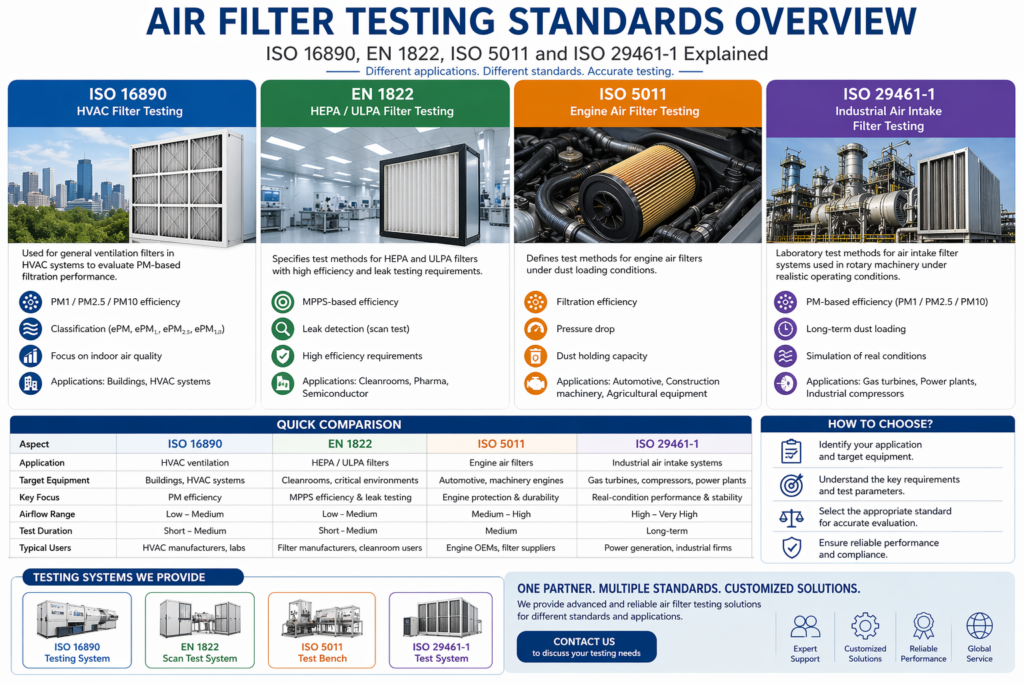
DANS 1822 est une norme européenne qui définit la classification et les tests des filtres HEPA et ULPA en fonction de leurs performances à la Taille des particules la plus pénétrante (MPPS).
Il est largement utilisé dans:
- Europe
- Industries des salles blanches
- Secteurs pharmaceutique et semi-conducteur
OIN 29463 (Norme internationale)
OIN 29463 est la norme internationale dérivée de EN 1822 et étend sa portée pour une utilisation mondiale.
Il fournit:
- Méthodes de test harmonisées
- Système de classification mondial
- Applicabilité dans différents secteurs et régions
2. Similitudes clés
Les deux normes partagent les mêmes principes fondamentaux:
- Classement basé sur Efficacité MPPS
- Exigence de efficacité globale et tests de fuite locaux
- Utilisation de méthodes de test à base d'aérosols (par ex., DEHS, PAO)
- Focus sur une filtration haute performance (HEPA & COLÈRE)
👉En pratique, OIN 29463 peut être considéré comme une extension internationale de l’EN 1822.
3. Différences clés entre ISO 29463 et FR 1822
| Aspect | OIN 29463 | DANS 1822 |
|---|---|---|
| Portée | International | européen |
| Structure | 5 parties (plus complet) | 5 parties |
| Terminologie | Harmonisé à l’échelle mondiale | Axé sur l'Europe |
| Application | Industries mondiales | Principalement l'Europe |
| Mises à jour | Plus récent et évolutif | Fondation antérieure |
4. Comparaison des classifications
Les deux normes classent les filtres en fonction de leur efficacité au MPPS:
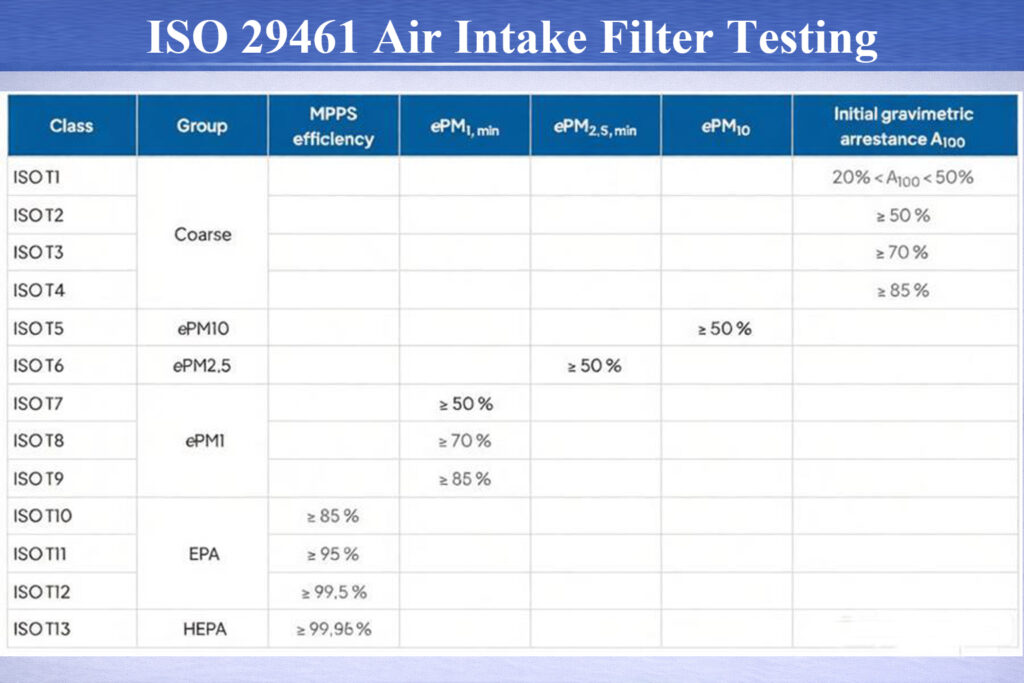
| Classe | Efficacité (MPPS) |
|---|---|
| E10 | ≥ 85% |
| E11 | ≥ 95% |
| E12 | ≥ 99.5% |
| H13 | ≥ 99.95% |
| H14 | ≥ 99.995% |
| U15-U17 | ≥ 99.9995% et au-dessus |
✔ ISO 29463 adopte essentiellement le même système de classification que l'EN 1822, assurer la compatibilité entre les deux normes.
5. Méthodes de test
Les deux normes nécessitent deux tests critiques:
1) Test d'efficacité MPPS
- Détermine l'efficacité de filtration la plus faible
- Définit la classification du filtre
2) Test de fuite (Test de numérisation)
- Détecte les défauts locaux dans le média filtrant
- Garantit l’absence de fuite de dérivation
Ces tests sont essentiels pour garantir la fiabilité des filtres dans les environnements critiques tels que les salles blanches et les hôpitaux..
6. Pourquoi ces normes sont importantes
Choisir la bonne norme garantit:
- Conformité aux réglementations internationales
- Performances de filtration fiables
- Protection des environnements sensibles
Pour les fabricants, comprendre les deux normes est crucial lors de l’exportation de produits à l’échelle mondiale.
7. Équipement de test pour les normes HEPA
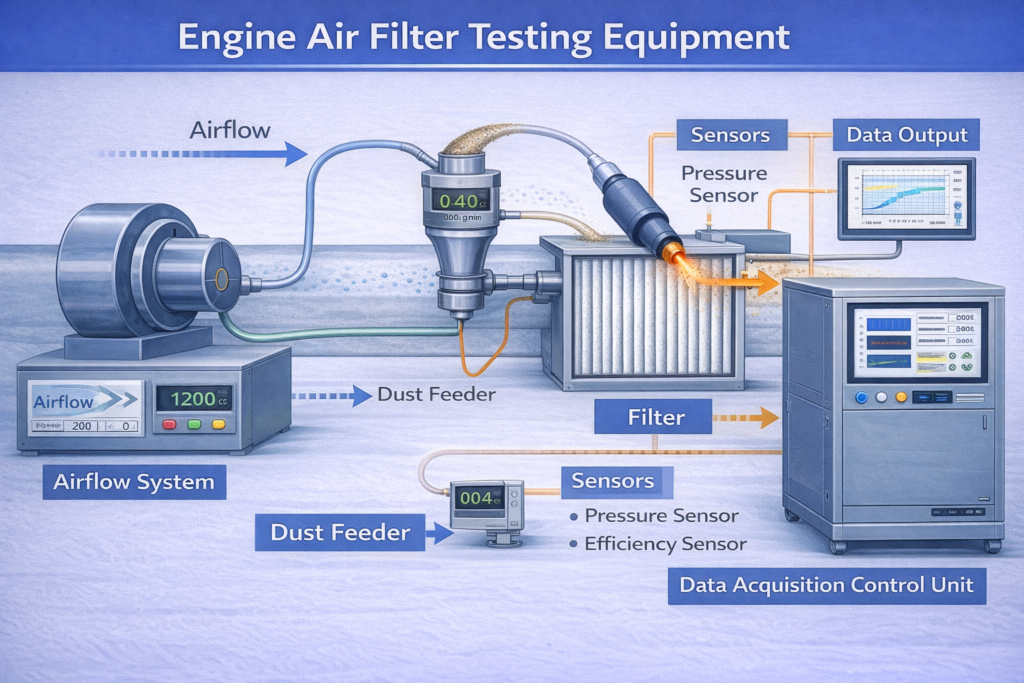
Pour se conformer OIN 29463 et DANS 1822, un équipement de test précis est requis.
Les systèmes typiques incluent:
- Systèmes de test des médias filtrants
- Bancs d'essais de filtres automatisés
- Scanner les systèmes de test d'étanchéité
Par exemple, les plates-formes de tests avancées peuvent:
- Mesurez avec précision l’efficacité du MPPS
- Effectuer une analyse des fuites haute résolution
- Assurer le respect des deux normes
8. Conclusion
DANS 1822 reste la base des tests de filtres HEPA, alors que OIN 29463 l'étend dans une norme unifiée à l'échelle mondiale.
Dans la plupart des cas:
👉 Leurs principes de test et systèmes de classification sont alignés
👉 La principale différence réside dans la portée et l'applicabilité internationale
Comprendre les deux normes aide les fabricants, laboratoires, et les utilisateurs finaux garantissent des performances de filtration constantes et conformes dans le monde entier.