ISO 16890 Test Method: From Efficiency Curves to ePM Classification

共有:

目次

アン ISO 16890 test is not a one-point efficiency measurement followed by a rating. The complete workflow combines airflow and resistance, 初期部分効率, performance after the specified conditioning procedure, そして, when required, 粉塵積載. Each stage answers a different question and must be reported correctly.

The core test workflow

The core test workflow

  • Set the test airflow and measure pressure drop. Airflow must remain stable, and the test duct must be checked for leakage and unacceptable flow distortion.
  • Measure initial fractional efficiency. Upstream and downstream particle concentrations are used to build an efficiency curve across particle-size intervals rather than one value at 0.3 μm.
  • Condition the filter as specified in ISO 16890-4 and repeat the fractional-efficiency measurement. The purpose is to evaluate performance after removable electrostatic effects have been reduced, not to reproduce field aging.
  • Apply the standard reference particle distributions and calculation rules to determine the ISO ePM1, ePM2.5, ePM10 または ISO Coarse group and rating.
  • When dust-loading performance is required, conduct the ISO 16890-3 test and record gravimetric efficiency and resistance against captured test-dust mass. Report this separately from ePM classification.

What must the test rig control?

What must the test rig control?

Accuracy depends on more than the particle counter. The system must control airflow, aerosol concentration and mixing uniformity, 上流と下流のサンプリング, sampling-line losses, pressure measurement and background concentration. For higher-efficiency samples, the downstream concentration must remain above the instrument detection limit. Dilution errors and switching delays can otherwise create convincing but incorrect results.

Four common reporting errors

Four common reporting errors

  • Treating a fixed-particle-size efficiency as ePM1 または ePM2.5.
  • Describing conditioned efficiency as the efficiency after several months of service.
  • Using a dust-loaded efficiency value in the final ePM classification.
  • Checking instrument certificates while ignoring validation of the duct, sampling and calculation chain.

How should the laboratory be configured?

How should the laboratory be configured?

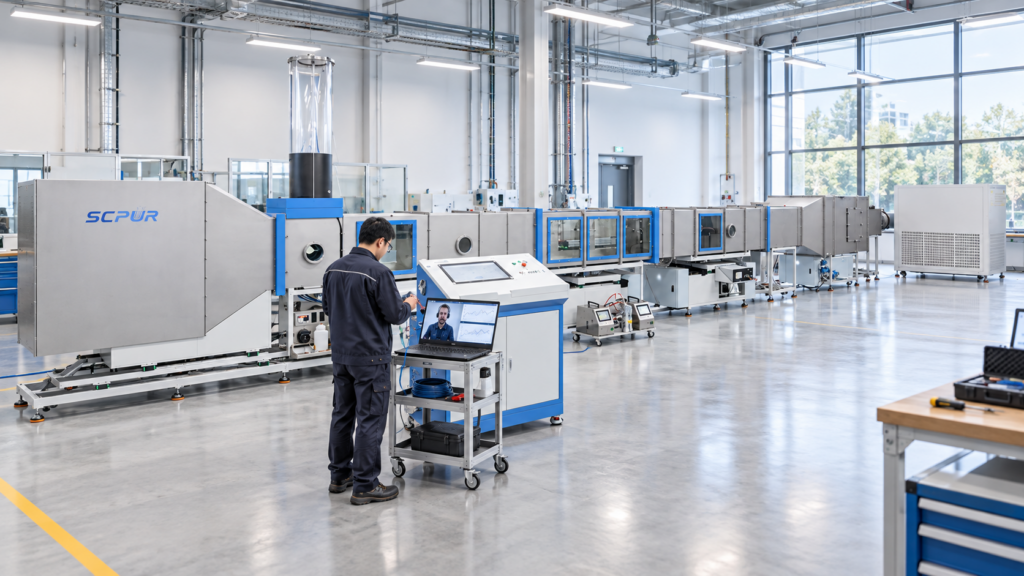
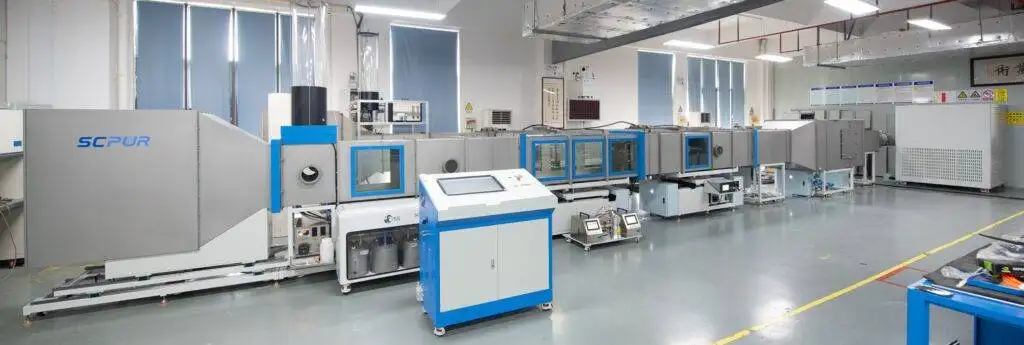
A laboratory issuing complete classifications normally needs fractional-efficiency and resistance testing together with the specified conditioning capability. Dust loading is added when ISO 16890-3 results are required. A production-control method may be faster and simpler, but its output should not be presented as a complete ISO 16890 分類. の SCPUR SC-16890 configuration should therefore be selected from the sample dimensions, 風量範囲, conditioning and dust-loading scope, reporting needs and the customer’s existing calibration system.

連絡する

出発前に...

自分のプロジェクトにどの国際標準が適用されるかわからない? 当社の 10 年間の業界専門知識に基づいた個別の技術評価については、当社の上級エンジニアと相談してください。.

*私たちはあなたの秘密を尊重し、すべての情報が保護されます.

世界標準の試験システムで品質を検証

当社の専門家がお客様に合わせてカスタム ソリューションを設計いたします. あなたのプロジェクトについて教えてください, あなたの品質を正確かつ迅速に検証しましょう.

カスタムR&D & カスタマイズされたソリューション

カスタムR&D & カスタマイズされたソリューション

世界標準への準拠

世界標準への準拠

100% 自社開発のソフトウェアシステム

100% 自社開発ソフトウェアシステム

リモート校正 & グローバルサポート

リモート校正 & グローバルサポート

お問い合わせ

*私たちはあなたの秘密を尊重し、すべての情報が保護されます.

This page has been automatically translated from the English original for convenience. Product models, standards, numerical values and technical limits should be verified against the English version. Please contact SCPUR for project-specific confirmation.