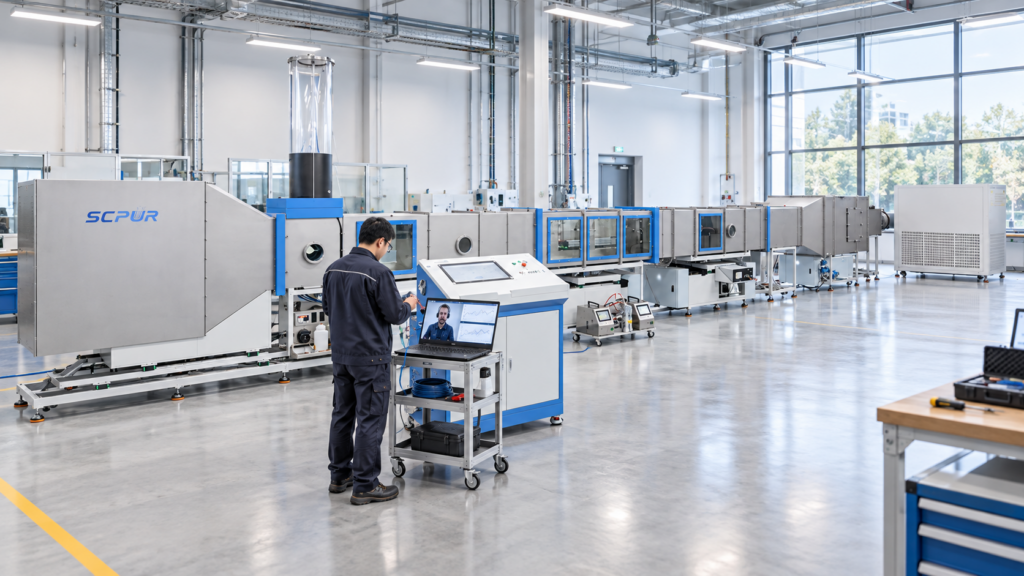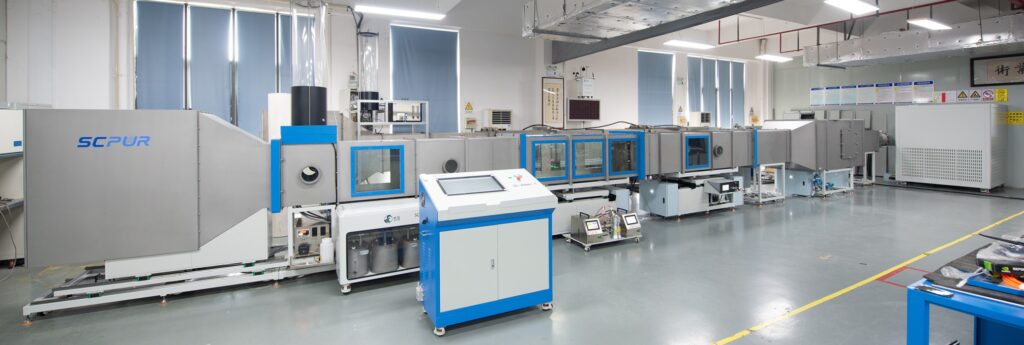


Uma ISO 16890 O teste não é uma medição de eficiência de um ponto seguida por uma classificação. O fluxo de trabalho completo combina fluxo de ar e resistência, eficiência fracionária inicial, desempenho após o procedimento de condicionamento especificado, e, quando necessário, carregamento de poeira. Cada etapa responde a uma pergunta diferente e deve ser relatada corretamente.
O fluxo de trabalho de teste principal
O fluxo de trabalho de teste principal
- Defina o fluxo de ar de teste e meça a queda de pressão. O fluxo de ar deve permanecer estável, e o duto de teste deve ser verificado quanto a vazamentos e distorção de fluxo inaceitável.
- Medir a eficiência fracionária inicial. As concentrações de partículas a montante e a jusante são usadas para construir uma curva de eficiência através de intervalos de tamanho de partícula, em vez de um valor em cada intervalo. 0.3 µm.
- Condicione o filtro conforme especificado na ISO 16890-4 e repita a medição de eficiência fracionária. O objetivo é avaliar o desempenho após a redução dos efeitos eletrostáticos removíveis., não reproduzir o envelhecimento do campo.
- Aplicar as distribuições de partículas de referência padrão e regras de cálculo para determinar o ISO ePM1, ePM2.5, Grupo e classificação ePM10 ou ISO grosseiro.
- Quando o desempenho de carregamento de poeira é necessário, conduzir o ISO 16890-3 testar e registrar a eficiência gravimétrica e a resistência contra a massa de poeira de teste capturada. Relate isso separadamente da classificação do ePM.
O que o equipamento de teste deve controlar?
O que o equipamento de teste deve controlar?
A precisão depende de mais do que o contador de partículas. O sistema deve controlar o fluxo de ar, concentração de aerossol e uniformidade de mistura, amostragem a montante e a jusante, perdas na linha de amostragem, medição de pressão e concentração de fundo. Para amostras de maior eficiência, a concentração a jusante deve permanecer acima do limite de detecção do instrumento. Caso contrário, erros de diluição e atrasos de comutação podem criar resultados convincentes, mas incorretos.
Quatro erros comuns de relatórios
Quatro erros comuns de relatórios
- Tratar uma eficiência de tamanho de partícula fixo como ePM1 ou ePM2.5.
- Descrevendo a eficiência condicionada como a eficiência após vários meses de serviço.
- Usando um valor de eficiência carregado de poeira na classificação final do ePM.
- Verificando os certificados do instrumento enquanto ignora a validação do duto, cadeia de amostragem e cálculo.
Como o laboratório deve ser configurado?
Como o laboratório deve ser configurado?
Um laboratório que emite classificações completas normalmente precisa de testes de eficiência fracionária e de resistência, juntamente com a capacidade de condicionamento especificada.. A carga de poeira é adicionada quando ISO 16890-3 resultados são necessários. Um método de controle de produção pode ser mais rápido e simples, mas sua saída não deve ser apresentada como uma ISO completa 16890 classificação. A configuração SCPUR SC-16890 deve, portanto, ser selecionada a partir das dimensões da amostra, faixa de fluxo de ar, escopo de condicionamento e carregamento de poeira, necessidades de relatórios e o sistema de calibração existente do cliente.