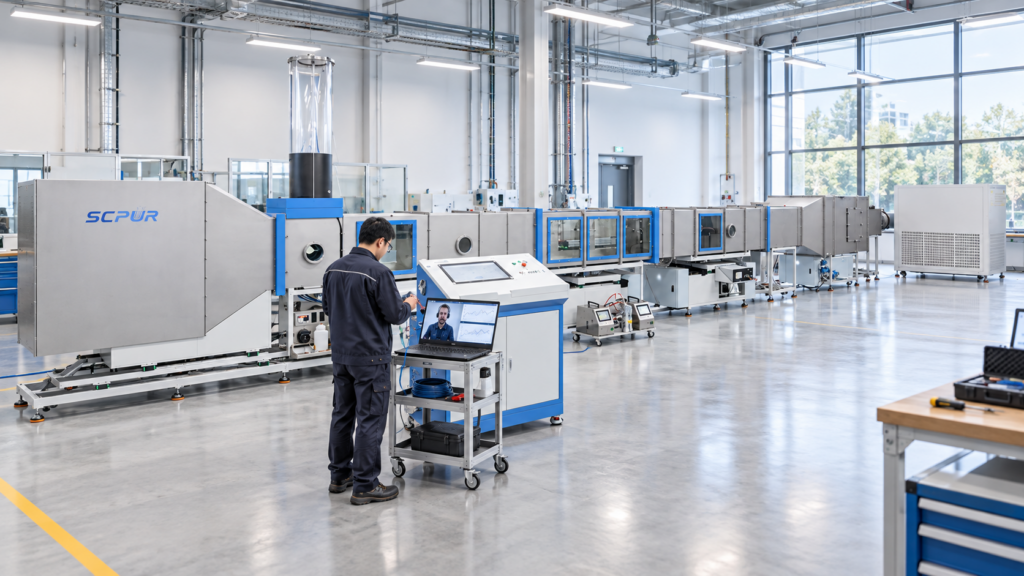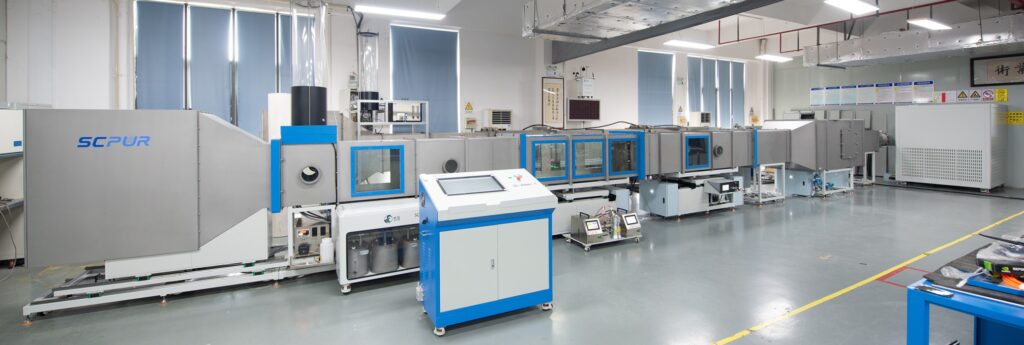


Una ISO 16890 La prueba no es una medición de eficiencia de un punto seguida de una calificación.. El flujo de trabajo completo combina flujo de aire y resistencia., eficiencia fraccionaria inicial, Rendimiento después del procedimiento de acondicionamiento especificado., y, cuando hace falta, carga de polvo. Cada etapa responde a una pregunta diferente y debe informarse correctamente.
El flujo de trabajo de prueba principal
El flujo de trabajo de prueba principal
- Configure el flujo de aire de prueba y mida la caída de presión.. El flujo de aire debe permanecer estable, y el conducto de prueba debe ser revisado para detectar fugas y distorsiones de flujo inaceptables..
- Medir la eficiencia fraccionaria inicial. Las concentraciones de partículas aguas arriba y aguas abajo se utilizan para construir una curva de eficiencia a través de intervalos de tamaño de partículas en lugar de un valor en 0.3 µm.
- Acondicione el filtro según lo especificado en ISO 16890-4 y repita la medición de eficiencia fraccionaria. El propósito es evaluar el rendimiento después de que se hayan reducido los efectos electrostáticos removibles., no reproducir el envejecimiento en el campo.
- Aplicar las distribuciones de partículas de referencia estándar y las reglas de cálculo para determinar el ISO ePM1, ePM2.5, ePM10 o ISO Grupo grueso y clasificación.
- Cuando se requiere rendimiento de carga de polvo, realizar la ISO 16890-3 Pruebe y registre la eficiencia gravimétrica y la resistencia contra la masa de polvo de prueba capturada.. Informar esto por separado de la clasificación ePM.
¿Qué debe controlar el banco de pruebas??
¿Qué debe controlar el banco de pruebas??
La precisión depende de algo más que el contador de partículas. El sistema debe controlar el flujo de aire., concentración de aerosol y uniformidad de mezcla, muestreo aguas arriba y aguas abajo, pérdidas en la línea de muestreo, Medición de presión y concentración de fondo.. Para muestras de mayor eficiencia, la concentración aguas abajo debe permanecer por encima del límite de detección del instrumento. De lo contrario, los errores de dilución y los retrasos en la conmutación pueden generar resultados convincentes pero incorrectos..
Cuatro errores comunes en los informes
Cuatro errores comunes en los informes
- Tratar una eficiencia de tamaño de partícula fijo como ePM1 o ePM2.5.
- Describir la eficiencia condicionada como la eficiencia después de varios meses de servicio..
- Uso de un valor de eficiencia cargado de polvo en la clasificación final de ePM.
- Verificar los certificados de los instrumentos ignorando la validación del conducto, cadena de muestreo y cálculo.
¿Cómo debe configurarse el laboratorio??
¿Cómo debe configurarse el laboratorio??
Un laboratorio que emite clasificaciones completas normalmente necesita pruebas de resistencia y eficiencia fraccionaria junto con la capacidad de acondicionamiento especificada.. La carga de polvo se agrega cuando ISO 16890-3 se requieren resultados. Un método de control de producción puede ser más rápido y sencillo, pero su resultado no debe presentarse como una ISO completa. 16890 clasificación. Por lo tanto, la configuración SCPUR SC-16890 debe seleccionarse entre las dimensiones de muestra., rango de flujo de aire, alcance de acondicionamiento y carga de polvo, necesidades de informes y el sistema de calibración existente del cliente.