

On s'attend souvent à ce qu'un débit d'air plus faible améliore la capture des petites particules, car elles restent plus longtemps dans le média filtrant et la diffusion brownienne devient plus efficace.. Pourtant, un test en laboratoire ou en production peut parfois signaler une efficacité inférieure à un point de débit d'air faible..
Ce résultat ne doit pas être immédiatement expliqué par un mécanisme de filtration spécial.. Dans de nombreux cas, la première question n'est pas "Pourquoi le filtre est-il devenu pire?» mais « Le résultat d'étiage est-il mesuré dans des conditions valides et comparables ??»
Cet article présente un ordre pratique d’enquête.
Commencez par la quantité comparée
Commencez par la quantité comparée
L’efficacité de la filtration n’est pas une constante matérielle. Cela dépend de plusieurs conditions de test, y compris:
- taille des particules ou distribution granulométrique;
- vitesse du milieu filtrant et vitesse de la face du filtre;
- matériau aérosol et état de charge;
- conditionnement du filtre et état électrostatique;
- température et humidité relative;
- concentration en amont et durée d’échantillonnage; et
- l'état du filtre et du système d'étanchéité.
Une comparaison n'a de sens que lorsque ces variables sont contrôlées. « Efficacité 500 m³/h » et « Efficacité 1 000 m³/h » ne peuvent pas être interprétés correctement sans connaître également la surface du filtre., le canal de particules comparé, et la méthode de test.
Ce que prédit réellement la théorie de la filtration
Ce que prédit réellement la théorie de la filtration
La filtration mécanique fibreuse est principalement régie par la diffusion, interception, et impaction inertielle.
- La diffusion est la plus importante pour les très petites particules. Une vitesse plus faible donne généralement à ces particules plus de temps pour s'éloigner du profilé et entrer en contact avec une fibre..
- L'interception devient plus importante à mesure que la taille des particules augmente et qu'une particule suivant une ligne de courant passe dans un rayon de particule d'une fibre..
- L'impaction inertielle devient plus importante pour les particules plus grosses et les vitesses plus élevées, car les particules sont moins capables de suivre l'air autour d'une fibre..
Le MPPS se produit près du minimum de la courbe d’efficacité combinée, où aucun mécanisme de capture n’est particulièrement puissant. Changer la vitesse peut modifier à la fois l'efficacité minimale et la taille des particules à laquelle ce minimum se produit..
Cela ne signifie pas que la faible vitesse crée un nouveau mécanisme de « contournement simplifié ».. Le flux autour des fibres est normalement laminaire dans des conditions à l'échelle de la filtration.. Une diminution mesurée à faible débit d'air doit donc être démontrée avec un, données résolues en taille plutôt que supposées à partir d'une explication verbale.
Premier chèque: Le point de test est-il dans la plage valide?
Premier chèque: Le point de test est-il dans la plage valide?
Chaque système de test a une plage de fonctionnement validée. Au bas de cette fourchette, plusieurs limites de contrôle et de mesure peuvent devenir plus influentes:
- résolution du contrôle du débit d'air;
- mélange d'aérosols et uniformité spatiale;
- temps de réponse entre l'échantillonnage en amont et en aval;
- pertes de particules dans les tubes de prélèvement;
- arrière-plan du détecteur et compte zéro; et
- le nombre de particules comptées pendant la période d'échantillonnage.
Si le débit d'air demandé est inférieur à la plage validée pour le conduit, ajutage, débitmètre, générateur d'aérosol, ou dispositif d'échantillonnage, le résultat doit être traité comme un résultat de diagnostic plutôt que comme un résultat standard.
Causes courantes d'une baisse apparente de l'efficacité en cas de faible débit d'air
Causes courantes d'une baisse apparente de l'efficacité en cas de faible débit d'air
1. Les fuites de dérivation représentent une fraction plus importante du débit total
1. Les fuites de dérivation représentent une fraction plus importante du débit total
Une petite fuite réparée à travers un joint, serrer, fixation, ou le conduit d'essai peut être difficile à voir à un débit d'air total élevé. À faible débit d'air, le même débit de fuite représente une fraction plus importante du total et peut produire une diminution apparente de l'efficacité.
Vérifier le périmètre du filtre, plaques d'obturation de luminaire, séparation amont/aval, ports d'échantillonnage, et tous les adaptateurs temporaires. Un test d'étanchéité sur plaque vierge est souvent plus informatif que la répétition de la même mesure du filtre..
2. L'aérosol en amont n'est pas stable ou uniforme
2. L'aérosol en amont n'est pas stable ou uniforme
À une vitesse de conduit inférieure, le réglage du générateur d'aérosol, longueur de mélange, et la position d'injection peut ne plus produire le même défi stable au niveau de la face du filtre. Si les concentrations en amont et en aval sont mesurées à des moments différents, la dérive de concentration peut apparaître comme un changement de pénétration.
Vérifier la stabilité temporelle, uniformité spatiale, et le délai entre les deux chemins d'échantillonnage. Ne présumez pas qu'un réglage du générateur validé à un débit d'air reste valable à chaque débit d'air inférieur..
3. Le nombre de particules est trop faible pour des statistiques fiables
3. Le nombre de particules est trop faible pour des statistiques fiables
Les filtres à haute efficacité produisent très peu de comptages en aval. Un échantillon court avec seulement un petit nombre d'événements présente une incertitude statistique élevée. Particules de fond, particules résiduelles dans les tubes, ou une fuite intermittente peut alors dominer l'efficacité calculée.
Augmenter la durée d'échantillonnage lorsque la méthode le permet, confirmer que la concentration en amont se situe dans la plage utilisable de l'instrument, effectuer une vérification de zéro/antécédents, et rapporter la pénétration avec sa base de comptage plutôt que de s'appuyer uniquement sur un pourcentage d'efficacité arrondi.
4. Les deux mesures ne comparent pas la même taille de particule
4. Les deux mesures ne comparent pas la même taille de particule
Si la distribution de l'aérosol test change avec le réglage du générateur ou le débit, un large canal de particules peut être pondéré différemment à différents points de test. Une « efficacité de 0,3 μm » signalée peut également faire référence à un canal de seuil plutôt qu'à un canal étroit., mesure résolue en taille.
Pour l'analyse des mécanismes, utiliser des courbes d'efficacité résolues en taille. Comparez les mêmes définitions de canaux, aérosol, état de neutralisation, et réglages des instruments à chaque flux d'air.
5. Les effets de l’échantillonnage et du transport ont changé
5. Les effets de l’échantillonnage et du transport ont changé
Flux d'échantillonnage, longueur du tube, virages, orientation de la sonde, et les retards de transport doivent rester maîtrisés. Le biais lié à la sonde est généralement moins grave pour les particules submicrométriques que pour les grosses particules, mais il ne faut pas l'ignorer lorsque la vitesse du conduit principal change considérablement.
Confirmer le débit d'échantillon du compteur de particules, taux de dilution, état des tubes, et équivalence des chemins amont/aval.
6. Le filtre ou le support a changé entre les tests
6. Le filtre ou le support a changé entre les tests
Les médias électret peuvent être affectés par la charge d'aérosols, solvants, température, humidité, et historique de conditionnement. Les supports mécaniques peuvent également changer après manipulation, scellage, ou installation répétée. Une séquence de débit qui va toujours de haut en bas peut donc confondre une variation en fonction du temps avec une variation en fonction du débit d'air..
Utilisez une séquence aléatoire ou répétée (par exemple faible → élevé → faible) et incluez un filtre de référence pour séparer la dérive du système du changement d'échantillon..
Quand le résultat peut être un véritable effet médiatique
Quand le résultat peut être un véritable effet médiatique
Une fois les vérifications du système réussies, le comportement du filtre dépendant de la vitesse peut être étudié. La méthode correcte consiste à mesurer l'efficacité fractionnaire sur une plage de tailles de particules à plusieurs vitesses moyennes contrôlées..
L'analyse devrait montrer:
- la courbe complète d'efficacité en fonction de la taille des particules;
- les MPPS correspondants à chaque vitesse;
- répétition des mesures et incertitude;
- chute de pression à chaque point de test; et
- si le support est mécanique, chargé, à base de membrane, ou un composite.
Un réel changement peut alors être lié à l’équilibre de la diffusion, interception, impaction, et capture électrostatique. Il ne faut pas l’attribuer simplement aux « lignes de courant laminaires traversant de larges pores ».
Séquence de dépannage recommandée
Séquence de dépannage recommandée
- Répéter le point de faible débit sans modifier l'installation du filtre.
- Effectuer une fuite du système ou une vérification des plaques blanches.
- Vérifier les capteurs de débit d'air et de pression réels au point bas.
- Confirmer la stabilité des aérosols en amont et l’uniformité spatiale.
- Vérifier le nombre d'antécédents, temps d'échantillonnage, concentration, et limites du compteur de particules.
- Répétez avec un filtre de référence stable.
- Exécuter une séquence bas → haut → bas.
- Si l'effet persiste, mesurer une courbe d'efficacité résolue en taille à chaque vitesse.
Cet ordre évite qu'un problème de système de mesure ne se transforme en une explication non étayée de la physique des filtres..
Comment SCPUR prend en charge les enquêtes sur les faibles débits
Comment SCPUR prend en charge les enquêtes sur les faibles débits
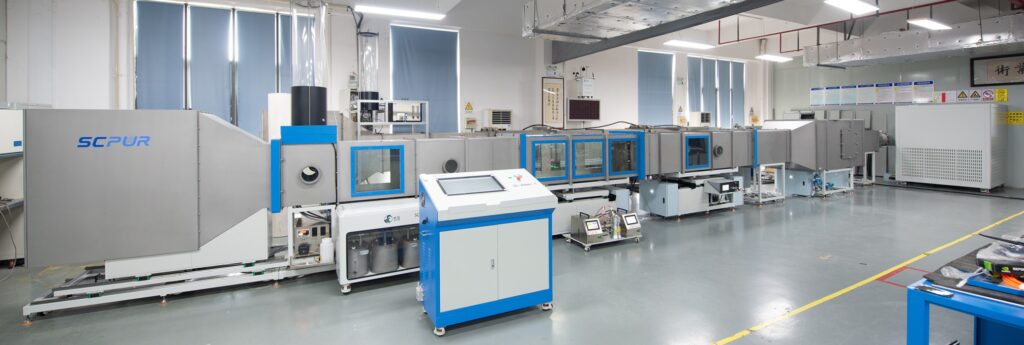
Les systèmes de test SCPUR sont configurés autour d'un flux d'air défini, taille des particules, concentration, et plages de tailles de filtre. Pour médias filtrants ou petits éléments filtrants, le SC-FT-1406D-Pro fournit des tests d'efficacité et de résistance contrôlés avec de l'huile- ou configurations d'aérosols à base de sel.
Pour une anomalie de faible débit d'air, le résultat utile n’est pas seulement une valeur réussite/échec. Il s'agit d'un enregistrement de test reproductible qui permet de séparer le contrôle du flux d'air, génération d'aérosols, échantillonnage, fuite, et le filtre lui-même.
- Testeur de filtre automatique SC-FT-1406D-Pro
- Solutions de test des médias filtrants
- Test de fuite du filtre HEPA: Analyse d'usine et test d'intégrité du système installé
- OIN 29463-2:2011 — Production d'aérosols, équipements de mesure et statistiques de comptage de particules
- OIN 29463-5:2022 — Méthode d'essai pour les éléments filtrants
- Comparaison expérimentale systématique des méthodes de test d'efficacité de filtration des particules
- Bases de la filtration de l'air TSI — influence de la vitesse frontale sur les MPPS