

Er wordt vaak verwacht dat een lagere luchtstroom de opvang van kleine deeltjes verbetert, omdat deze langer in het filtermedium blijven en de Brownse diffusie effectiever wordt. Toch kan een laboratorium- of productietest soms een lagere efficiëntie melden bij een laag luchtstroompunt.
Dat resultaat moet niet meteen worden verklaard als een speciaal filtratiemechanisme. In veel gevallen, de eerste vraag is niet: “Waarom is het filter slechter geworden?' maar 'Wordt het resultaat bij laag debiet gemeten onder geldige en vergelijkbare omstandigheden??”
Dit artikel presenteert een praktische onderzoeksvolgorde.
Begin met de hoeveelheid die wordt vergeleken
Begin met de hoeveelheid die wordt vergeleken
De filtratie-efficiëntie is geen enkele materiaalconstante. Het hangt af van verschillende testomstandigheden, inbegrepen:
- deeltjesgrootte of deeltjesgrootteverdeling;
- filter mediumsnelheid en filtervlaksnelheid;
- aërosolmateriaal en ladingstoestand;
- filterconditionering en elektrostatische toestand;
- temperatuur en relatieve vochtigheid;
- stroomopwaartse concentratie en bemonsteringsduur; En
- de staat van het filter- en afdichtingssysteem.
Een vergelijking heeft alleen betekenis als deze variabelen worden gecontroleerd. “500 m³/h efficiëntie” en “1.000 m³/h efficiëntie” kunnen niet correct worden geïnterpreteerd zonder ook het filteroppervlak te kennen, het deeltjeskanaal dat wordt vergeleken, en de testmethode.
Wat de filtratietheorie feitelijk voorspelt
Wat de filtratietheorie feitelijk voorspelt
Mechanische vezelfiltratie wordt voornamelijk bepaald door diffusie, onderschepping, en traagheidsimpact.
- Diffusie is het belangrijkst voor zeer kleine deeltjes. Een lagere snelheid geeft deze deeltjes over het algemeen meer tijd om weg te bewegen van de stroomlijn en contact te maken met een vezel.
- Onderschepping wordt belangrijker naarmate de deeltjesgrootte toeneemt en een deeltje dat een stroomlijn volgt, binnen één deeltjesstraal van een vezel passeert.
- Traagheidsimpact wordt belangrijker voor grotere deeltjes en hogere snelheden, omdat de deeltjes minder goed in staat zijn de lucht rond een vezel te volgen.
De MPPS vindt plaats nabij het minimum van de gecombineerde efficiëntiecurve, waar geen enkel vangmechanisme bijzonder sterk is. Het veranderen van de snelheid kan zowel de minimale efficiëntie als de deeltjesgrootte waarbij dat minimum optreedt veranderen.
Dit betekent niet dat lage snelheid een nieuw ‘stroomlijn-bypass’-mechanisme creëert. De stroming rond de vezels is normaal gesproken laminair onder omstandigheden op filtratieschaal. Een gemeten afname bij lage luchtstroom moet daarom met gecontroleerd worden aangetoond, grootte-opgeloste gegevens in plaats van te veronderstellen op basis van een mondelinge uitleg.
Eerste controle: Ligt het testpunt binnen het geldige bereik?
Eerste controle: Ligt het testpunt binnen het geldige bereik?
Elk testsysteem heeft een gevalideerd werkbereik. Aan de onderkant van dat bereik, verschillende controle- en meetlimieten kunnen invloedrijker worden:
- resolutie van de luchtstroomregeling;
- aerosolmenging en ruimtelijke uniformiteit;
- responstijd tussen stroomopwaartse en stroomafwaartse bemonstering;
- deeltjesverliezen in bemonsteringsbuizen;
- detectorachtergrond en nultellingen; En
- het aantal deeltjes dat tijdens de bemonsteringsperiode is geteld.
Als de gevraagde luchtstroom onder het gevalideerde bereik voor het kanaal ligt, mondstuk, stroommeter, aërosolgenerator, of bemonsteringsregeling, het resultaat moet worden behandeld als een diagnostisch resultaat en niet als een standaardresultaat.
Veelvoorkomende oorzaken van een schijnbare efficiëntiedaling bij een lage luchtstroom
Veelvoorkomende oorzaken van een schijnbare efficiëntiedaling bij een lage luchtstroom
1. Bypass-lekkage wordt een groter deel van de totale stroom
1. Bypass-lekkage wordt een groter deel van de totale stroom
Een klein vast lek via een pakking, klem, armatuur, of het testkanaal kan moeilijk zichtbaar zijn bij een hoge totale luchtstroom. Bij lage luchtstroom, dezelfde lekstroom vertegenwoordigt een groter deel van het totaal en kan een schijnbare vermindering van de efficiëntie veroorzaken.
Controleer de filteromtrek, bevestigingsplaten, stroomopwaartse/stroomafwaartse scheiding, monsterpoorten, en eventuele tijdelijke adapters. Een lektest met een blanco plaat is vaak informatiever dan het herhalen van dezelfde filtermeting.
2. Het stroomopwaartse aërosol is niet stabiel of uniform
2. Het stroomopwaartse aërosol is niet stabiel of uniform
Bij een lagere kanaalsnelheid, de instelling van de aerosolgenerator, lengte mengen, en de injectiepositie produceren mogelijk niet langer dezelfde stabiele uitdaging aan de filterzijde. Als de stroomopwaartse en stroomafwaartse concentraties op verschillende tijdstippen worden gemeten, concentratiedrift kan verschijnen als een verandering in penetratie.
Controleer de temporele stabiliteit, ruimtelijke uniformiteit, en de vertraging tussen de twee bemonsteringspaden. Ga er niet vanuit dat een generatorinstelling die gevalideerd is bij één luchtstroom geldig blijft bij elke lagere luchtstroom.
3. Deeltjesaantallen zijn te laag voor betrouwbare statistieken
3. Deeltjesaantallen zijn te laag voor betrouwbare statistieken
Hoogefficiënte filters produceren zeer weinig stroomafwaartse tellingen. Een korte steekproef met slechts een klein aantal gebeurtenissen heeft een hoge statistische onzekerheid. Achtergronddeeltjes, achtergebleven deeltjes in de slang, of één intermitterend lek kan dan de berekende efficiëntie domineren.
Verhoog de bemonsteringstijd waar de methode dit toelaat, bevestig dat de stroomopwaartse concentratie binnen het bruikbare bereik van het instrument ligt, voer een nul-/achtergrondcontrole uit, en rapporteer de penetratie op basis van de telbasis in plaats van alleen te vertrouwen op een afgerond efficiëntiepercentage.
4. De twee metingen vergelijken niet dezelfde deeltjesgrootte
4. De twee metingen vergelijken niet dezelfde deeltjesgrootte
Als de testaërosolverdeling verandert met de generatorinstelling of -stroom, een breed deeltjeskanaal kan op verschillende testpunten verschillend worden gewogen. Een gerapporteerde “0,3 μm efficiëntie” kan ook verwijzen naar een drempelkanaal in plaats van een smal kanaal, maat opgeloste meting.
Voor mechanismeanalyse, gebruik grootte-opgeloste efficiëntiecurven. Vergelijk dezelfde kanaaldefinities, aërosol, neutralisatie staat, en instrumentinstellingen bij elke luchtstroom.
5. Bemonstering en transporteffecten zijn veranderd
5. Bemonstering en transporteffecten zijn veranderd
Bemonsteringsstroom, lengte van de slang, bochten, oriëntatie van de sonde, en transportvertragingen moeten onder controle blijven. Probe-gerelateerde bias is gewoonlijk minder ernstig voor submicrometerdeeltjes dan voor grote deeltjes, maar dit mag niet worden genegeerd wanneer de snelheid van het hoofdkanaal aanzienlijk verandert.
Bevestig de deeltjestellermonsterstroom, verdunningsverhouding, staat van de buis, en gelijkwaardigheid van het stroomopwaartse/stroomafwaartse pad.
6. Het filter of medium is tussen tests gewijzigd
6. Het filter of medium is tussen tests gewijzigd
Electret-media kunnen worden beïnvloed door aërosolbelasting, oplosmiddelen, temperatuur, vochtigheid, en conditionering van de geschiedenis. Mechanische media kunnen ook veranderen na gebruik, afdichting, of herhaalde installatie. Een stroomvolgorde die altijd van hoog naar laag loopt, kan daarom tijdsafhankelijke verandering verwarren met luchtstroomafhankelijke verandering.
Gebruik een willekeurige of herhaalde reeks (bijvoorbeeld laag → hoog → laag) en voeg een referentiefilter toe om systeemdrift te scheiden van monsterverandering.
Wanneer het resultaat een echt media-effect kan zijn
Wanneer het resultaat een echt media-effect kan zijn
Nadat de systeemcontroles zijn geslaagd, snelheidsafhankelijk filtergedrag kan worden onderzocht. De juiste methode is het meten van de fractionele efficiëntie over een deeltjesgroottebereik bij verschillende gecontroleerde gemiddelde snelheden.
De analyse zou moeten uitwijzen:
- de volledige curve van efficiëntie versus deeltjesgrootte;
- de overeenkomstige MPPS bij elke snelheid;
- herhaalde metingen en onzekerheid;
- drukval op elk testpunt; En
- of het medium mechanisch is, opgeladen, op membraan gebaseerd, of een composiet.
Een echte verandering kan dan gekoppeld worden aan de diffusiebalans, onderschepping, impactie, en elektrostatische opvang. Het moet niet simpelweg worden toegeschreven aan ‘laminaire stroomlijnen die door grote poriën gaan’.
Aanbevolen probleemoplossingsvolgorde
Aanbevolen probleemoplossingsvolgorde
- Herhaal het laagstroompunt zonder de filterinstallatie te veranderen.
- Voer een systeemlek- of blanco-plaatcontrole uit.
- Controleer de werkelijke luchtstroom- en druksensoren op het laagste punt.
- Bevestig de stroomopwaartse aërosolstabiliteit en ruimtelijke uniformiteit.
- Controleer achtergrondtellingen, bemonsteringstijd, concentratie, en deeltjestellerlimieten.
- Herhaal dit met een stabiel referentiefilter.
- Voer een reeks laag → hoog → laag uit.
- Als het effect blijft bestaan, meet bij elke snelheid een op maat opgeloste efficiëntiecurve.
Deze volgorde voorkomt dat een meetsysteemprobleem wordt omgezet in een niet-ondersteunde uitleg over filterfysica.
Hoe SCPUR onderzoek met lage doorstroming ondersteunt
Hoe SCPUR onderzoek met lage doorstroming ondersteunt
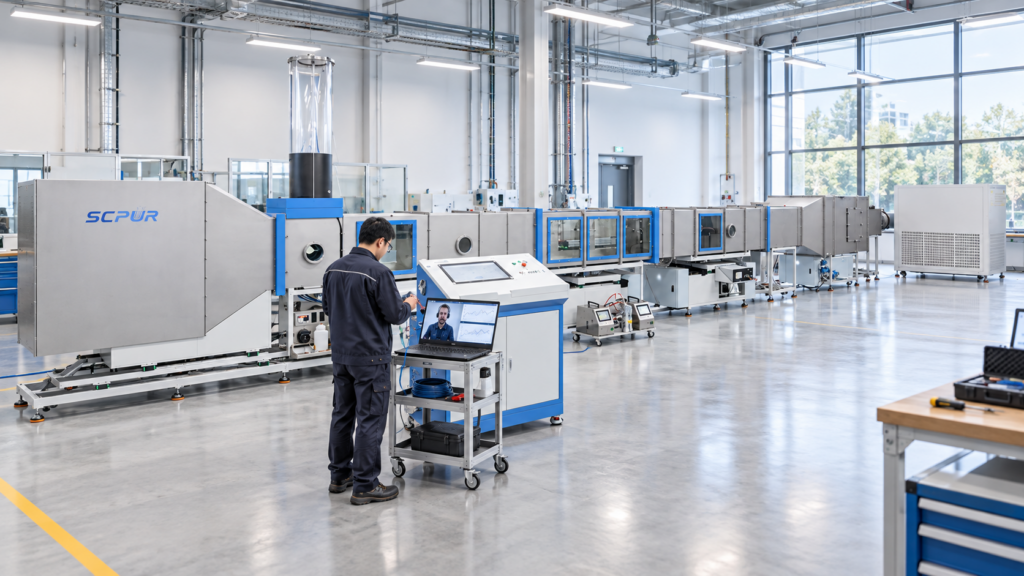
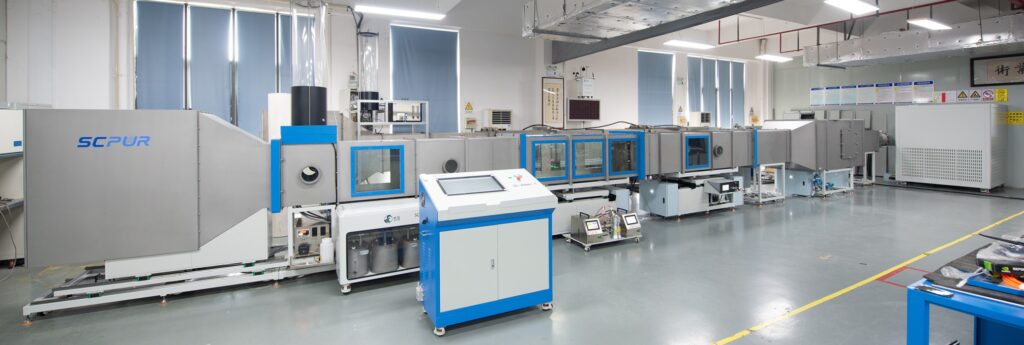
SCPUR-testsystemen zijn geconfigureerd rond een gedefinieerde luchtstroom, deeltjesgrootte, concentratie, en filtergroottebereiken. Voor filtermedia of kleine filterelementen, de SC-FT-1406D-Pro biedt gecontroleerde efficiëntie- en weerstandstesten met olie- of op zout gebaseerde aërosolconfiguraties.
Voor een anomalie met een lage luchtstroom, de bruikbare output is niet alleen een pass/fail-waarde. Het is een herhaalbaar testrecord dat helpt bij het gescheiden regelen van de luchtstroom, aërosol generatie, bemonstering, lekkage, en het filter zelf.