

“HEPA-filterlektest” wordt voor twee verschillende activiteiten gebruikt:
- het testen van een afzonderlijk filterelement in de fabriek van de fabrikant; En
- het testen van een geïnstalleerd filter, zijn pakking, huisvesting, en omringende installatie in een cleanroom of luchtbehandelingssysteem.
De twee tests hebben verschillende grenzen, procedures, en acceptatiecriteria. Als u ze door elkaar haalt, kan dit leiden tot de verkeerde apparatuurspecificatie of een niet-ondersteunde conformiteitsclaim.
1. Fabrieksscantest van een filterelement
1. Fabrieksscantest van een filterelement
Bij fabrieksscantests worden de lokale prestaties van een voltooid filter geëvalueerd voordat het wordt geïnstalleerd. Onder EN 1822 en ISO 29463, de test is gekoppeld aan de MPPS-prestaties en de nominale luchtstroom van het filter.
Het doel is om onaanvaardbare lokale penetratie te detecteren, veroorzaakt door defecten zoals:
- gaatjes of beschadigingen in het filtermedium;
- discontinuïteiten in de medium-tot-frame kit;
- defecten rond tussenschotten of plooipakketten; En
- lokale constructieschade veroorzaakt tijdens productie of behandeling.
De grens is het filterelement zelf. Het gebouw huisvesting, plafond rooster, installatie pakking compressie, en bypass rond een geïnstalleerd frame maken geen deel uit van deze fabriekstest.
2. Testen van geïnstalleerde systeemintegriteit
2. Testen van geïnstalleerde systeemintegriteit
Nadat een filter is geïnstalleerd, een integriteitstest kan het volledige geïnstalleerde filtersysteem evalueren. Afhankelijk van de opgegeven methode, dit kan omvatten:
- het filtermedium;
- het filterframe;
- de pakking of gelafdichting;
- de behuizing en montage-interface; En
- omzeil lekkage rondom de installatie.
Het testen van geïnstalleerde systemen wordt vaak geassocieerd met kwalificatiemethoden voor cleanrooms, zoals ISO 14644-3 en met projectspecifieke farmaceutische of faciliteitsprocedures. Het filter wordt niet opnieuw geclassificeerd onder EN 1822 of ISO 29463.
Een filter kan de fabrieksscantest doorstaan en later niet slagen voor een geïnstalleerde systeemtest vanwege installatieschade, onvoldoende compressie van de pakking, lekkage van de behuizing, of omzeilen. Omgekeerd, een geïnstalleerde test vervangt niet de classificatietest van de fabrikant voor filterelementen.
3. Hoe een fabrieksscantest voor het tellen van deeltjes werkt
3. Hoe een fabrieksscantest voor het tellen van deeltjes werkt
Een typische automatische scanreeks omvat de volgende fasen.
Stel de testconditie vast
Stel de testconditie vast
Het filter wordt in de testopstelling geïnstalleerd en afgedicht, en de nominale luchtstroom wordt vastgesteld. Drukval en luchtstroom worden onder gecontroleerde omstandigheden geregistreerd.
Genereer en conditioneer de Challenge-aerosol
Genereer en conditioneer de Challenge-aerosol
Een stabiele aerosol wordt stroomopwaarts ingebracht en gemengd om een geschikte oplossing te verkrijgen, uniforme uitdagingsconcentratie. Voor op standaarden gebaseerde classificatie, de testdeeltjesgrootte moet overeenkomen met de toepasselijke MPPS-procedure.
Meet de stroomopwaartse referentieconcentratie
Meet de stroomopwaartse referentieconcentratie
De stroomopwaartse concentratie vormt de referentie voor het berekenen van de penetratie. Als het afdrijft, stroomafwaartse tellingen kunnen niet correct worden geïnterpreteerd, het systeem moet dus de concentratiestabiliteit bewaken en de gespecificeerde bemonsteringsvolgorde toepassen.
Scan het volledige stroomafwaartse gebied
Scan het volledige stroomafwaartse gebied
Eén of meer sondes bewegen over het stroomafwaartse filteroppervlak en het relevante frame-/afdichtingsgebied. Het scanpad moet het vereiste gebied zonder gaten bestrijken. Het systeem registreert de positie van de sonde en het aantal stroomafwaartse deeltjes.
Bereken lokale penetratie en identificeer abnormale gebieden
Bereken lokale penetratie en identificeer abnormale gebieden
De lokale penetratie wordt bepaald op basis van stroomopwaartse en stroomafwaartse metingen. Als een punt of regio de toepasselijke limiet overschrijdt, het systeem registreert zijn positie voor inspectie, reparatie, en verificatie.
Bepaal de integrale efficiëntie waar nodig
Bepaal de integrale efficiëntie waar nodig
Lokaal lekscannen en integrale efficiëntie zijn verschillende resultaten. Voor een volledige, op standaarden gebaseerde evaluatie kunnen zowel de lokale test als de algehele efficiëntietest van het filterelement nodig zijn.
4. Acceptatielimieten zijn klassespecifiek
4. Acceptatielimieten zijn klassespecifiek
Er bestaat geen universele regel dat een HEPA-filterlek “≤ 0,01%” moet zijn. Onder EN 1822-1:2019, de MPPS-limieten omvatten:
| Filterklasse | Minimale integrale efficiëntie | Maximale integrale penetratie | Maximale lokale penetratie |
|---|---|---|---|
| H13 | 99.95% | 0.05% | 0.25% |
| H14 | 99.995% | 0.005% | 0.025% |
De waarden gelden binnen de aangegeven standaardprocedure en testomstandigheden. Andere klassen, alternatieve methoden, tests van geïnstalleerde systemen, en klantspecificaties kunnen verschillende criteria gebruiken.
De 0.01% Het cijfer is daarom geen algemene lokale H13/H14-leklimiet. In ISO 29463-1:2024, 0.01% is de maximale integrale penetratie voor ISO 40 H, een tussenliggende ISO-klasse zonder exacte EN 1822 klasse gelijkwaardig.
5. Waarom de scansnelheid niet alleen kan worden gespecificeerd
5. Waarom de scansnelheid niet alleen kan worden gespecificeerd
In een productbrochure kan de mechanische snelheid van een scanas worden vermeld, maar een standaardtest kan niet worden gedefinieerd door een enkele universele snelheid zoals 10 cm/sec.
De toegestane scansnelheid is afhankelijk van de volledige meetomstandigheid, inbegrepen:
- sonde-inlaatgebied en scan-track-afstand;
- deeltjesteller bemonsteringsstroom;
- stroomopwaartse aërosolconcentratie;
- verwachte lokale penetratielimiet;
- detectorrespons en transportvertraging;
- bemonsteringsinterval en telstatistieken; En
- of één of meerdere sondes tegelijkertijd scannen.
De software moet de testsnelheid van de geconfigureerde methode bepalen of beperken. Een snellere as kan de retour- en positioneringstijd verbeteren, maar het mag de kans op het ontdekken van een relevant lokaal lek niet verkleinen.
6. Sondedekking en positionering
6. Sondedekking en positionering
Volledige dekking is net zo belangrijk als de gevoeligheid van de detector. In het scanplan moet rekening worden gehouden:
- sondebreedte en effectief inlaatgebied;
- overlap of afstand tussen aangrenzende sporen;
- afstand en oriëntatie ten opzichte van het filteroppervlak;
- rand, kader, en afdichtingsgebieden;
- plooi- of V-bankgeometrie; En
- gebieden die handmatige bevestiging vereisen omdat ze niet kunnen worden bereikt door de automatische sonde.
Voor onregelmatige filters, een gecombineerde automatische en handmatige procedure kan betrouwbaarder zijn dan het claimen van volledige automatische dekking waar de sonde fysiek niet kan bereiken.
7. Handmatig versus automatisch fabrieksscannen
7. Handmatig versus automatisch fabrieksscannen
Handmatig scannen kan nuttig zijn voor ontwikkelingswerk, bevestiging, reparatie locatie, en ongebruikelijke geometrieën. De beperkingen zijn de operatorafhankelijke snelheid, sonde afstand, dekking, en gegevensregistratie.
Automatisch scannen biedt:
- consistente tasterbeweging en spoorafstand;
- herhaalbare testsnelheid en bemonsteringstijd;
- gecoördineerde positie- en deeltjestellingsgegevens;
- automatische lekkartering;
- traceerbare pass/fail-logica; En
- herhaal het testen van gerepareerde gebieden.
Automatisering neemt de noodzaak niet weg om de juiste standaard te configureren, klas, MPPS, luchtstroom, aërosol, en detector. Het maakt een geldige procedure herhaalbaarder; het kan een ongeldige configuratie niet compatibel maken.
8. Benodigde apparatuur voor een automatische fabrieksscantest
8. Benodigde apparatuur voor een automatische fabrieksscantest
Een compleet systeem kan omvatten:
- gecontroleerde luchtstroom- en drukverschilmeting;
- een filterarmatuur met betrouwbare afdichting;
- aërosol generatie, mengen, en concentratiecontrole;
- stroomopwaartse referentiebemonstering;
- één of meer stroomafwaartse scansondes;
- een optische deeltjesteller of condensatiedeeltjesteller geschikt voor de vereiste klasse en deeltjesbereik;
- een bewegingssysteem met positiefeedback; En
- software voor sequencing, evaluatie tellen, lekkage in kaart brengen, rapportage, en traceerbaarheid.
De gevoeligheid die nodig is voor H13 is heel anders dan die nodig is voor U16 of U17. De detectorselectie en concentratiecontrole moeten gebaseerd zijn op de laagste penetratie die gemeten moet worden.
9. De rol van de SCPUR SC-L8023/U
9. De rol van de SCPUR SC-L8023/U
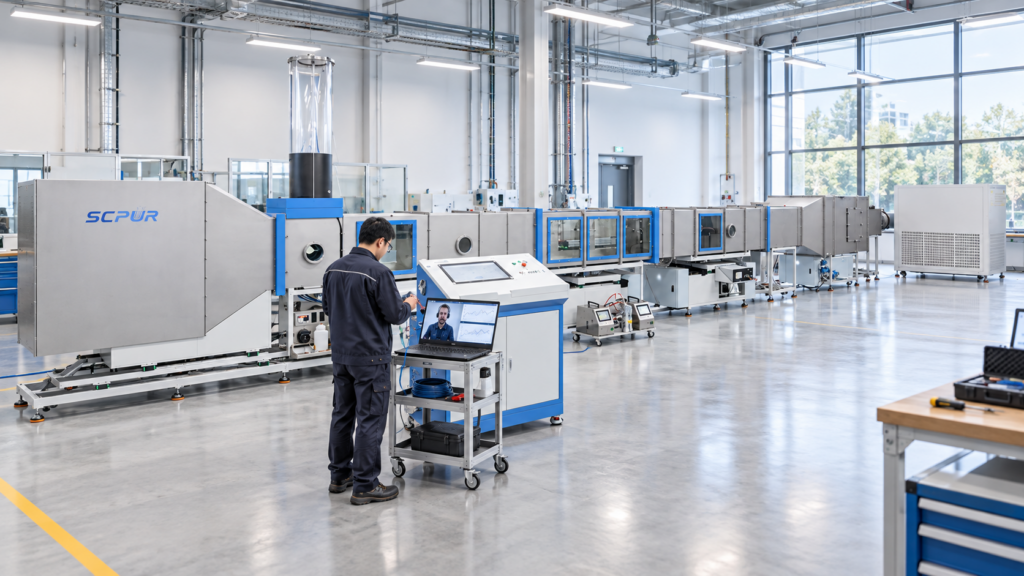
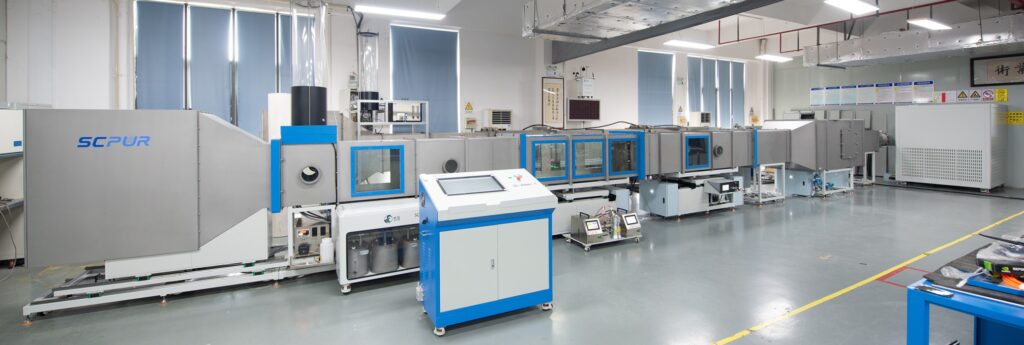
De SC-L8023/U Automatisch scantestsysteem is ontworpen voor fabriekstests van hoogefficiënte filterelementen. Afhankelijk van de geselecteerde configuratie, het kan een gecontroleerde luchtstroom integreren, automatisch scannen, deeltjesmeting, concentratiemonitoring, lekkage in kaart brengen, en integrale prestatieverificatie.
Systeemconfiguratie wordt geselecteerd op basis van:
- filterklasse en toepasselijke norm;
- filterafmetingen en geometrie;
- nominale luchtstroom en drukval;
- vereiste deeltjesgroottebereik en detectorgevoeligheid;
- aantal scansondes;
- productiedoorvoer; En
- of de klant nu behoefte heeft aan interne kwaliteitscontrole of aan formele, op standaarden gebaseerde rapportage.
10. Vragen die u moet beantwoorden voordat u een lektestsysteem selecteert
10. Vragen die u moet beantwoorden voordat u een lektestsysteem selecteert
- Wordt het filter getest vóór installatie of als onderdeel van een geïnstalleerd systeem??
- Welke standaard, editie, en filterklasse moeten worden gerapporteerd?
- Is MPPS-bepaling al beschikbaar voor het filtermedium??
- Is de test bedoeld voor interne productiescreening of formele classificatie?
- Welke filtermaten, vormen, luchtstromen, en drukvallen moeten worden afgedekt?
- Welke lokale penetratie moet de detector betrouwbaar meten?
- Is automatische volledige dekking mogelijk voor de filtergeometrie??
- Moet het systeem het in kaart brengen en opnieuw testen van reparaties ondersteunen?
Duidelijke antwoorden op deze vragen staan fabrieksclassificatie in de weg, productie screening, en het testen van de integriteit van geïnstalleerde systemen, zodat ze niet met elkaar vermengd worden.
- Automatisch scantestsysteem SC-L8023/U
- Cleanroom HEPA-filtervalidatie en lektestoplossingen
- IN 1822 versus ISO 29463: Klassen, Tests en belangrijkste verschillen
- BS EN 1822-1:2019 — Classificatie, prestatietests en markering
- ISO 29463-1:2024 — Classificatie, prestatie, testen en markeren
- ISO 29463-4:2011 — Testmethode voor het vaststellen van lekkage van filterelementen, scanmethode
- ISO 29463-5:2022 — Testmethode voor filterelementen
- ISO 14644-3:2019 — Cleanrooms en bijbehorende gecontroleerde omgevingen, testmethoden