ISO 16890 대 ASHRAE 52.2: 차이점은 무엇입니까?

공유하다:

목차

ISO 16890 그리고 ASHRAE 52.2 are both used to evaluate air-cleaning devices for general ventilation. 하지만, they use different classification systems, test procedures and calculation methods.

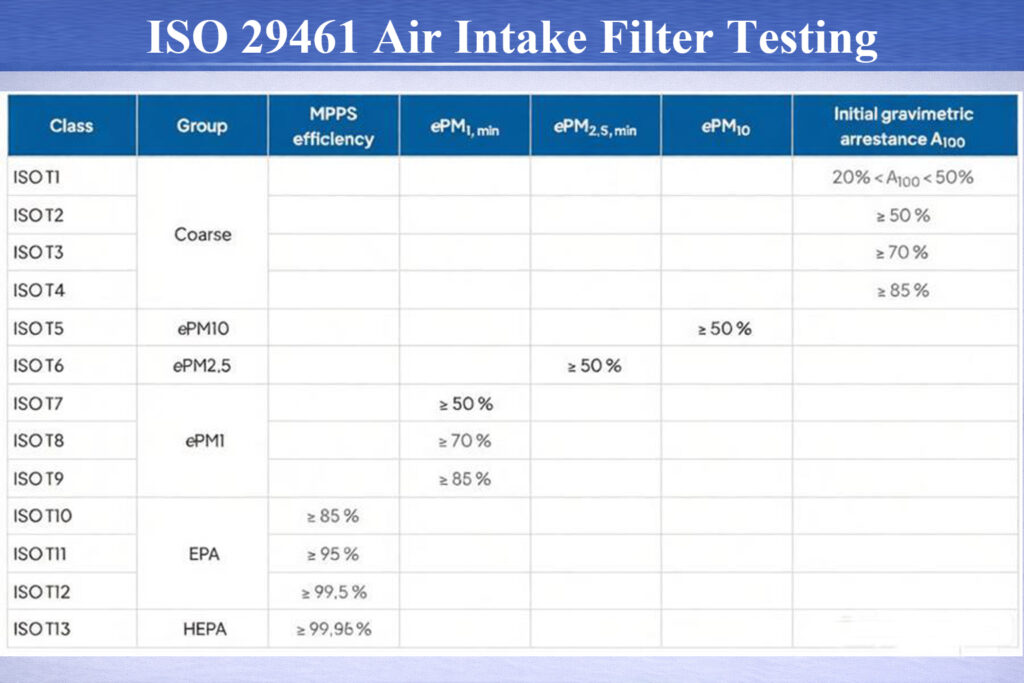
ISO 16890 reports ISO Coarse, ePM10, ePM2.5 그리고 ePM1 분류. ASHRAE 52.2 reports a Minimum Efficiency Reporting Value, 또는 MERV.

There is no exact conversion between an ISO ePM classification and a MERV 평가. Manufacturers supplying different markets may therefore need to test the same product according to both standards.

Comparison at a Glance

ItemISO 16890ASHRAE 52.2
Primary classificationISO Coarse, ePM10, ePM2.5, ePM1MERV
Typical market useInternational marketsNorth American market
Efficiency basisFractional efficiency processed using standardized PM distributionsParticle-size removal efficiency in defined size ranges
조절Complete-filter conditioning according to ISO 16890-4Procedures defined by ASHRAE 52.2 and its applicable appendices
먼지 로딩Separate gravimetric and resistance test under ISO 16890-3Part of the prescribed ASHRAE test sequence
Main outputePM group and reported percentageMERV and particle-size efficiency data

How ISO 16890 Classifies Filters

ISO 16890 measures fractional efficiency across a range of particle sizes. The resulting initial and conditioned efficiency curves are processed using standardized reference particle-size distributions.

The calculated results determine whether the filter qualifies as:

  • ISO ePM1
  • ISO ePM2.5
  • ISO ePM10
  • ISO Coarse

An ISO ePM result provides a standardized basis for comparing filters. It is not a direct measurement of performance against every real atmospheric aerosol.

ISO 16890 also includes a dust-loading method for measuring gravimetric efficiency and resistance versus captured dust mass. This is a separate performance test and does not determine the ePM classification.

How ASHRAE 52.2 Assigns MERV

ASHRAE 52.2 evaluates removal efficiency as a function of particle size. Particle-size efficiency data are grouped into three ranges:

  • E1: 0.3–1.0 µm
  • E2: 1.0–3.0 µm
  • E3: 3.0-10μm

The test procedure evaluates particle-removal performance and airflow resistance according to the prescribed sequence. The applicable efficiency results are then used to determine the MERV 평가.

Because MERV and ePM are calculated differently, statements such as “MERV 13 equals ePM2.5” should not be used as formal conversions. Approximate comparison charts may be useful for general discussion, but they cannot replace testing under the standard required by the customer.

Why the Results Cannot Be Directly Converted

The two standards differ in:

  • 에어로졸 테스트
  • Particle-size channels and grouping
  • Conditioning procedure
  • Dust-loading procedure
  • Classification calculation
  • Test sequence
  • Reporting requirements

A filter may perform strongly under both standards, but the result from one method cannot be used to claim compliance with the other.

Airflow must also be considered. Efficiency and pressure drop measured at different airflow rates are not directly comparable.

Which Standard Should a Manufacturer Use?

Use the standard required by the customer, contract or target market.

ISO 16890 is normally selected when customers require an ISO ePM or ISO Coarse 분류. ASHRAE 52.2 is normally selected when the market requires MERV.

Manufacturers supplying both international and North American customers may need a test platform configured for both methods. Sharing the same duct, fan and pressure-measurement system is possible, but the aerosol generation, 조절, loading, software and reporting procedures must support each standard separately.

Information Needed Before Selecting Equipment

Before configuring a test system, 정의하다:

  1. Required standard and edition
  2. Filter type and maximum dimensions
  3. Rated airflow and pressure-drop range
  4. Target ISO ePM group or MERV 평가
  5. Required conditioning and dust-loading procedures
  6. Daily or weekly testing volume
  7. Product-development, classification or production-QC purpose
  8. Calibration and report requirements

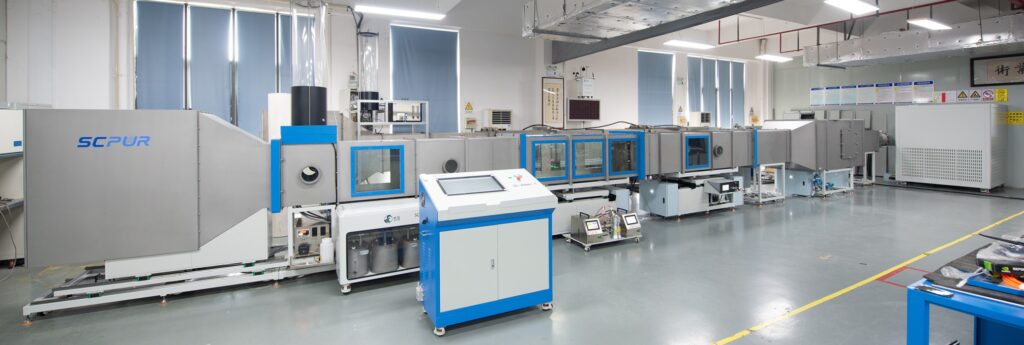
SCPUR provides configurable general ventilation filter test systems for ISO 16890 그리고 ASHRAE 52.2 애플리케이션. Each system is configured according to the required test scope rather than relying on an approximate conversion between the two standards.

ISO 16890

연락하세요

가기 전에...

귀하의 프로젝트에 어떤 국제 표준이 적용되는지 확실하지 않음? 당사의 10년 업계 전문 지식을 바탕으로 한 맞춤형 기술 평가를 위해 수석 엔지니어와 상담하세요..

502 나쁜 게이트웨이

502 나쁜 게이트웨이


nginx
*우리는 귀하의 기밀성을 존중하며 모든 정보는 보호됩니다.

글로벌 표준 테스트 시스템으로 품질을 검증하세요

우리 전문가들은 귀하를 위한 맞춤형 솔루션을 설계할 준비가 되어 있습니다.. 귀하의 프로젝트에 대해 알려주십시오., 정확하고 빠르게 품질을 검증해 드립니다..

커스텀 R&디 & 맞춤형 솔루션

커스텀 R&디 & 맞춤형 솔루션

글로벌 스탠다드 준수

글로벌 스탠다드 준수

100% 자체 개발 소프트웨어 시스템

100% 자체 개발 소프트웨어 시스템

원격 교정 & 글로벌 지원

원격 교정 & 글로벌 지원

문의하기

*우리는 귀하의 기밀성을 존중하며 모든 정보는 보호됩니다.

This page has been automatically translated from the English original for convenience. Product models, standards, numerical values and technical limits should be verified against the English version. Please contact SCPUR for project-specific confirmation.