

ISO 16890 and ASHRAE 52.2 are both used to evaluate air-cleaning devices for general ventilation. However, they use different classification systems, test procedures and calculation methods.
ISO 16890 reports ISO Coarse, ePM10, ePM2.5 and ePM1 classifications. ASHRAE 52.2 reports a Minimum Efficiency Reporting Value, or MERV.
There is no exact conversion between an ISO ePM classification and a MERV rating. Manufacturers supplying different markets may therefore need to test the same product according to both standards.
Comparison at a Glance
| Item | ISO 16890 | ASHRAE 52.2 |
| Primary classification | ISO Coarse, ePM10, ePM2.5, ePM1 | MERV |
| Typical market use | International markets | North American market |
| Efficiency basis | Fractional efficiency processed using standardized PM distributions | Particle-size removal efficiency in defined size ranges |
| Conditioning | Complete-filter conditioning according to ISO 16890-4 | Procedures defined by ASHRAE 52.2 and its applicable appendices |
| Dust loading | Separate gravimetric and resistance test under ISO 16890-3 | Part of the prescribed ASHRAE test sequence |
| Main output | ePM group and reported percentage | MERV and particle-size efficiency data |
How ISO 16890 Classifies Filters
ISO 16890 measures fractional efficiency across a range of particle sizes. The resulting initial and conditioned efficiency curves are processed using standardized reference particle-size distributions.
The calculated results determine whether the filter qualifies as:
- ISO ePM1
- ISO ePM2.5
- ISO ePM10
- ISO Coarse
An ISO ePM result provides a standardized basis for comparing filters. It is not a direct measurement of performance against every real atmospheric aerosol.
ISO 16890 also includes a dust-loading method for measuring gravimetric efficiency and resistance versus captured dust mass. This is a separate performance test and does not determine the ePM classification.
How ASHRAE 52.2 Assigns MERV
ASHRAE 52.2 evaluates removal efficiency as a function of particle size. Particle-size efficiency data are grouped into three ranges:
- E1: 0.3–1.0 µm
- E2: 1.0–3.0 µm
- E3: 3.0–10 µm
The test procedure evaluates particle-removal performance and airflow resistance according to the prescribed sequence. The applicable efficiency results are then used to determine the MERV rating.
Because MERV and ePM are calculated differently, statements such as “MERV 13 equals ePM2.5” should not be used as formal conversions. Approximate comparison charts may be useful for general discussion, but they cannot replace testing under the standard required by the customer.
Why the Results Cannot Be Directly Converted
The two standards differ in:
- Test aerosol
- Particle-size channels and grouping
- Conditioning procedure
- Dust-loading procedure
- Classification calculation
- Test sequence
- Reporting requirements
A filter may perform strongly under both standards, but the result from one method cannot be used to claim compliance with the other.
Airflow must also be considered. Efficiency and pressure drop measured at different airflow rates are not directly comparable.
Which Standard Should a Manufacturer Use?
Use the standard required by the customer, contract or target market.
ISO 16890 is normally selected when customers require an ISO ePM or ISO Coarse classification. ASHRAE 52.2 is normally selected when the market requires MERV.
Manufacturers supplying both international and North American customers may need a test platform configured for both methods. Sharing the same duct, fan and pressure-measurement system is possible, but the aerosol generation, conditioning, loading, software and reporting procedures must support each standard separately.
Information Needed Before Selecting Equipment
Before configuring a test system, define:
- Required standard and edition
- Filter type and maximum dimensions
- Rated airflow and pressure-drop range
- Target ISO ePM group or MERV rating
- Required conditioning and dust-loading procedures
- Daily or weekly testing volume
- Product-development, classification or production-QC purpose
- Calibration and report requirements
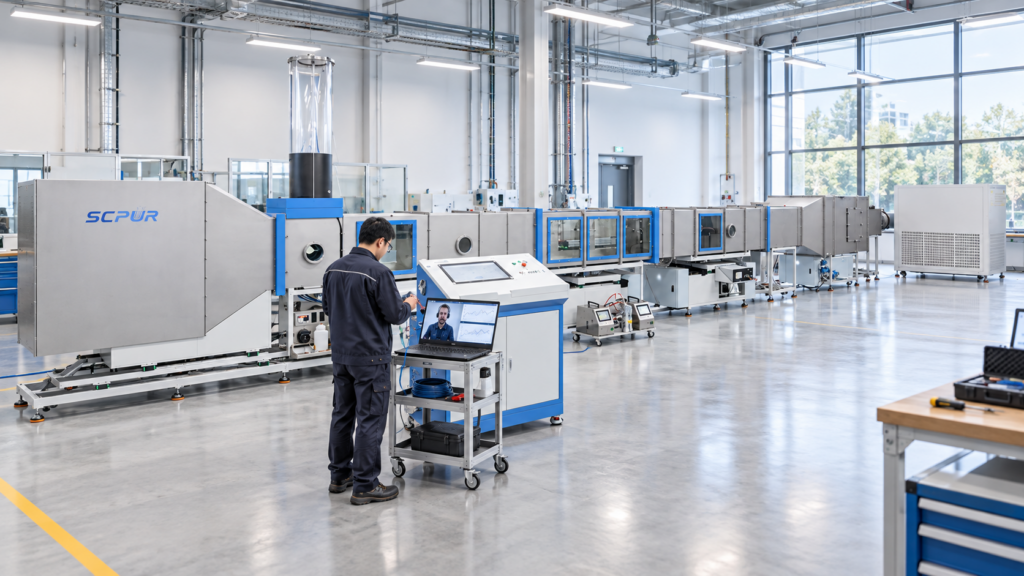
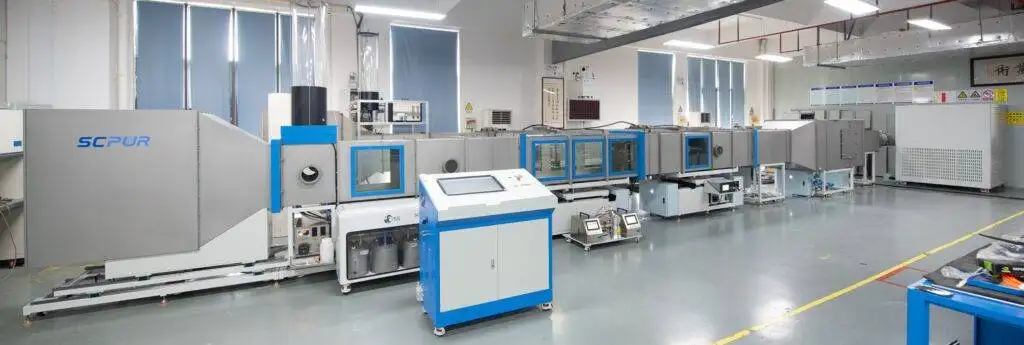
SCPUR provides configurable general ventilation filter test systems for ISO 16890 and ASHRAE 52.2 applications. Each system is configured according to the required test scope rather than relying on an approximate conversion between the two standards.
Recommended Test System: