

ISO 29461-1 e ISO 5011 são ambos usados na filtragem de entrada de ar, mas eles não fazem a mesma pergunta sobre desempenho.
- ISO 29461-1 avalia o desempenho estático de elementos filtrantes de partículas utilizados em sistemas de admissão de ar para máquinas rotativas estacionárias. Dependendo da eficiência do filtro, aplica e estende ISO 16890 ou ISO 29463 métodos e produz a classificação ISO T aplicável e dados de eficiência de partículas de apoio.
- ISO 5011 fornece procedimentos laboratoriais para comparar filtros de ar usados em motores de combustão interna e compressores. Seus principais resultados são baseados em restrições, eficiência gravimétrica de coleta de poeira, capacidade de poeira, e características de desempenho relacionadas.
A diferença, portanto, não é simplesmente “filtros industriais versus filtros automotivos”. Ambos os padrões podem aparecer em projetos de compressores industriais ou motores estacionários. A seleção depende do objeto de teste, especificação do cliente, material de desafio, resultado necessário, e método de medição.
Edições Atuais e Escopo
Edições Atuais e Escopo
Esta comparação utiliza as edições atuais disponíveis no momento da publicação:
- ISO 29461-1:2021, *Sistemas de filtros de admissão de ar para máquinas rotativas – Métodos de teste – Papel 1: Elementos de filtro estáticos*; e
- ISO 5011:2025, *Equipamento de limpeza de ar de admissão para motores de combustão interna e compressores – Teste de desempenho*.
ISO 29461-1:2021 está atualmente sob revisão sistemática. Para um contrato, escopo de acreditação, ou nova especificação de sistema de teste, confirme a edição necessária antes de congelar o método.
Comparação resumida
Comparação resumida
| Ponto de comparação | ISO 29461-1 | ISO 5011 |
|---|---|---|
| Aplicação principal | Turbinas a gás estacionárias, compressores industriais e outras máquinas rotativas estacionárias | Motores de combustão interna e compressores em aplicações automotivas e industriais |
| Objeto de teste típico | Elemento individual do filtro de partículas estáticas | Filtro de ar completo ou elemento/conjunto do filtro de ar acordado |
| Lógica de teste primário | Eficiência e classificação do tamanho das partículas usando a ISO aplicável 16890 ou ISO 29463 filial | Comparação gravimétrica sob carga de poeira padronizada |
| Material de desafio | Teste aerossol para medição fracionada ou MPPS; poeira padronizada onde o procedimento de carregamento selecionado exigir | Pó de teste ISO padronizado selecionado para o procedimento |
| Instrumentos principais | Sistema de medição de partículas, amostragem a montante/a jusante, gerador de aerossol, medição de fluxo de ar e pressão; equipamento gravimétrico quando o carregamento está incluído | Alimentador de poeira, medição de fluxo de ar e pressão, filtro de ar de teste e coleta de massa a jusante, e balanças calibradas |
| Base de fluxo de ar | Intervalo padrão explícito de 850 para 8,500 m³/h para elementos filtrantes | Teste o fluxo de ar selecionado para o filtro de ar nominal e procedimento aplicável; não deve ser descrito por um rótulo universal de “fluxo moderado” |
| Resultado principal | Classificação ISO T com ePM aplicável- ou dados relacionados ao MPPS, resistência e outros resultados acordados | Restrição, eficiência gravimétrica, capacidade de poeira, desempenho completo ou incremental e dados relacionados |
| Conversão direta de classe | Não aplicável | ISO 5011 não gera um ISO T, ePM, Classe MERV ou HEPA |
1. O limite do aplicativo tem uma sobreposição
1. O limite do aplicativo tem uma sobreposição
ISO 29461-1 foi escrito para filtros de partículas em sistemas de admissão de ar estáticos, protegendo máquinas rotativas, como turbinas a gás estacionárias, compressores, e outros motores estacionários de combustão interna. O objeto de teste normalmente é um elemento de filtro individual. Normalmente não mede o desempenho em campo direto de um sistema de admissão instalado completo.
ISO 5011 aplica-se a filtros de ar usados em motores de combustão interna e compressores em aplicações automotivas e industriais. Pode, portanto, abranger veículos de passageiros e comerciais, máquinas de construção e agrícolas, motores pesados, motores estacionários, e filtros de ar de compressor relevantes.
Isso cria uma sobreposição real: um compressor industrial ou motor estacionário de combustão interna pode aparecer na linguagem de escopo de ambas as normas. Nesse caso, não escolha apenas entre as palavras “compressor” ou “industrial”. Verificar:
- como o filtro ou filtro de ar é fornecido e montado;
- qual resultado de desempenho o proprietário do equipamento exige;
- se o documento de aquisição solicita classificação ISO T ou ISO 5011 dados gravimétricos;
- o fluxo de ar nominal, pressão, e ambiente de poeira; e
- se o projeto diz respeito a um elemento filtrante ou ao conjunto completo do filtro de ar.
A especificação do cliente e a decisão pretendida permanecem decisivas.
2. O resultado é fundamentalmente diferente
2. O resultado é fundamentalmente diferente
ISO 29461-1: Classificação e evidências de eficiência de partículas
ISO 29461-1: Classificação e evidências de eficiência de partículas
ISO 29461-1 divide a rota de teste de acordo com a eficiência do filtro:
- filtros de baixa eficiência usam procedimentos da ISO 16890 série; e
- Filtros EPA e HEPA com pelo menos 85% eficiência nos procedimentos de uso de MPPS da ISO 29463 série.
O programa de teste resultante pode incluir curvas de eficiência fracionária, Cálculos relacionados ao ePM para o ramo de menor eficiência, MPPS e dados de eficiência integral para o ramo de alta eficiência, resistência ao fluxo de ar, e a classificação ISO T aplicável.
O relatório deve manter a ISO final 29461-1 resultado distinto dos dados do método subjacente. Um filtro de admissão de turbina a gás não deve ser reetiquetado apenas com um ePM familiar, E, ou designação H quando a classificação final exigida for a classe ISO T aplicável.
ISO 5011: Desempenho gravimétrico e capacidade de poeira
ISO 5011: Desempenho gravimétrico e capacidade de poeira
ISO 5011 foi projetado para comparação direta em laboratório de filtros de ar. A principal evidência de desempenho inclui:
- restrição ou pressão diferencial em função do fluxo de ar;
- eficiência inicial de coleta de poeira gravimétrica;
- eficiência de vida inteira em um teste de carga definido;
- eficiência incremental em estágios de carregamento especificados quando necessário;
- capacidade de poeira até o ponto final de teste definido; e
- transporte de óleo para filtros de ar em banho de óleo, quando aplicável.
ISO 5011 não atribui MERV, ePM, HEPA, ou aulas ISO T. Seus resultados respondem a uma pergunta diferente: como o filtro de ar funciona sob o fluxo de ar definido e procedimento padronizado de carregamento de poeira.
3. O aerossol de teste e o pó de teste não são intercambiáveis
3. O aerossol de teste e o pó de teste não são intercambiáveis
A comparação existente muitas vezes se torna enganosa quando ambos os padrões são descritos simplesmente como “testes de eficiência e carga de poeira”. As cadeias de medição são diferentes.
ISO 29461-1 Cadeia de Medição de Partículas
ISO 29461-1 Cadeia de Medição de Partículas
Para o ramo relacionado à ISO 16890, um aerossol controlado é medido a montante e a jusante na faixa de tamanho de partícula necessária. Os dados de partículas suportam cálculos de eficiência fracionária e PM. Onde o condicionamento é necessário, a eficiência descarregada é avaliada separadamente.
Para o ramo relacionado à ISO 29463, o instrumento de aerossol e partículas deve suportar testes no MPPS ou próximo a ele. Testes de alta eficiência podem, portanto, exigir um sistema de medição submícron com faixa de concentração e estatísticas de contagem suficientes, não apenas um padrão 0.3 contador óptico μm.
O carregamento de poeira pode fazer parte de uma norma ISO acordada 29461-1 programa, mas a medição e classificação do tamanho das partículas continuam a ser fundamentais para a estrutura da norma.
ISO 5011 Cadeia Gravimétrica
ISO 5011 Cadeia Gravimétrica
ISO 5011 usa teste padronizado de poeira e equilíbrio de massa. O sistema deve alimentar poeira a uma taxa controlada, misture no fluxo de ar, medir a massa coletada pelo filtro de ar de teste e pelo estágio de coleta a jusante, e registre a mudança na resistência à medida que o carregamento avança.
Isto requer uma pesagem confiável, calibração de alimentação de pó, coleção absoluta a jusante, controle de fluxo de ar, e tempo de teste. Uma medição opcional de eficiência fracionária pode fornecer R adicional&Informação D, mas não substitui o método gravimétrico exigido pela ISO 5011 relatórios de desempenho.
4. O fluxo de ar deve ser comparado cuidadosamente
4. O fluxo de ar deve ser comparado cuidadosamente
ISO 29461-1 estende explicitamente a ISO aplicável 16890 e ISO 29463 procedimentos para filtrar as taxas de fluxo do elemento de 0.24 para 2.36 m³/s, ou 850 para 8,500 m³/h. O equipamento de teste deve manter uma distribuição estável de aerossóis, amostragem, medição do fluxo de ar, e vedação em toda esta faixa.
ISO 5011 não deve ser descrito apenas como um nível inferior- ou padrão de fluxo de ar médio. O fluxo de ar de teste é selecionado de acordo com a aplicação nominal do filtro de ar e o procedimento aplicável. Os bancos de testes práticos variam amplamente, desde filtros de ar para motores menores até produtos industriais e para serviços pesados.
Para seleção de equipamentos, compare o fluxo de ar mínimo e máximo real necessário, tamanho da conexão do filtro, restrição esperada, capacidade do ventilador, e faixa de medição de vazão. Um nome padrão por si só não dimensiona a bancada.
5. Carregamento de poeira não significa a mesma evidência
5. Carregamento de poeira não significa a mesma evidência
Em ISO 5011, o carregamento padronizado de poeira é fundamental para medir a eficiência gravimétrica, desempenho para toda a vida, capacidade de poeira, e desenvolvimento de resistência.
Em ISO 29461-1, carga de poeira e desenvolvimento de resistência podem apoiar a avaliação do filtro, mas parte 1 continua sendo um método laboratorial controlado para desempenho estático. Não deve ser apresentado como uma reprodução completa do ambiente de campo de uma turbina a gás ou compressor.
A ISO 29461 série separa questões ambientais e mecânicas adicionais em outras partes:
- ISO 29461-2 aborda a resistência da água do elemento filtrante em neblina e neblina;
- ISO 29461-3 aborda a integridade mecânica sob condições anormais definidas; e
- ISO 29461-4 aborda operações costeiras e offshore usando sal ultrafino e umidade variável.
Se um projeto requer água, mecânico, sal, ou resistência à umidade, escrevendo apenas “ISO 29461-1 compatível” não é suficiente. A peça necessária e a sequência de teste devem ser indicadas.
6. Os sistemas de teste exigem diferentes configurações principais
6. Os sistemas de teste exigem diferentes configurações principais
| subsistema | ISO 29461-1 sistema de teste | ISO 5011 sistema de teste |
|---|---|---|
| Seção de teste | Dimensionado e vedado para elementos de filtro estático industrial acima do fluxo de ar necessário | Acessórios ou adaptadores para o filtro de ar acordado, elemento ou montagem e sua geometria de entrada/saída |
| Geração de desafio | Geradores de aerossol para a ISO aplicável 16890 ou ISO 29463 filial; alimentador de pó quando necessário | Alimentador de pó padronizado calibrado e arranjo de injeção/mistura |
| Princípio de medição | Dimensionamento de partículas a montante/jusante ou medição MPPS, além de fluxo de ar e pressão diferencial | Coleta e pesagem gravimétrica de massa, além de fluxo de ar e pressão diferencial |
| Instrumentos de partículas | Sistema óptico de partículas para a faixa fracionária necessária; instrumento submícron/MPPS para filtros de alta eficiência | Não é necessário para o núcleo gravimétrico ISO 5011 resultado; opcional apenas para R adicional resolvido por tamanho&D trabalho |
| Medição de massa | Obrigatório quando o carregamento gravimétrico está incluído | Essencial para massa de filtro de ar de teste, coleta a jusante e verificação de alimentação de poeira |
| Programas | Seleção de método, controle de concentração, sequência de amostragem, cálculos de eficiência, Classificação ISO T e relatórios rastreáveis | Controle de alimentação de poeira, pesagem intermitente ou contínua, estágios de carregamento, cálculos de eficiência/capacidade e relatório de vida útil |
Os dois sistemas podem compartilhar princípios de engenharia, como fluxo de ar estável, medição de pressão calibrada, alarmes, registro de dados, e relatórios automatizados. No entanto, um ventilador e duto comuns não tornam um método compatível com o outro. A geração de desafios, amostragem, medição, pesagem, cálculo, e as funções de relatório devem corresponder ao padrão selecionado.
7. Qual padrão você deve especificar?
7. Qual padrão você deve especificar?
Escolha ISO 29461-1 quando:
Escolha ISO 29461-1 quando:
- o filtro é destinado a uma turbina a gás estacionária, compressor industrial, ou ingestão de máquinas rotativas relacionadas;
- o cliente exige uma classificação ISO T;
- eficiência do tamanho das partículas, Dados relacionados ao ePM, ou o desempenho do MPPS é fundamental para a avaliação;
- o elemento opera dentro da ISO 29461-1 faixa de fluxo de ar; e
- o projeto diz respeito ao desempenho estático de um elemento filtrante de admissão individual.
Escolha ISO 5011 quando:
Escolha ISO 5011 quando:
- o produto é um filtro de ar para um motor de combustão interna ou compressor aplicável;
- o cliente exige eficiência gravimétrica, restrição, capacidade de poeira, ou desempenho para toda a vida;
- carregamento padronizado de poeira é o desafio central;
- a geometria completa do filtro de ar ou montagem acordada faz parte da avaliação de desempenho; e
- o documento de aquisição ou programa de desenvolvimento de produto refere-se explicitamente à ISO 5011.
Você pode precisar de ambos quando:
Você pode precisar de ambos quando:
- o fabricante fornece filtros para os mercados de motores e turbinas a gás;
- a mesma família de produtos é vendida sob especificações de clientes diferentes;
- um cliente solicita dados de tamanho de partícula e dados gravimétricos de capacidade de poeira; ou
- um R&O programa D precisa comparar o nível de mídia, nível de elemento, e comportamento de purificação de ar completo.
Nestes casos, definir dois escopos de teste e relatórios separados. Não converta o resultado de um método na classificação do outro.
8. Informações necessárias antes de configurar o equipamento
8. Informações necessárias antes de configurar o equipamento
Para selecionar o sistema de teste correto, prepare as seguintes informações:
- Desenhos de filtro ou filtro de ar, dimensões, massa, e geometria de conexão.
- Máquina pretendida e ambiente operacional.
- Padrão exigido, edição, aula, e critérios de aceitação do cliente.
- Faixa nominal de fluxo de ar e resistência máxima esperada.
- Aerossol necessário, poeira de teste, condicionamento, ou procedimento de resistência.
- Resultados exigidos no relatório final.
- Volume de amostra esperado, taxa de produção, e nível de automação.
- Se o sistema é para R&D, classificação formal, qualificação de fornecedor, ou controle de produção.
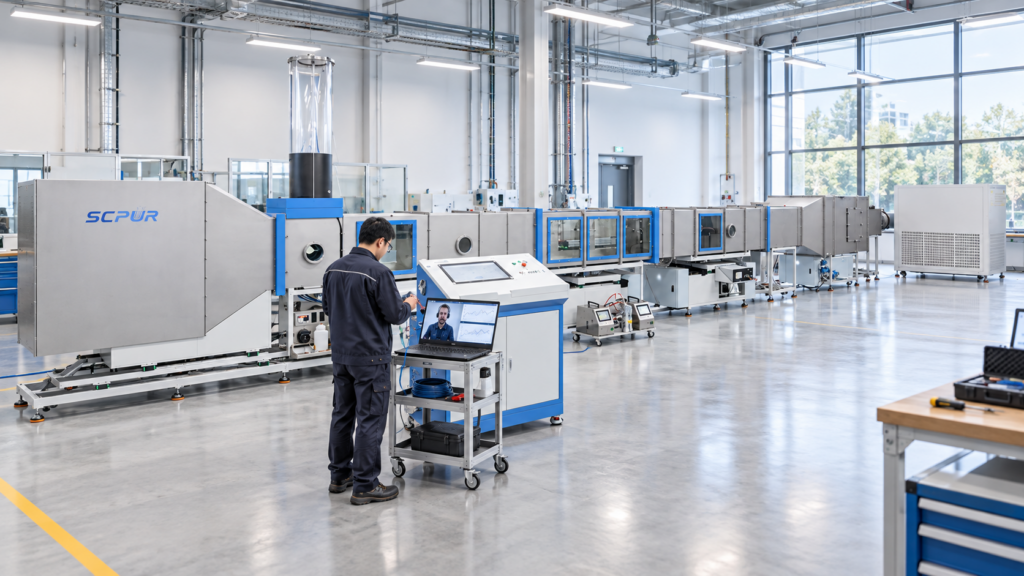
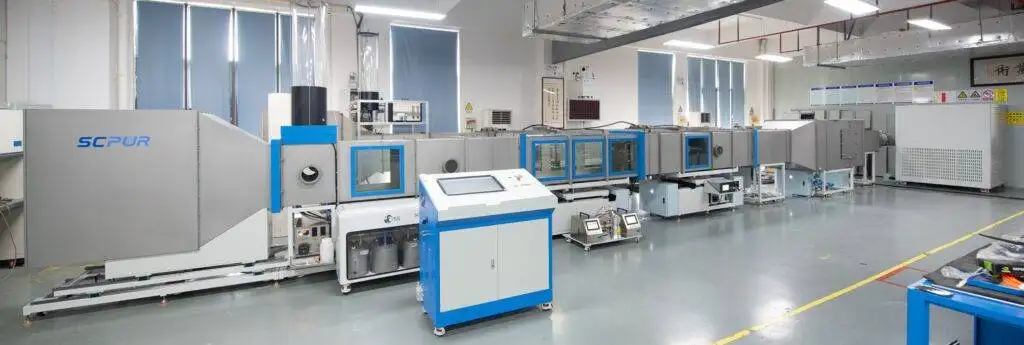
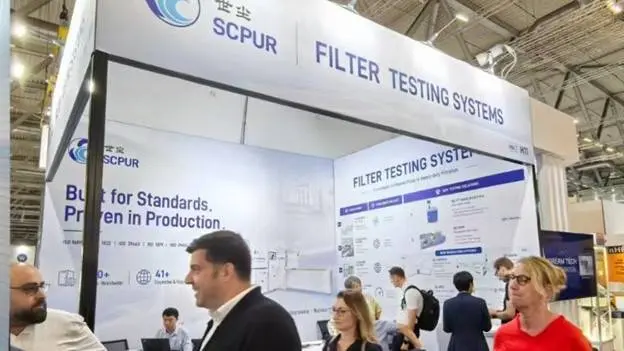
SCPUR fornece arquiteturas de sistema de teste separadas para ISO 29461-1 e ISO 5011 porque as evidências e cadeias de medição exigidas são diferentes. Definir o resultado primeiro evita configurações desnecessárias e garante que a plataforma selecionada possa executar todo o método necessário.
Revise os dois caminhos de solução: Sistemas de teste de filtros de admissão de motores e turbinas
Perguntas frequentes
Perguntas frequentes
Pode ISO 5011 os resultados serão convertidos para uma classe ISO T?
Pode ISO 5011 os resultados serão convertidos para uma classe ISO T?
Não. ISO 5011 Os resultados de eficiência gravimétrica e capacidade de poeira não fornecem os dados de tamanho de partícula e o procedimento de classificação necessários para uma classe ISO T.
ISO 29461-1 testar um sistema completo de admissão de turbina a gás instalado?
ISO 29461-1 testar um sistema completo de admissão de turbina a gás instalado?
Normalmente, não. ISO 29461-1 cobre principalmente elementos de filtro estáticos individuais. Uma montagem completa só está dentro do escopo quando atende aos critérios de qualificação para o arranjo de teste. O desempenho do sistema de campo instalado não deve ser inferido apenas dos dados do elemento.
ISO 29461-1 incluem simulação costeira e de alta umidade?
ISO 29461-1 incluem simulação costeira e de alta umidade?
Papel 1 é o método de desempenho estático. A resistência ao nevoeiro e à névoa é abordada na ISO 29461-2, enquanto os testes de sal e umidade costeiros e offshore são abordados na ISO 29461-4.
Uma bancada de testes pode executar ambos os padrões??
Uma bancada de testes pode executar ambos os padrões??
Somente se incluir e validar ambas as cadeias de medição completas. ISO 29461-1 requer a medição de partículas aplicável, aerossol, amostragem, e funções de classificação. ISO 5011 requer alimentação controlada de pó de teste, coleta gravimétrica, pesagem, e cálculos de capacidade. Compartilhar apenas hardware de fluxo de ar é insuficiente.
- Sistemas de teste de filtros de admissão de motores e turbinas
- Sistema de teste de filtro de admissão de ar SC-5011
- ISO 29461-1 Guia de teste do filtro de entrada de ar
- Padrões de teste de filtro de ar: Um guia prático
- ISO 29461-1:2021 – Elementos filtrantes estáticos para máquinas rotativas
- ISO 5011:2025 – Teste de desempenho do equipamento de limpeza de ar de entrada
- ISO 16890-1:2016 – Classificação geral do filtro de ventilação
- ISO 29463-1:2024 – Classificação de filtro de alta eficiência
- ISO 29461-2:2022 – Resistência a neblina e neblina
- ISO 29461-3:2024 – Integridade mecânica
- ISO 29461-4:2025 – Ambientes costeiros e offshore