

IN 1822 ist die europäische Norm zur Klassifizierung hocheffizienter Luftfilter für die Belüftung, Klimatisierung und technische Prozesse wie Reinräume und Pharmaherstellung.
Der Standard deckt drei Filtergruppen ab:
- Gruppe E: EPA-Filter
- Gruppe H: HEPA-Filter
- Gruppe U: ULPA-Filter
Dieser Artikel bezieht sich auf EN 1822-1:2019, was die Klassifizierung definiert, Leistungsprüfung und -bewertung. Die detaillierten Verfahren zur Aerosolerzeugung, Partikelmessung, Prüfung von Filtermedien, Filterelementleckage und Gesamteffizienz werden durch ISO angegeben 29463 Teile 2 Zu 5.
Warum funktioniert EN 1822 Verwenden Sie MPPS?
IN 1822 Bewertet Filter bei der durchdringendsten Partikelgröße, oder MPPS.
MPPS ist die Partikelgröße, bei der ein bestimmtes Filtermedium unter den angegebenen Testbedingungen die geringste Filtrationseffizienz aufweist. Er wird anhand einer Fraktionseffizienzkurve bestimmt und nicht als ein fester Partikeldurchmesser angenommen.
Für viele Glasfaser-Filtermedien, MPPS liegt oft im Submikrometerbereich. Jedoch, es sollte nicht automatisch als angegeben werden 0.3 µm. Das tatsächliche Ergebnis hängt vom Filtermedium ab, Anströmgeschwindigkeit und Partikeleinfangmechanismen.
Testen nur bei einem festen 0.3 Der µm-Kanal kann für eine validierte Methode zur Qualitätskontrolle in der Produktion nützlich sein, aber es ist nicht automatisch gleichbedeutend mit formalem EN 1822 Klassifizierung bei MPPS.
IN 1822 Klassen filtern
IN 1822 klassifiziert Filter nach ihrer Effizienz oder Durchdringung bei MPPS.
| Filtergruppe | Klasse | Minimaler integraler Wirkungsgrad bei MPPS | Minimaler lokaler Wirkungsgrad bei MPPS |
| EPA | E10 | 85% | Wird nicht zur Klassifizierung verwendet |
| EPA | E11 | 95% | Wird nicht zur Klassifizierung verwendet |
| EPA | E12 | 99.5% | Wird nicht zur Klassifizierung verwendet |
| HEPA | H13 | 99.95% | 99.75% |
| HEPA | H14 | 99.995% | 99.975% |
| ULPA | U15 | 99.9995% | 99.9975% |
| ULPA | U16 | 99.99995% | 99.99975% |
| ULPA | U17 | 99.999995% | 99.9999% |
Filter der Gruppe E werden anhand des integralen Wirkungsgrads klassifiziert und werden zu Klassifizierungszwecken nicht auf Dichtheit geprüft.
Die Gruppen H und U erfordern sowohl eine integrale Leistung als auch die Einhaltung der geltenden lokalen Durchdringungsgrenze. Der Standard verlangt keine physikalische „Null-Leckage“. Es erfordert, dass die lokale Durchdringung den für die jeweilige Klasse und Methode angegebenen Grenzwert nicht überschreitet.
Drei verschiedene Testaufgaben
Eine vollständige EN 1822 Die Bewertung umfasst verwandte, aber unterschiedliche Testaufgaben.
1. Prüfung von Filtermedien
Eine flache Medienprobe wird über einen Partikelgrößenbereich bei der angegebenen Mediengeschwindigkeit getestet. Die Fraktionseffizienzkurve wird verwendet, um MPPS zu identifizieren und die Leistung des Filtermediums zu bewerten.
Medientests sind bei der Materialauswahl und Produktentwicklung hilfreich, Der fertige Filter wird jedoch nicht klassifiziert.
Plissee, Klebstoffauftrag, Rahmen, Versiegelung und Handhabung können die Leistung des fertigen Produkts beeinträchtigen.
2. Integrale Filtereffizienz
Der fertige Filter wird bei seinem Nennluftstrom getestet. Die Partikelkonzentrationen vor und nach dem Filter werden gemessen, um die durchschnittliche Effizienz oder Durchdringung des gesamten Filterelements bei MPPS zu bestimmen.
Der Druckabfall wird auch beim Nennluftstrom aufgezeichnet.
Der Integralwirkungsgrad stellt die durchschnittliche Leistung des gesamten Filters dar. Ein Filter kann seine integrale Effizienzanforderung erfüllen und dennoch einen lokalisierten Defekt enthalten.
3. Lokale Dichtheitsprüfung
Durch lokale Tests werden die nachgeschaltete Filteroberfläche und relevante Dichtungsbereiche auf Stellen überprüft, an denen die Durchdringung den zulässigen Grenzwert überschreitet.
Zu den möglichen Mängeln gehören::
- Beschädigungen oder Nadellöcher im Filtermedium
- Klebstoffunterbrechungen
- Leckage zwischen Medienpaket und Rahmen
- Herstellungs- oder Handhabungsschäden
In einem Partikelzähl-Scan-Test, Eine Probenahmesonde bewegt sich über die stromabwärtige Seite des Filters. Zuverlässige Ergebnisse hängen von einer vollständigen Scanabdeckung ab, kontrollierte Sondengeschwindigkeit, Sondenabstand, Probenahmefluss und stabile vorgeschaltete Aerosolkonzentration.
Ein Scan-Test ist also mehr als das Bewegen eines Partikelzählers über die Filteroberfläche.
Was bestimmt die Genauigkeit des Tests??
Zuverlässiges EN 1822 Beim Testen muss das gesamte Messsystem unter kontrollierten Bedingungen betrieben werden.
Wichtige Faktoren sind unter anderem:
- Stabiler Testluftstrom
- Korrekte Installation und Abdichtung des Filters
- Geeignete Aerosolerzeugung bei erforderlichem MPPS
- Gleichmäßige Aerosolkonzentration vorgelagert
- Repräsentative Upstream- und Downstream-Probenahme
- Empfindlichkeit und Konzentrationsbereich des Partikelzählers
- Bei Bedarf angemessene Verdünnung
- Geringe Hintergrundpartikelkonzentration
- Kontrollierte Scangeschwindigkeit und Sondengeometrie
- Vollständige Scanabdeckung
- Korrekte Berechnungs- und Berichtslogik
Von H13 bis U17 wird die erforderliche Detektorempfindlichkeit immer anspruchsvoller. Geräte, die für routinemäßige H13-Produktionstests geeignet sind, sind nicht automatisch in der Lage, U16- oder U17-Filter genau zu bewerten.
Werkstests und Tests installierter Systeme unterscheiden sich
IN 1822 Die Klassifizierung erfolgt am Filterelement unter definierten Prüfbedingungen.
Bei einem Integritätstest des installierten Filters wird der Filter nach der Installation in einem Reinraum überprüft, Lüftungsgerät oder anderes System. Es kann Bypass-Leckagen durch die Dichtung erkennen, Geldichtung, Montagerahmen oder Gehäuse.
Installierte Integritätstests ersetzen nicht den werksseitigen Klassifizierungstest des Herstellers. Ebenfalls, Ein werkseitiger Filterscanner und ein tragbares Photometer, das für Feldintegritätstests verwendet wird, sind nicht dieselbe Art von Ausrüstung.
Was sollte vor der Auswahl der Ausrüstung definiert werden??
Bevor Sie eine EN auswählen 1822 Testsystem, bestätigen:
- Die erforderliche Filterklasse
- Maximale Filterabmessungen
- Nomineller Luftstrom- und Druckabfallbereich
- Erwarteter MPPS-Bereich
- Testaerosol
- Erforderliche Empfindlichkeit der Partikelmessung
- Ob es sich bei der Aufgabe um Medientests handelt, integrale Effizienz, Lecksuche oder eine Kombination davon
- Erforderlicher Produktionsdurchsatz und Automatisierung
- Berichtsformat und Kundenakzeptanzkriterien
Es reicht nicht aus, nur zu sagen, dass das Gerät „EN 1822 unterstützt“.. Der eigentliche Testumfang, Filterklasse und Messfähigkeit müssen definiert werden.
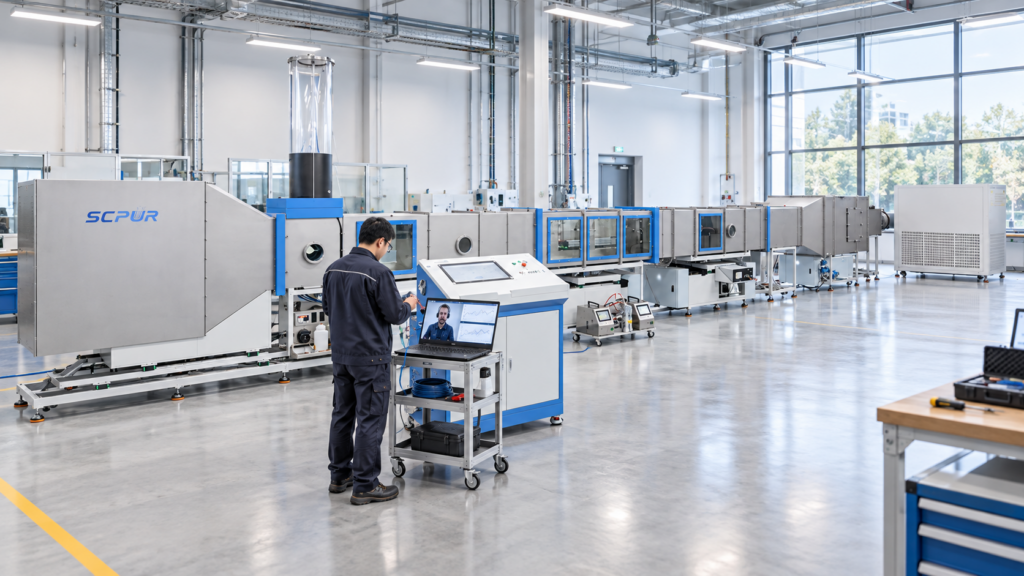
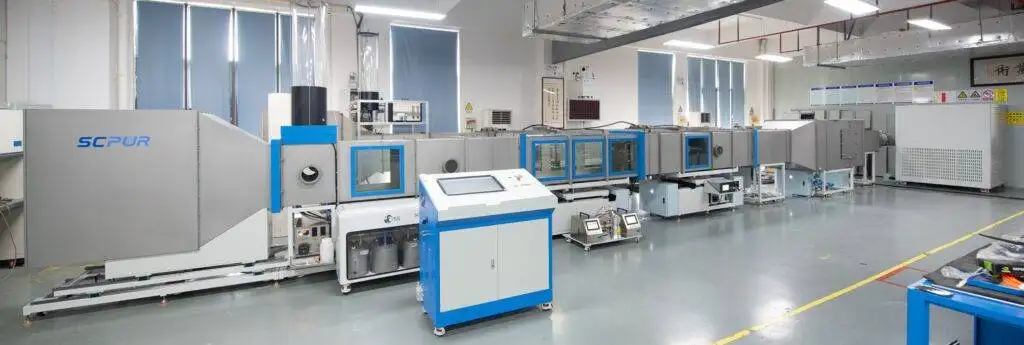
SCPUR bietet separate Lösungen für die Bewertung von Flachfiltermedien und die Werksprüfung von fertigem EPA, HEPA- und ULPA-Filter. Die SC-L8023/U-Serie unterstützt kontrollierte Werksscans und Produktionstests entsprechend der erforderlichen Filtergröße, Luftstrom, Partikelmessbereich und Prüfverfahren.
Recommended Test System:SC-L8023U HEPA & ULPA Automatic Filter Scanning System