

IN 1822 is de Europese norm die wordt gebruikt om hoogefficiënte luchtfilters voor ventilatie te classificeren, airconditioning en technische processen zoals cleanrooms en farmaceutische productie.
De standaard omvat drie filtergroepen:
- Groep E: EPA-filters
- Groep H: HEPA-filters
- Groep U: ULPA-filters
Dit artikel verwijst naar EN 1822-1:2019, die classificatie definieert, prestatietests en markering. De gedetailleerde procedures voor het genereren van aerosolen, deeltjesmeting, testen van filtermedia, Lekkage van filterelementen en algehele efficiëntie worden via ISO vermeld 29463 Onderdelen 2 naar 5.
Waarom doet NL 1822 Gebruik MPPS?
IN 1822 evalueert filters op de meest doordringende deeltjesgrootte, of MPPS.
MPPS is de deeltjesgrootte waarbij een bepaald filtermedium onder de gespecificeerde testomstandigheden de laagste filtratie-efficiëntie heeft. Deze wordt bepaald op basis van een fractionele-efficiëntiecurve in plaats van dat wordt aangenomen dat deze één vaste deeltjesdiameter is.
Voor veel glasvezelfiltermedia, MPPS wordt vaak aangetroffen binnen een submicrometerbereik. Echter, het mag niet automatisch worden vermeld als 0.3 µm. Het daadwerkelijke resultaat is afhankelijk van het filtermedium, gezichtssnelheid en mechanismen voor het vangen van deeltjes.
Alleen testen bij een vaste 0.3 µm-kanaal kan nuttig zijn voor een gevalideerde productiekwaliteitscontrolemethode, maar het is niet automatisch gelijk aan formele EN 1822 classificatie bij MPPS.
IN 1822 Klassen filteren
IN 1822 classificeert filters op basis van hun efficiëntie of penetratie bij MPPS.
| Groep filteren | Klas | Minimale integrale efficiëntie bij MPPS | Minimale lokale efficiëntie bij MPPS |
| EPA | E10 | 85% | Niet gebruikt voor classificatie |
| EPA | E11 | 95% | Niet gebruikt voor classificatie |
| EPA | E12 | 99.5% | Niet gebruikt voor classificatie |
| HEPA | H13 | 99.95% | 99.75% |
| HEPA | H14 | 99.995% | 99.975% |
| ULPA | U15 | 99.9995% | 99.9975% |
| ULPA | U16 | 99.99995% | 99.99975% |
| ULPA | U17 | 99.999995% | 99.9999% |
Groep E-filters worden geclassificeerd met behulp van integrale efficiëntie en worden niet op lekkage getest voor classificatiedoeleinden.
Groepen H en U vereisen zowel integrale prestaties als naleving van de toepasselijke lokale penetratielimiet. De norm vereist geen fysiek ‘nul lekkage’. Het vereist dat de lokale penetratie de voor de betreffende klasse en methode gespecificeerde limiet niet overschrijdt.
Drie verschillende testtaken
Een volledige EN 1822 Evaluatie omvat gerelateerde maar verschillende testtaken.
1. Filtermedia testen
Een vlak mediamonster wordt getest over een deeltjesgroottebereik bij de gespecificeerde mediasnelheid. De fractionele-efficiëntiecurve wordt gebruikt om MPPS te identificeren en de prestaties van het filtermedium te evalueren.
Mediatesten zijn nuttig tijdens materiaalselectie en productontwikkeling, maar het classificeert het voltooide filter niet.
Plooien, lijm toepassing, inlijsten, afdichting en hantering kunnen allemaal de prestaties van het voltooide product beïnvloeden.
2. Integrale filterefficiëntie
Het voltooide filter wordt getest bij zijn nominale luchtstroom. Stroomopwaartse en stroomafwaartse deeltjesconcentraties worden gemeten om de gemiddelde efficiëntie of penetratie van het volledige filterelement bij MPPS te bepalen.
De drukval wordt ook geregistreerd bij de nominale luchtstroom.
Integrale efficiëntie vertegenwoordigt de gemiddelde prestatie van het hele filter. Een filter kan aan zijn integrale rendementseis voldoen en toch een plaatselijk defect vertonen.
3. Lokale lektesten
Lokale tests controleren het stroomafwaartse filteroppervlak en de relevante afdichtingsgebieden op punten waar de penetratie de toegestane limiet overschrijdt.
Mogelijke defecten zijn onder meer:
- Beschadigingen of gaatjes in het filtermedium
- Discontinuïteiten in de lijm
- Lekkage tussen het mediapakket en het frame
- Schade door fabricage of hantering
In een deeltjestellende scantest, een bemonsteringssonde beweegt over de stroomafwaartse zijde van het filter. Betrouwbare resultaten zijn afhankelijk van volledige scandekking, gecontroleerde sondesnelheid, sonde afstand, bemonsteringsstroom en stabiele stroomopwaartse aërosolconcentratie.
Een scantest is dus meer dan het verplaatsen van een deeltjesteller over het filteroppervlak.
Wat de nauwkeurigheid van de test bepaalt?
Betrouwbaar NL 1822 testen vereist dat het volledige meetsysteem onder gecontroleerde omstandigheden functioneert.
Belangrijke factoren zijn onder meer:
- Stabiele testluchtstroom
- Correcte filterinstallatie en afdichting
- Geschikte aerosolgeneratie bij de vereiste MPPS
- Uniforme stroomopwaartse aërosolconcentratie
- Representatieve stroomopwaartse en stroomafwaartse bemonstering
- Gevoeligheid en concentratiebereik van deeltjesteller
- Geschikte verdunning indien nodig
- Lage achtergronddeeltjesconcentratie
- Gecontroleerde scansnelheid en tastergeometrie
- Volledige scandekking
- Correcte berekenings- en rapportagelogica
De vereiste detectorgevoeligheid wordt steeds veeleisender vanaf H13 tot en met U17. Apparatuur die geschikt is voor routinematige H13-productietests is niet automatisch in staat U16- of U17-filters nauwkeurig te evalueren.
Fabriekstesten en tests op geïnstalleerde systemen zijn verschillend
IN 1822 classificatie wordt uitgevoerd op het filterelement onder gedefinieerde testomstandigheden.
Een geïnstalleerde filterintegriteitstest controleert het filter na installatie in een cleanroom, luchtbehandelingsunit of ander systeem. Het kan bypass-lekkage via de pakking detecteren, gel-afdichting, montageframe of behuizing.
Geïnstalleerde integriteitstesten vervangen niet de fabrieksclassificatietest van de fabrikant. Insgelijks, een fabrieksfilterscanner en een draagbare fotometer die worden gebruikt voor veldintegriteitstests zijn niet hetzelfde type apparatuur.
Wat moet worden gedefinieerd voordat apparatuur wordt geselecteerd?
Voordat u een EN selecteert 1822 testsysteem, bevestigen:
- De vereiste filterklasse
- Maximale filterafmetingen
- Nominale luchtstroom en drukvalbereik
- Verwacht MPPS-bereik
- Testaërosol
- Vereiste gevoeligheid voor deeltjesmeting
- Of de taak het testen van media is, integrale efficiëntie, lekscannen of een combinatie
- Vereiste productiedoorvoer en automatisering
- Rapportformaat en klantacceptatiecriteria
Alleen maar stellen dat apparatuur “EN 1822 ondersteunt” is niet voldoende. De daadwerkelijke testomvang, filterklasse en meetcapaciteit moeten worden gedefinieerd.
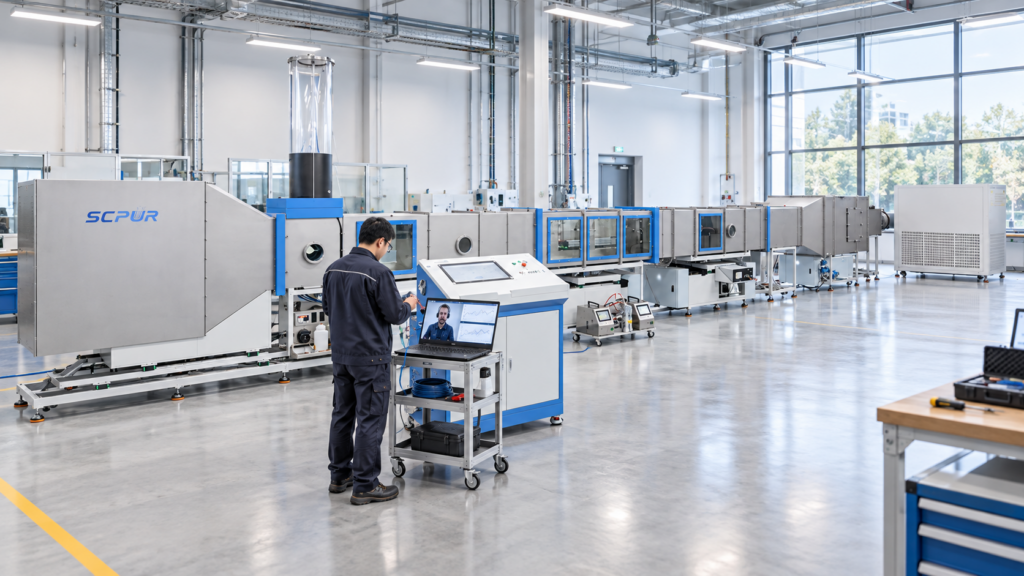
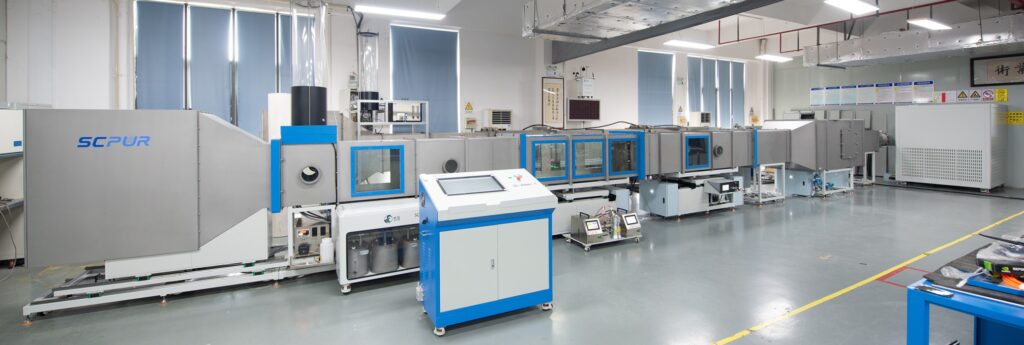
SCPUR biedt afzonderlijke oplossingen voor de evaluatie van vlakke filtermedia en het testen in de fabriek van afgewerkte EPA, HEPA- en ULPA-filters. De SC-L8023/U-serie ondersteunt gecontroleerde fabrieksscans en productietests volgens de vereiste filtergrootte, luchtstroom, deeltjesmeetbereik en testprocedure.