Common ISO 16890 테스트 실수와 이를 피하는 방법

공유하다:

목차

안 ISO 16890 result depends on the complete measurement chain—not only the particle counters.

공기 흐름 제어, 에어로졸 생성, sampling, 조절, system leakage and data processing can all affect the final result. A highly automated test bench can still produce unreliable data if these basic conditions are not verified.

The following problems deserve particular attention.

1. Testing at the Wrong Airflow

Efficiency and pressure drop can change with airflow. The test airflow must match the declared test condition and remain stable throughout the measurement.

The laboratory should verify:

  • Airflow measurement range
  • 교정 상태
  • Temperature and pressure compensation
  • Flow stability
  • Filter dimensions and face area
  • Pressure capability at higher resistance

Testing outside the applicable range of the system or measurement device can invalidate the result.

2. Leakage Around the Filter or Test Duct

Air bypassing the filter can be measured as downstream penetration. Leakage may occur through:

  • The filter fixture
  • Adapter joints
  • Sampling connections
  • Duct sections
  • Gaskets and clamps

A leakage check should be completed before efficiency testing. The fixture must seal the filter without deforming it.

3. Unstable or Non-Uniform Aerosol

The upstream aerosol must be sufficiently stable and mixed before reaching the sampling location.

Poor aerosol distribution can make the upstream sample unrepresentative of the concentration reaching the filter.

The laboratory should verify concentration stability and spatial uniformity under the required airflow conditions rather than assuming that a generator setting is sufficient.

4. Poor Sampling Arrangement

Upstream and downstream samples must represent the aerosol in the duct.

Errors can be introduced by:

  • Incorrect probe location or orientation
  • Excessively long sampling tubes
  • Particle losses in bends or tubing
  • Different transport conditions upstream and downstream
  • Contamination remaining from a previous test

Sampling lines should be kept controlled, clean and suitable for the required particle-size range.

5. Particle-Counter Concentration Errors

An upstream concentration that is too high can cause coincidence error or exceed the instrument range. A downstream concentration that is too low can produce poor counting statistics.

Dilution may be required upstream, but the dilution ratio must be known and stable.

The laboratory should also check:

  • Instrument zero count
  • Background particle concentration
  • 유량
  • Size-channel response
  • 교정 상태
  • Synchronization of upstream and downstream measurements

Changing instruments or dilution configurations without updating the calculation can create a large efficiency error.

6. Ignoring Background Concentration

For high-efficiency filters, downstream penetration may be close to the background particle level.

If background concentration is not measured and controlled, particles from the duct, test room or sampling system may be incorrectly attributed to filter penetration.

The test system should be cleaned and stabilized before measurement.

7. Incorrect Conditioning

ISO 16890 conditioning is a controlled procedure used to determine minimum fractional test efficiency after reducing the influence of electrostatic charge.

It should not be shortened, modified or described as a simulation of a specific period of field ageing.

After conditioning, the filter must be handled and tested according to the applicable procedure. Uncontrolled storage or contamination can affect the result.

8. Mixing ePM Classification with Dust Loading

Initial and conditioned fractional-efficiency results are used for ePM classification.

Dust loading evaluates different parameters, including gravimetric efficiency, dust capacity and resistance versus captured dust mass. It does not determine the ePM class.

Reports should separate these results clearly.

9. Using Software Without Verifying the Calculation

Automation reduces manual work, but it does not replace validation.

The laboratory should verify:

  • Particle-size channel mapping
  • Upstream and downstream corrections
  • Dilution factors
  • Efficiency and penetration calculations
  • ePM calculation logic
  • Rounding and classification rules
  • Test-condition records
  • Report templates

Software changes should be controlled and checked using known datasets.

A Practical Pre-Test Check

Before starting an ISO 16890 시험, confirm:

  1. The system is within calibration
  2. The duct and fixture pass the leakage check
  3. Airflow is stable
  4. Aerosol concentration is stable and uniform
  5. Sampling lines are clean
  6. Particle counters are within range
  7. Dilution settings are correct
  8. Background concentration is acceptable
  9. The correct test procedure and filter condition are selected

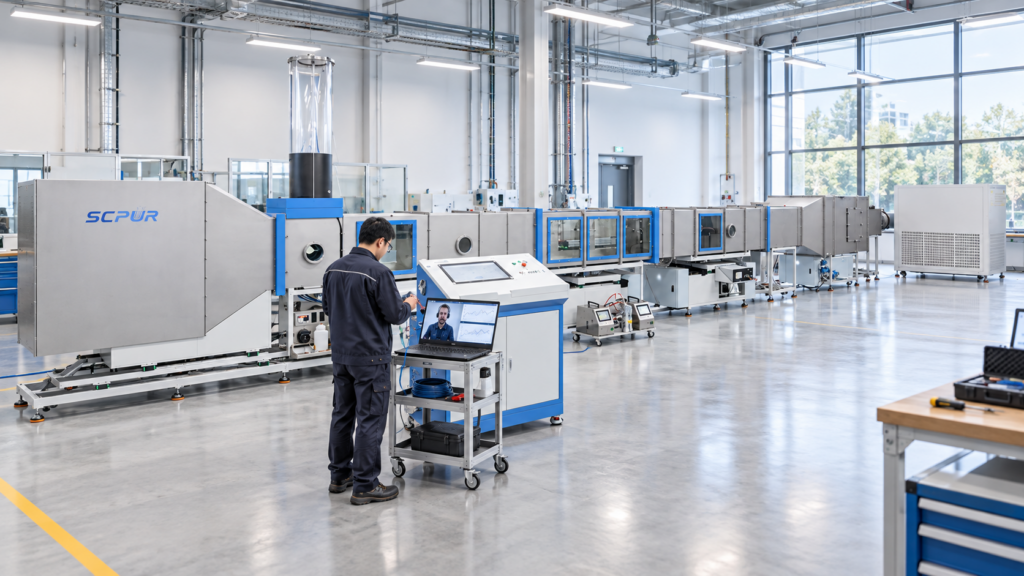
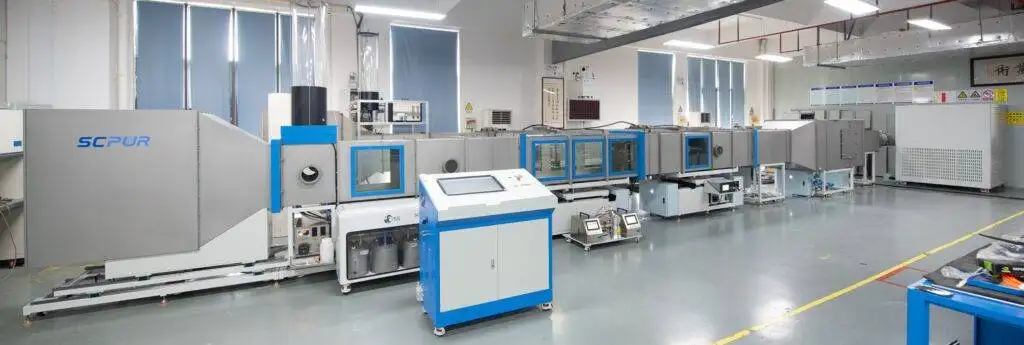
SCPUR systems combine automated control with airflow, 에어로졸, sampling and calculation functions. Reliable results still depend on a validated measurement chain and a laboratory procedure that operators follow consistently.

ISO 16890

연락하세요

가기 전에...

귀하의 프로젝트에 어떤 국제 표준이 적용되는지 확실하지 않음? 당사의 10년 업계 전문 지식을 바탕으로 한 맞춤형 기술 평가를 위해 수석 엔지니어와 상담하세요..

502 나쁜 게이트웨이

502 나쁜 게이트웨이


nginx
*우리는 귀하의 기밀성을 존중하며 모든 정보는 보호됩니다.

글로벌 표준 테스트 시스템으로 품질을 검증하세요

우리 전문가들은 귀하를 위한 맞춤형 솔루션을 설계할 준비가 되어 있습니다.. 귀하의 프로젝트에 대해 알려주십시오., 정확하고 빠르게 품질을 검증해 드립니다..

커스텀 R&디 & 맞춤형 솔루션

커스텀 R&디 & 맞춤형 솔루션

글로벌 스탠다드 준수

글로벌 스탠다드 준수

100% 자체 개발 소프트웨어 시스템

100% 자체 개발 소프트웨어 시스템

원격 교정 & 글로벌 지원

원격 교정 & 글로벌 지원

문의하기

*우리는 귀하의 기밀성을 존중하며 모든 정보는 보호됩니다.

This page has been automatically translated from the English original for convenience. Product models, standards, numerical values and technical limits should be verified against the English version. Please contact SCPUR for project-specific confirmation.