

Une norme actuelle et une norme héritée
DANS 779 était la principale norme européenne de classification des filtres de ventilation générale avant l'EN ISO 16890 la série l'a remplacé dans les spécifications européennes actuelles. DANS 779 les résultats peuvent encore apparaître dans les anciens documents clients, enregistrements de produits installés ou exigences de production héritées.
OIN 16890 utilise une méthode de classification et de calcul différente. Un G existant, La classe M ou F ne peut pas être convertie automatiquement en classe ISO ePM. Si un client a besoin d'un ISO 16890 résultat, le filtre doit être évalué à l'aide de la norme ISO applicable 16890 procédure.
Systèmes de classification
| Comparaison | DANS 779 | OIN 16890 |
| Statut | Norme européenne héritée | Système international actuel pour les filtres de ventilation générale |
| Cours | G1-G4, M5-M6 et F7-F9 | ISO Coarse, ISO ePM10, ISO ePM2.5 et ISO ePM1 |
| Base d'efficacité | Arrestance moyenne pour les filtres grossiers et 0.4 efficacité micrométrique pour filtres moyens et fins | Courbe d'efficacité fractionnaire combinée à des distributions de référence standardisées de PM |
| Traitement électrostatique | Un traitement défini a été utilisé pour certaines exigences d'efficacité minimale du filtre fin | Le filtre complet est conditionné selon la norme ISO 16890-4 pour déterminer l'efficacité minimale du test fractionné |
| Chargement de poussière | Utilisé dans l'EN 779 séquence de test | OIN 16890-3 rapporte l'efficacité gravimétrique et le développement de la résistance séparément de la classification ePM |
| Résultat rapporté | Un G, Classe M ou F | Un groupe ISO ePM et un pourcentage arrondi, ou ISO grossier |
Pourquoi il n'y a pas de conversion directe
Un filtre testé selon EN 779 et le même filtre testé sous ISO 16890 peut produire des résultats qui semblent globalement similaires, mais les normes n'utilisent pas la même évaluation des aérosols, itinéraire de conditionnement, gammes de particules, calculs ou limites de classe. Un tableau de comparaison du marché peut montrer les tendances historiques, mais ce n'est pas une table de conversion reconnue par les normes.
Les déclarations telles que F7 est égal à ePM2.5 ou F9 est égal à ePM1 doivent donc être supprimées des rapports techniques., les étiquettes des produits et les documents contractuels sauf s'ils sont clairement identifiés comme une estimation de marché non normative. Même alors, la classe ISO réelle doit provenir d'un ISO 16890 test.
Comment les méthodes de test diffèrent
DANS 779 a utilisé de la poussière de chargement synthétique dans le cadre de sa séquence de tests et a mis l'accent sur l'arrêt moyen des filtres grossiers et l'efficacité à 0.4 micromètres pour filtres moyens et fins. Ses éditions ultérieures ont également abordé l'influence de la charge électrostatique pour la classification des filtres fins..
OIN 16890 mesure une courbe d'efficacité fractionnaire et applique des distributions granulométriques de référence pour calculer l'ePM1, Valeurs ePM2,5 et ePM10. La procédure spécifiée de conditionnement de vapeur IPA est utilisée pour déterminer l'efficacité minimale du test fractionné.. Chargement de poussière sous ISO 16890-3 mesure l'efficacité et la résistance gravimétriques par rapport à la masse de poussière capturée, mais ne définit pas la classe ePM.
Ce que devraient faire les fabricants
- Conserver l'héritage FR 779 rapports lorsqu'ils sont requis pour des produits historiques ou des spécifications client existantes.
- Utiliser l'ISO 16890 tests et classification pour les nouvelles revendications ISO ePM.
- Ne réétiquetez pas une EN 779 classe en tant que classe ePM sans l'ISO applicable 16890 test.
- Indiquer la norme et l'édition sur chaque rapport d'essai et déclaration de produit.
- Conserver la classification ePM, données de chute de pression et résultats de chargement de poussière sous forme de sorties rapportées séparément.
Implications sur l'équipement
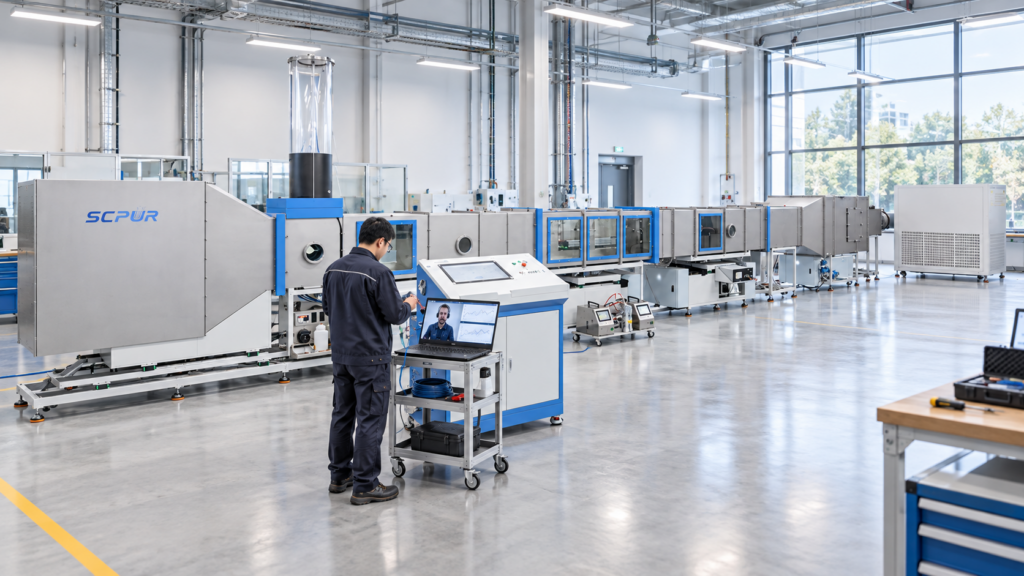
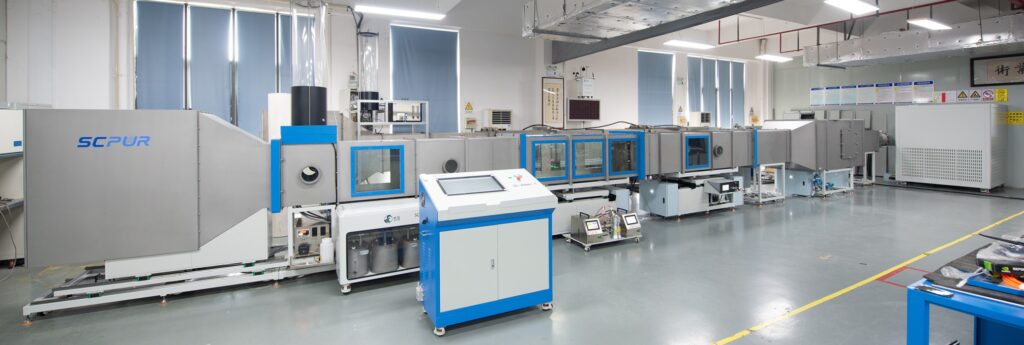
Un laboratoire prenant en charge les deux méthodes a besoin d'une mesure validée du débit d'air et de la pression., génération d'aérosols, mesure des particules en amont et en aval et calculs logiciels corrects. OIN 16890 nécessite en outre la capacité de conditionnement spécifiée pour la classification, et ISO 16890-3 le chargement de poussière nécessite une alimentation contrôlée en poussière, collecte et pesage en aval.
Un système ne doit pas être décrit comme prenant en charge les deux normes uniquement parce qu'il est équipé d'un ventilateur., compteur de conduits et de particules. Les fonctions de test configurées et la logique de rapport doivent correspondre à la procédure requise.