

A Current Standard and a Legacy Standard
IN 779 was the main European classification standard for general ventilation filters before the EN ISO 16890 series replaced it in current European specifications. IN 779 results may still appear in older customer documents, installed product records or legacy production requirements.
ISO 16890 uses a different classification and calculation method. An existing G, M or F class cannot be converted automatically into an ISO ePM class. If a customer requires an ISO 16890 result, the filter must be evaluated using the applicable ISO 16890 procedure.
Classification Systems
| Comparison | IN 779 | ISO 16890 |
| Status | Legacy European standard | Current international system for general ventilation filters |
| Klassen | G1-G4, M5-M6 and F7-F9 | ISO Coarse, ISO ePM10, ISO ePM2.5 and ISO ePM1 |
| Efficiëntiebasis | Average arrestance for coarse filters and 0.4 micrometre efficiency for medium and fine filters | Fractional-efficiency curve combined with standardized PM reference distributions |
| Electrostatic treatment | Defined treatment was used for certain fine-filter minimum-efficiency requirements | The complete filter is conditioned according to ISO 16890-4 to determine minimum fractional test efficiency |
| Stof laden | Used within the EN 779 test sequence | ISO 16890-3 reports gravimetric efficiency and resistance development separately from ePM classification |
| Reported result | One G, M or F class | An ISO ePM group and rounded percentage, or ISO Coarse |
Why There Is No Direct Conversion
A filter tested under EN 779 and the same filter tested under ISO 16890 may produce results that appear broadly similar, but the standards do not use the same aerosol evaluation, conditioning route, particle ranges, calculations or class boundaries. A market comparison chart can show historical tendencies, but it is not a standards-recognized conversion table.
Statements such as F7 equals ePM2.5 or F9 equals ePM1 should therefore be removed from technical reports, product labels and contractual documents unless they are clearly identified as a non-normative market estimate. Even then, the actual ISO class must come from an ISO 16890 test.
How the Test Methods Differ
IN 779 used synthetic loading dust as part of its test sequence and emphasized average arrestance for coarse filters and efficiency at 0.4 micrometres for medium and fine filters. Its later editions also addressed the influence of electrostatic charge for fine-filter classification.
ISO 16890 measures a fractional-efficiency curve and applies reference particle-size distributions to calculate ePM1, ePM2.5 and ePM10 values. The specified IPA-vapour conditioning procedure is used to determine minimum fractional test efficiency. Dust loading under ISO 16890-3 measures gravimetric efficiency and resistance versus captured dust mass, but does not set the ePM class.
What Manufacturers Should Do
- Keep legacy EN 779 reports when they are required for historical products or existing customer specifications.
- Use ISO 16890 testing and classification for new ISO ePM claims.
- Do not relabel an EN 779 class as an ePM class without the applicable ISO 16890 test.
- State the standard and edition on every test report and product declaration.
- Keep ePM classification, pressure-drop data and dust-loading results as separate reported outputs.
Equipment Implications
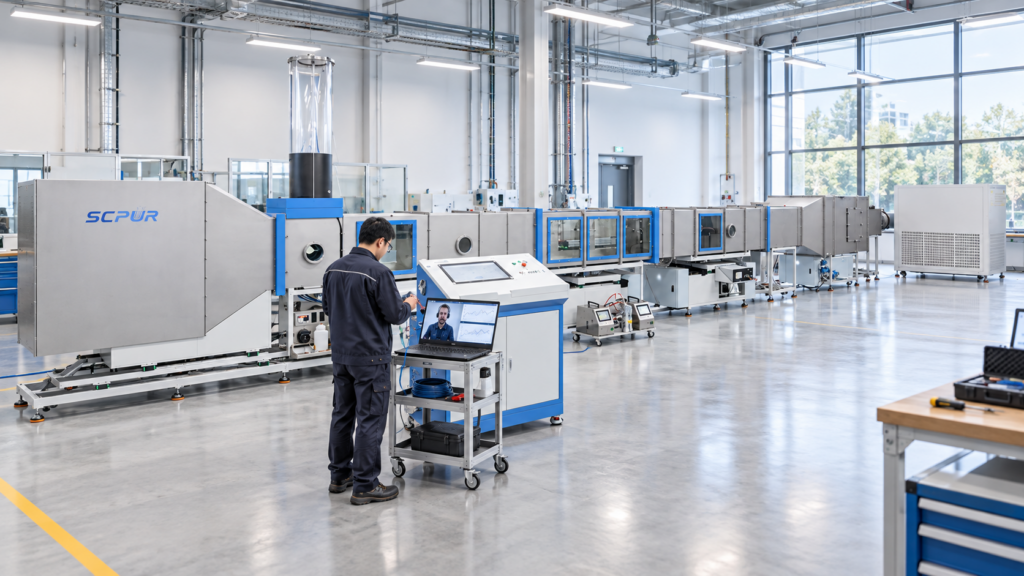
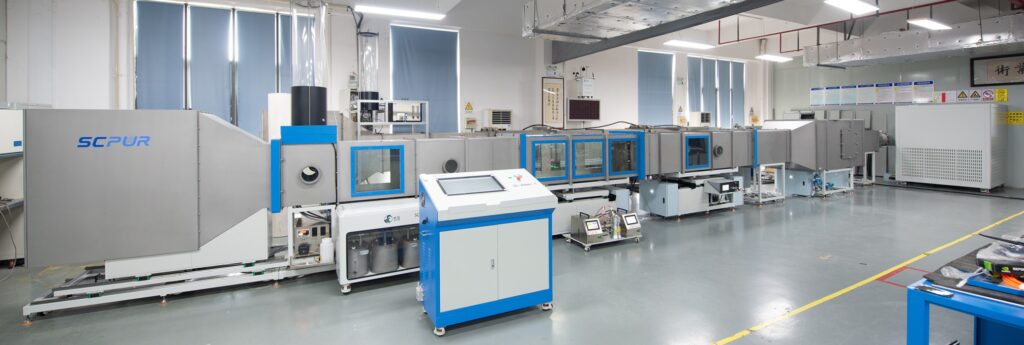
A laboratory supporting both methods needs validated airflow and pressure measurement, aërosol generatie, upstream and downstream particle measurement and the correct software calculations. ISO 16890 additionally requires the specified conditioning capability for classification, en ISO 16890-3 dust loading requires controlled dust feeding, downstream collection and weighing.
A system should not be described as supporting both standards only because it has a fan, duct and particle counter. The configured test functions and report logic must match the required procedure.