

EM 1822 e ISO 29463 são séries intimamente relacionadas para testar e classificar EPA, HEPA, e filtros ULPA. Eles usam a mesma ideia central: determinar o desempenho pela contagem de partículas no tamanho de partícula mais penetrante (MPPS), avaliar a eficiência geral do filtro, e - quando necessário - verifique o desempenho local por meio de testes de vazamento.
Eles não são, no entanto, rótulos idênticos para o mesmo padrão. A diferença mais importante é o sistema de classificação. EM 1822-1:2019 usa oito classes europeias familiares de E10 a U17. ISO 29463-1:2024 usa treze classes da ISO 05 E para ISO 75 Você, incluindo níveis de eficiência intermediários que não têm EN direta 1822 equivalentes de classe.
Para seleção de equipamentos e relatórios de testes, “en suporta 1822 e ISO 29463” não é informação suficiente. A aula necessária, método de teste, fluxo de ar nominal, Gama MPPS, aerossol, sensibilidade do detector, e o formato do relatório também devem ser definidos.
Edições atuais abordadas nesta comparação
Edições atuais abordadas nesta comparação
Este artigo compara:
- EM 1822-1:2019, a atual classificação europeia, teste de desempenho, e marcação de documento; e
- ISO 29463-1:2024, a terceira edição do documento de classificação internacional.
A série ISO também inclui ISO 29463-2 para requisitos de aerossol e contagem de partículas, ISO 29463-3 para mídia de folha plana, ISO 29463-4 para vazamento do elemento filtrante, e ISO 29463-5:2022 para eficiência do elemento filtrante.
O que as duas séries têm em comum
O que as duas séries têm em comum
Ambas as estruturas são construídas em torno de três tarefas de teste relacionadas:
- Teste de meio filtrante: determinar a eficiência fracionária em uma faixa de tamanho de partícula e identificar o MPPS na velocidade média relevante.
- Teste de vazamento de elemento filtrante: avaliar a penetração local ou a ausência de vazamentos inaceitáveis para as classes e métodos onde isso for necessário.
- Eficiência de filtro integral: determinar a eficiência geral do elemento filtrante acabado no fluxo de ar nominal.
Ambos distinguem entre o Grupo E (EPA), Grupo H (HEPA), e Grupo U (ULPA). Ambos classificam o desempenho no MPPS em vez de assumir que 0.3 μm é sempre o tamanho de partícula mais difícil.
A principal diferença: Resolução de Classificação
A principal diferença: Resolução de Classificação
EM 1822 usa uma série de oito classes. ISO 29463:2024 mantém os níveis principais correspondentes e adiciona classes intermediárias.
| EM 1822-1:2019 | ISO exato 29463-1:2024 corresponder | Eficiência geral no MPPS | Penetração local máxima em MPPS |
|---|---|---|---|
| E10 | ISO 05 E | ≥ 85% | Não usado para classificação |
| E11 | ISO 15 E | ≥ 95% | Não usado para classificação |
| E12 | ISO 25 E | ≥ 99.5% | Não usado para classificação |
| H13 | ISO 35 H | ≥ 99.95% | ≤ 0.25% |
| H14 | ISO 45 H | ≥ 99.995% | ≤ 0.025% |
| Sub15 | ISO 55 Você | ≥ 99.9995% | ≤ 0.0025% |
| Sub16 | ISO 65 Você | ≥ 99.99995% | ≤ 0.00025% |
| Sub-17 | ISO 75 Você | ≥ 99.999995% | ≤ 0.0001% |
ISO 29463-1:2024 adicionalmente define ISO 10 E, ISO 20 E, ISO 30 E, ISO 40 H, ISO 50 Você, ISO 60 Você, e ISO 70 Você. Estas são classes ISO válidas, mas eles não devem ser renomeados como o EN mais próximo 1822 aula.
Por exemplo:
- ISO 40 H tem uma eficiência global de pelo menos 99.99% no MPPS. Ele fica entre EN H13 e H14 e não é um filtro EN H14.
- ISO 50 U fica entre os níveis exatos equivalentes a EN ISO 45 H e ISO 55 Você. Não cria uma nova classe EN.
Desempenho local não é o mesmo que eficiência integral
Desempenho local não é o mesmo que eficiência integral
A eficiência integral calcula a média do desempenho em toda a área superficial do filtro. A eficiência local refere-se ao desempenho em um local específico verificado.
Para classes H e U, um filtro pode atender ao seu requisito de eficiência integral e ainda assim falhar no limite de penetração local devido a um furo, meio danificado, descontinuidade do selante, ou defeito relacionado ao quadro. É por isso que os testes de eficiência geral e a verificação de vazamentos locais são tarefas separadas.
Os filtros do Grupo E são diferentes: sob esses sistemas de classificação, eles não são testados quanto a vazamentos para fins de classificação.
Diferenças nas regras do método de teste de vazamento
Diferenças nas regras do método de teste de vazamento
O método de varredura de contagem de partículas é o método de referência na ISO 29463-4. É o método necessário para filtros do Grupo U. ISO 29463 também permite métodos alternativos de teste de vazamento definidos para filtros do Grupo H quando as condições aplicáveis forem atendidas e o método for claramente identificado.
EM 1822-1:2019 referências ISO 29463 Peças 2 através 5 para os procedimentos de teste detalhados, mas aplica sua própria classificação EN. O 2019 A edição EN exclui o teste de vazamento de varredura de filtro fotômetro de aerossol. Os filtros do Grupo U são testados pelo método de varredura de contagem de partículas MPPS.
Esta é uma diferença significativa. A afirmação de que “o teste de vazamento é o mesmo em ambas as normas” é muito ampla. O grupo de filtros e o método normativo selecionado devem ser indicados.
É 0.3 Teste μm suficiente?
É 0.3 Teste μm suficiente?
Não automaticamente. Os padrões classificam filtros em MPPS. ISO 29463 observa que o MPPS para meios de microfibra de vidro está frequentemente na faixa aproximada de 0.12 μm para 0.25 μm, enquanto a membrana e a mídia carregada requerem consideração adicional.
UM 0.3 canal de partículas μm pode ser útil para um método de controle de qualidade interno validado, mas não deve ser apresentado como formal PT 1822 ou ISO 29463 classificação, a menos que o procedimento aplicável completo e a medição MPPS exigida sejam satisfeitos.
Como a diferença afeta o equipamento de teste
Como a diferença afeta o equipamento de teste
Um sistema de teste adequado é definido por mais do que sua faixa de fluxo de ar. As principais questões de configuração incluem:
- Qual classe EN ou ISO deve ser relatada?
- A tarefa é determinar o MPPS do meio filtrante, eficiência integral do filtro acabado, verificação de vazamento local, ou todos os três?
- Qual é o fluxo de ar nominal e a faixa de tamanho do filtro?
- O aerossol de teste é monodisperso?, quase monodisperso, ou polidisperso?
- Qual faixa de tamanho de partícula e concentração o detector deve medir?
- A sensibilidade do contador é suficiente para a penetração local e integral esperada??
- Como será a cobertura da digitalização, geometria da sonda, velocidade, tempo de amostragem, e estatísticas de contagem sejam controladas?
- Qual método alternativo de vazamento, se houver, é permitido pelo contrato e padrão?
A sensibilidade necessária aumenta substancialmente de H13 a U17. Um sistema adequado para um teste de produção H13 não é automaticamente adequado para U16 ou U17.
Qual padrão um fabricante deve especificar?
Qual padrão um fabricante deve especificar?
Use o padrão nomeado no contrato do cliente, requisito regulatório, ou mercado-alvo. Se um fabricante atende clientes europeus e internacionais, o relatório de ensaio pode incluir ambas as classificações apenas quando existir um mapeamento exato e os procedimentos aplicáveis tiverem sido satisfeitos.
Não converta uma classe ISO intermediária em uma classe EN não oficial. Em vez de, relatório:
- o padrão completo e edição;
- a classe de filtro exatamente como definida;
- o fluxo de ar nominal;
- o aerossol de teste e MPPS;
- a eficiência integral ou penetração;
- o método local de teste de vazamento e limite de aceitação; e
- qualquer desvio acordado ou método de produção específico do cliente.
Resumo Prático
Resumo Prático
- EM 1822 e ISO 29463 compartilhe princípios de contagem de partículas baseados em MPPS.
- EM 1822-1:2019 tem oito aulas; ISO 29463-1:2024 tem treze.
- Apenas classes ISO específicas são mapeadas exatamente para E10–E12, H13–H14, e Sub15–U17.
- Eficiência integral e penetração local são resultados de aceitação diferentes.
- Os filtros do Grupo E não são testados quanto a vazamentos para classificação.
- As opções de método para filtros do Grupo H e U devem ser verificadas em vez de assumidas.
- UM 0.3 O teste de produção μm não é automaticamente um teste de classificação MPPS.
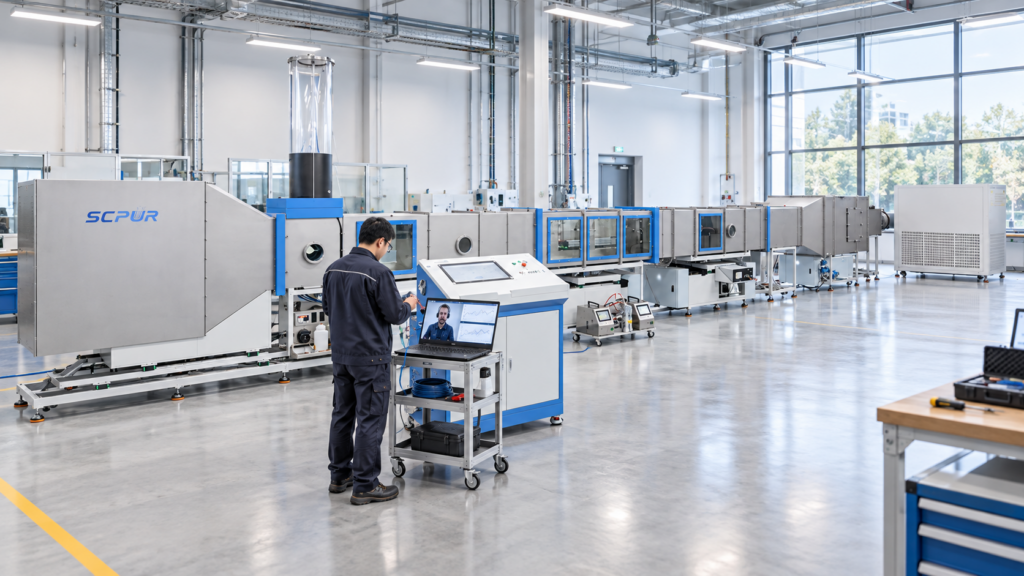
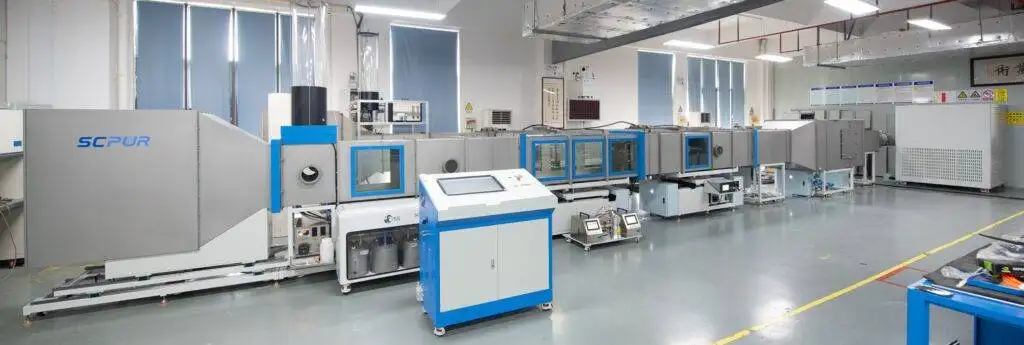
SCPUR configura sistemas automáticos de varredura de filtros de acordo com a classe exigida, alcance do detector, dimensões do filtro, fluxo de ar, método de aerossol, e fluxo de trabalho de produção. Veja o Sistema de teste de digitalização automática SC-L8023/U para a visão geral da plataforma.
- Compreendendo PT 1822 Teste de filtro HEPA
- Sistema de teste de digitalização automática SC-L8023/U
- Teste de vazamento do filtro HEPA: Verificação de fábrica versus teste de integridade do sistema instalado
- Soluções de validação de filtros HEPA para salas limpas e testes de vazamento
- BS EN 1822-1:2019 — Classificação, testes de desempenho e marcação
- ISO 29463-1:2024 — Classificação, desempenho, teste e marcação
- ISO 29463-2:2011 — Produção de aerossol, equipamentos de medição e estatísticas de contagem de partículas
- ISO 29463-4:2011 — Método de teste para determinar vazamento de elementos filtrantes, método de digitalização
- ISO 29463-5:2022 — Método de teste para elementos filtrantes